

By Usman Fambuleh
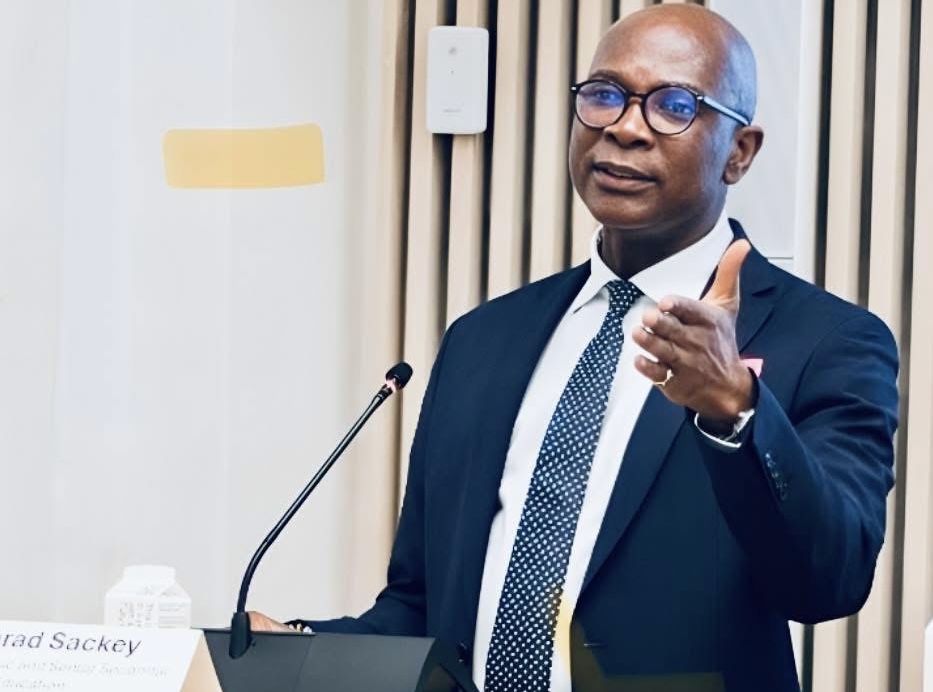
The Government of Sierra Leone has announced strengthened measures to tackle examination malpractice and safeguard the credibility of the country’s education system, with the Minister of Basic and Senior Secondary Education, Hon. Conrad Sackey, warning that all those involved in undermining examination integrity will be held accountable.
Minister Sackey made the disclosure on Wednesday, August 26, 2026, during a Special Edition Civic Town Hall held at the Miatta Civic Centre in Freetown under the theme, “How Do We Address the Threats to Quality Education in Sierra Leone?”
The programme was hosted by the Minister of Information and Civic Education, Hon. Chernor Bah, and brought together stakeholders to discuss challenges affecting the quality, credibility and integrity of the country’s education system.
Speaking on the recently released National Primary School Examination (NPSE) results, Minister Sackey said approximately 161,000 candidates sat the examination, recording an overall pass rate of 78.2 per cent.
He congratulated pupils who performed well and commended teachers and other education stakeholders for their contributions, noting that the results reflected progress despite the challenges confronting the sector.
The Minister, however, clarified concerns surrounding the decision to set aside 1,927 results, stressing that the figure should not be interpreted as meaning that all the affected pupils were involved in examination malpractice.
According to Minister Sackey, approximately 1,640 of the results were set aside because the schools concerned failed to submit the required continuous assessment cards.
He explained that the decision was also intended to protect pupils whose continuous assessment scores could have a significant impact on their final results and their chances of securing admission to competitive Grade A schools.
He further disclosed that cases specifically linked to alleged examination malpractice accounted for only about 0.2 per cent of candidates who sat the NPSE.
Minister Sackey urged the public to carefully understand the figures and avoid creating the impression that all 1,927 candidates were implicated in cheating.
He noted that more than 5,000 pupils scored 300 marks and above, describing the overall performance as encouraging while stressing that even a relatively small number of malpractice cases must be addressed because of their potential to undermine public confidence in the education system.
As part of efforts to address the problem, Minister Sackey disclosed that the Government is working on a new White Paper on education. He noted that the existing policy framework dates back to 1984 and said the proposed document would introduce stronger measures to address practices that threaten the integrity of the education sector, including provisions to criminalise certain forms of misconduct.
He also called for greater public education and civic awareness on examination malpractice, stressing that the problem cannot be blamed solely on pupils.
According to him, examination malpractice involves a wider network, with parents, teachers and other individuals potentially playing different roles in facilitating or encouraging dishonest practices.
Technology, he added, is increasingly becoming an important tool in the fight against examination malpractice.
Minister Sackey said digital systems could be used to analyse more than 300,000 pieces of examination data to identify duplication, unusual patterns and other potential irregularities. He added that additional digital platforms were being introduced to strengthen examination administration, monitoring and the detection of suspicious activities.
The Minister further warned that punitive action would be taken where investigations establish sufficient evidence of wrongdoing.
He disclosed that 58 principals had previously been suspended for one year without pay over examination-related offences, while other cases remained under investigation and consideration.
Addressing concerns over the presence of the military during the NPSE, Minister Sackey explained that their involvement was primarily intended to protect examination materials and support the integrity of the examination process.
He maintained that the deployment should not be viewed as an attempt to intimidate pupils.
Minister Sackey concluded by calling for a collective national effort involving the Government, teachers, parents, pupils, civil society, the media and other stakeholders to protect the credibility of Sierra Leone’s education system.
He stressed that examination integrity is essential to ensuring that pupils are assessed fairly and that certificates and qualifications awarded in Sierra Leone genuinely reflect the knowledge, skills and competence of those who earn them.
The Special Edition Civic Town Hall formed part of ongoing national discussions on the challenges facing Sierra Leone’s education sector, with stakeholders examining practical measures to improve quality, strengthen accountability and ensure that the country’s education system produces credible and competent graduates.