
During the 70th biennial session of the International Whaling Commission (IWC), member countries meeting that took place from 27 September to 2 October 2026 in Hobart, Australia,
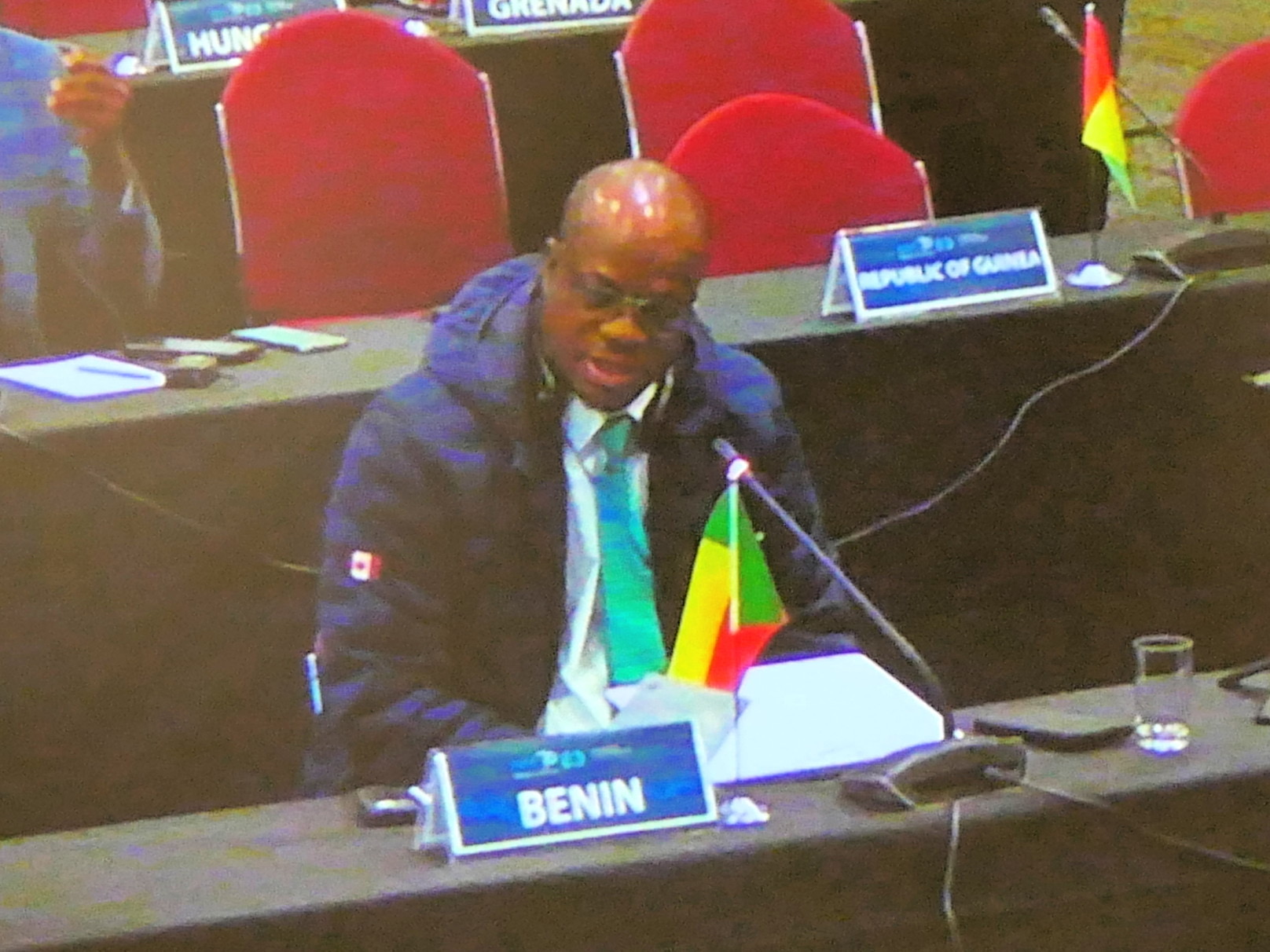
Dr. Urbain Tas Brito, Commissioner of Benin, was elected as the new President of the IWC.
Ms. Anne-Marie SVOBODA (EU/Netherlands), who was elected Vice-President will be assisting Dr. Urbain Tas Brito during his term of two (2).
This session was marked by the participation of sixty-five (65) countries, including five (5) member states of ATLAFCO: Benin, Côte d’Ivoire, Morocco, Mauritania, and Senegal. This session, which coincided with the celebration of the organization’s 80th anniversary, saw significant progress, notably the creation of an ad hoc working group to propose legal solutions to resolve the issue of quorum interpretation, a recurring theme at each session of the IWC.
The just concluded IWC meeting saw ATLAFCOmember state to lead this important international organization, created in 1948, for the next two years, considered extremely sensitive for its future, demonstrates once again the increasingly strategic positioning of ATLAFCO within international organizations. This illustrates its significant role in ocean governance and reaffirms its commitment within high-level international fisheries management bodies, as established in the Abidjan Declaration adopted in April 2025 during the 11th Ministerial Conference.
This 70th session also provided an opportunity to reaffirm the strong support of African IWC member countries, Caribbean and Pacific nations as well as ATLAFCO member states for the principle of the sustainable use of living marine resources and for decision-making based primarily on sound scientific arguments and advice.
The IWC noted that ATLAFCO funded the participation of several scientists from its member states in the IWC Scientific Committee meeting held last April in Slovenia.
ATLAFCO strongly emphasizes the contribution of sustainable use to human food security, social stability, and job creation for coastal communities and populations that depend directly on marine resources.
A Code of Conduct was adopted by consensus to guide the work of the Commission and its subsidiary bodies, therefore the participants also adopted by consensus the “Hobart Declaration,” which constitutes the Commission’s first collective statement on its role, history, and future. Setting aside political differences, the Commission spoke with one voice to highlight the challenges ahead.
It was also revealed that the 70 Biennial Session that “management” mechanisms, created a proposal to create a sanctuary for whales in the South Atlantic, introduced in 1998 by a group of countries not in favor of the sustainable use of living marine resources, was once again strongly rejected because it is not based on any scientific basis. The Resolution on cetacean strandings, considered a cross-cutting priority for the IWC, was adopted by consensus. This resolution recognizes the wealth of information that stranded whales can provide, particularly for ecosystem monitoring and biological and health data. It encourages collaboration between the various IWC committees working on information related to strandings.
“Two draft resolutions were withdrawn by the sponsoring countries. These were the draft resolutions relating to targeted capture of small cetaceans linked to commercial fishing, on the one hand, and to the implementation of a conservation and management program for whale stocks aimed at the sustainable use of whale resources”, it revealed.
As for the Commission’s budget for the period 2027-2028, it was adopted by vote in view of the strong divergences between the countries in favor of an annual increase of 4.5% and those which are for a budgetary status quo in view of the global economic context.