
Reflections of Sierra Leonean Pilgrims Honoured as Guests of the Custodian of the Two Holy Mosques
By-Alhaji Chernor Mohamadu Jalloh
On Behalf of the Sierra Leonean Beneficiaries of the Custodian of the Two Holy Mosques’ Guests Program for Hajj
There are rare moments in life when faith, destiny, and history converge so powerfully that words struggle to capture their significance. For nine Sierra Leoneans, including this humble writer, such a moment arrived when we learned that we had been selected to perform Hajj as honoured guests of the Custodian of the Two Holy Mosques, King Salman bin Abdulaziz Al Saud.
The news was received with disbelief and overwhelming joy. Some reread the message repeatedly to ensure it was real; others immediately called family members to share the blessing. What began as an unexpected invitation soon unfolded into a profound lesson in faith, hospitality, leadership, and human dignity.
Our journey commenced at the Saudi Embassy in Freetown, where His Excellency the Saudi Ambassador, together with the Embassy staff and Cultural Attaché, guided us through every stage of preparation with remarkable professionalism and warmth. Even before boarding the aircraft, we felt less like travellers and more like honoured guests.
As our aircraft descended into Jeddah, anticipation filled the cabin. Every pilgrim carried private prayers, cherished hopes, and silent conversations with Allah (SWT). Some sought forgiveness, others prayed for their families and communities, while many simply expressed gratitude for being granted the opportunity to answer the divine call to Hajj.
Then came Makkah—the spiritual epicentre of Islam.
Nothing can adequately prepare a believer for the first sight of the Holy Ka‘aba. Amid the movement of thousands of pilgrims, the Sacred House suddenly appears before one’s eyes in all its majestic simplicity. In that moment, the surrounding world fades into silence. Hearts tremble, eyes overflow with tears, and souls become overwhelmed with gratitude and awe.
Allah reminds us:
“Indeed, the first House established for mankind was that at Bakkah—blessed and guidance for the worlds.” (Qur’an 3:96)
Standing before the Ka‘aba, one begins to understand the profound truth contained within that verse.
The spiritual grandeur of Makkah is matched by an equally remarkable human achievement: the organization required to serve millions of pilgrims. Nowhere was this more evident than in Mina, the vast city of tents that emerges annually to accommodate the guests of Allah.
Rows of white tents stretched across the valley like a sea of devotion. Yet what impressed us most was not merely the scale but the extraordinary efficiency. Transportation moved seamlessly, meals were served punctually, guidance was readily available, and medical services remained constantly accessible. Everything functioned with remarkable precision, allowing pilgrims to devote themselves fully to worship.
Indeed, the level of organization was so impressive that some pilgrims jokingly remarked that the authorities could locate a missing pilgrim before the pilgrim himself realized he was lost.
The hospitality extended to pilgrims deserves special mention. The generosity with which meals and refreshments were provided reflected the Kingdom’s renowned culture of service and care for the guests of Allah. The quality, variety, and abundance of the provisions were so remarkable that some pilgrims jokingly remarked that maintaining dietary discipline required almost as much determination as keeping pace with the demanding schedule of worship. Such light-hearted observations only underscored the warmth and generosity that accompanied us throughout the pilgrimage.
The Day of Arafat marked the spiritual summit of the pilgrimage. Beneath the vast Arabian sky, humanity stood united before its Creator. Titles offered no privilege, wealth conferred no advantage, and nationality carried no distinction. Professors stood beside farmers, businessmen alongside labourers, and ministers beside mechanics. Every worldly marker of status dissolved into insignificance, leaving only one shared identity: servants of Allah seeking His mercy and forgiveness.
In that sacred gathering, pilgrims turned inward in reflection and supplication. Tears of repentance mingled with prayers of gratitude as countless hands rose toward the heavens.
At sunset, millions journeyed to Muzdalifah. There, beneath an immense canopy of stars, pilgrims rested directly upon the earth. In that simple setting, one rediscovers a timeless truth often obscured by modern comforts: contentment is rooted not in material abundance but in spiritual surrender. One of our colleagues aptly described Muzdalifah as “the world’s largest five-star hotel without walls.”
The return to Mina for the symbolic stoning of the Jamarat reminded us of the perpetual struggle against arrogance, greed, envy, selfishness, and moral weakness. The ritual transcends its physical form, inviting believers to confront the inner adversaries that threaten spiritual growth.
Every pilgrim leaves Mina carrying two forms of provision. One is tangible and rests within the luggage that accompanies them home. The other is invisible yet infinitely more valuable—a treasury of faith, humility, patience, sacrifice, and spiritual renewal stored deep within the heart.
Then comes the Farewell Tawaf, perhaps the most emotionally moving moment of the entire pilgrimage. Gratitude and sorrow coexist in equal measure. The heart rejoices at having fulfilled a sacred obligation, yet grieves at the prospect of departure. With every circuit around the Holy Ka‘aba, countless pilgrims silently whisper the same prayer:
“O Allah, permit us to return to Your Sacred House once again.”
The pilgrimage narrative, however, does not conclude in Makkah. Its most serene epilogue unfolds in Al-Madinah Al-Munawwarah—the Illuminated City and beloved home of the Prophet Muhammad (SAWS).
If Makkah overwhelmed the soul with awe, Madinah embraced it with tranquility.
For three unforgettable days, we immersed ourselves in prayer, reflection, and gratitude within the magnificent Al-Masjid An-Nabawi. Every prayer deepened our connection to Islamic history and tradition. Many pilgrims found themselves lingering after worship, reluctant to leave, quietly absorbing the serenity that permeates every corner of the sacred sanctuary.
Among the most moving moments of our stay was the opportunity to convey our salutations to the Prophet Muhammad (SAWS), Abu Bakr As-Siddiq (RA), and Umar ibn Al-Khattab (RA). It was an encounter where faith, history, and devotion converged in a deeply personal manner.
Those blessed days in Madinah provided a fitting culmination to our spiritual journey. While Makkah taught us surrender, sacrifice, and devotion, Madinah taught us love, gratitude, and inner tranquility. Together, they completed a transformative experience that will remain etched in our hearts forever.
When the time finally arrived to depart for Freetown, none of us boarded the aircraft as the same individuals who had left Sierra Leone weeks earlier. We returned carrying renewed faith, deeper humility, and unforgettable memories. Though our aircraft departed the Arabian Peninsula, a portion of our hearts remained behind—anchored forever between the sacred precincts of Makkah and the illuminated tranquility of Madinah.
Above all, we offer our sincerest gratitude to Allah (SWT), whose mercy made this journey possible. We also express our profound appreciation to the Custodian of the Two Holy Mosques, King Salman bin Abdulaziz Al Saud, whose generosity has enabled thousands of Muslims across the world to fulfill this sacred obligation with dignity and honour.
We are equally indebted to His Excellency the Saudi Ambassador to Sierra Leone and the Cultural Attaché in Freetown, whose dedication, kindness, and professionalism transformed what could have been merely a pilgrimage into an unforgettable experience of hospitality and brotherhood.
Our journey began as nine ordinary pilgrims from Sierra Leone; it concluded with nine grateful witnesses to an extraordinary tradition of service, generosity, and devotion extended to the guests of Allah.
May Allah bless the Kingdom of Saudi Arabia, preserve its leadership, reward all those who labour in service of the pilgrims, and accept the Hajj of every believer who answers His call.
Labbaik Allahumma Labbaik.
Ameen.
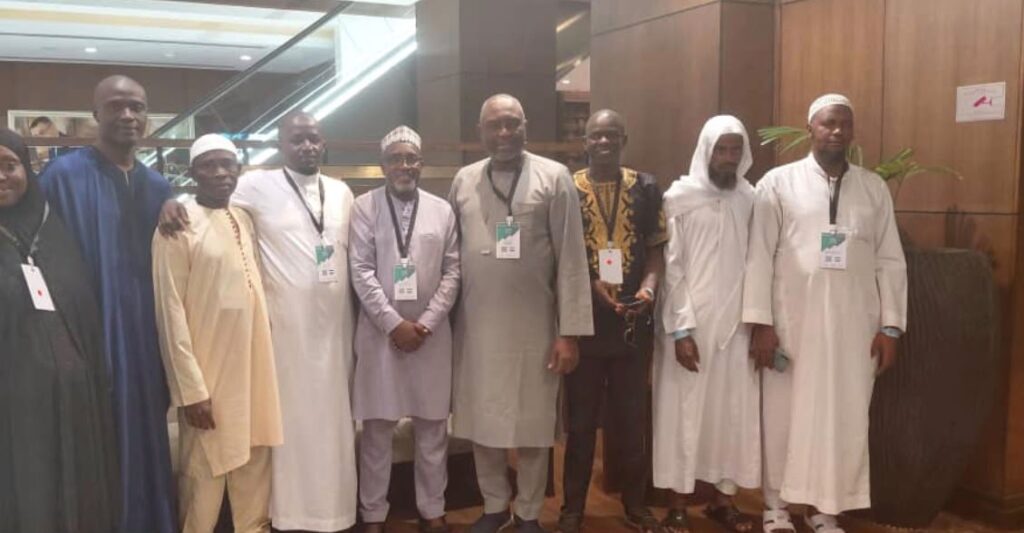
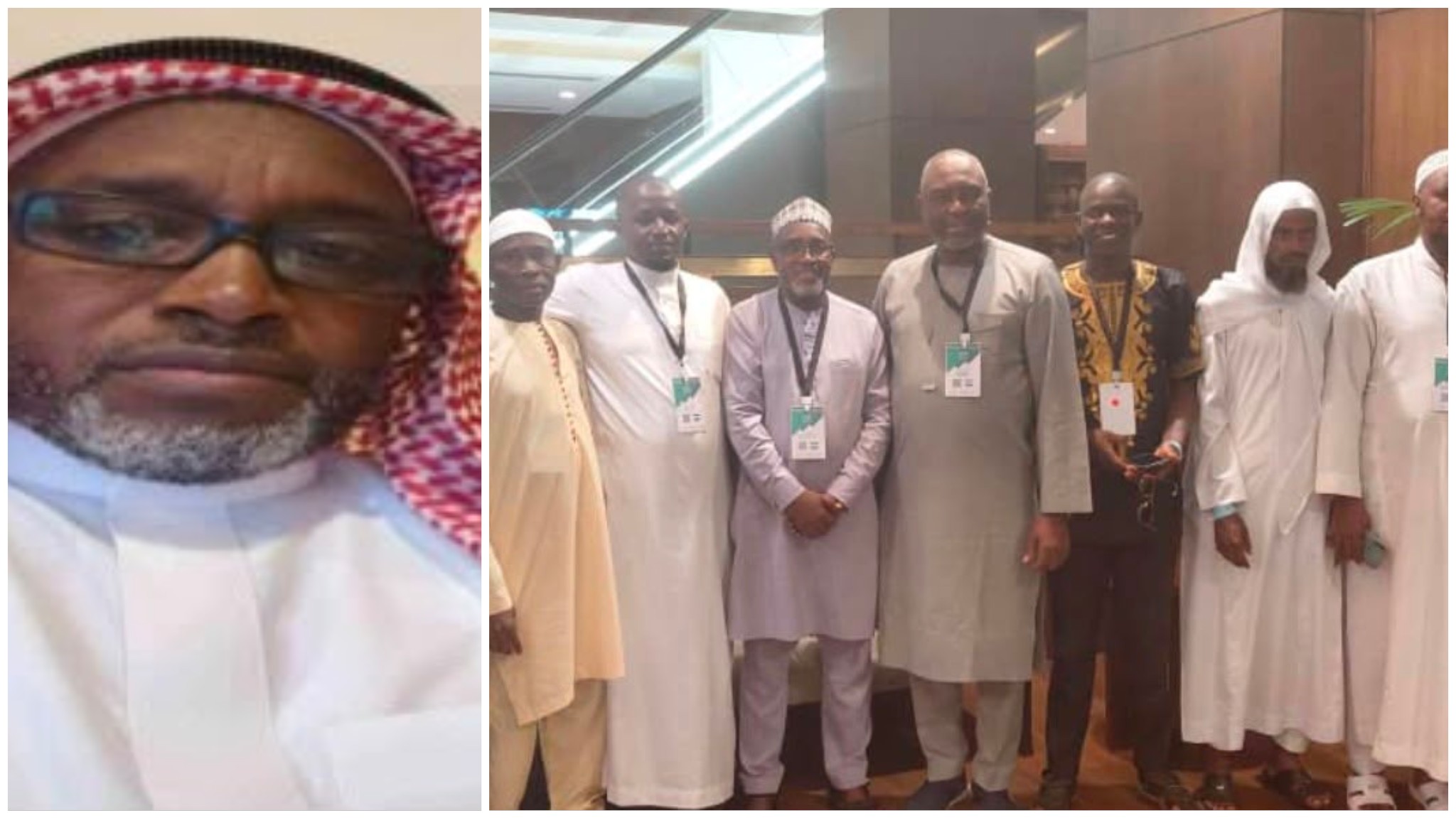
Haja Fatima Binta Koroma, Alhaji Douda Kamara, Alhaji Mahmud Turay, AlhajiHillal Amin Turay, Alhaji Chernor M. Jalloh, Alhaji Sheik Ibrahim Barrie, AlhajiMohamed Musa Kamar, Alhaji Mohamadu Fula Jalloh, Alhaji Mohamadu Mustapha Jalloh