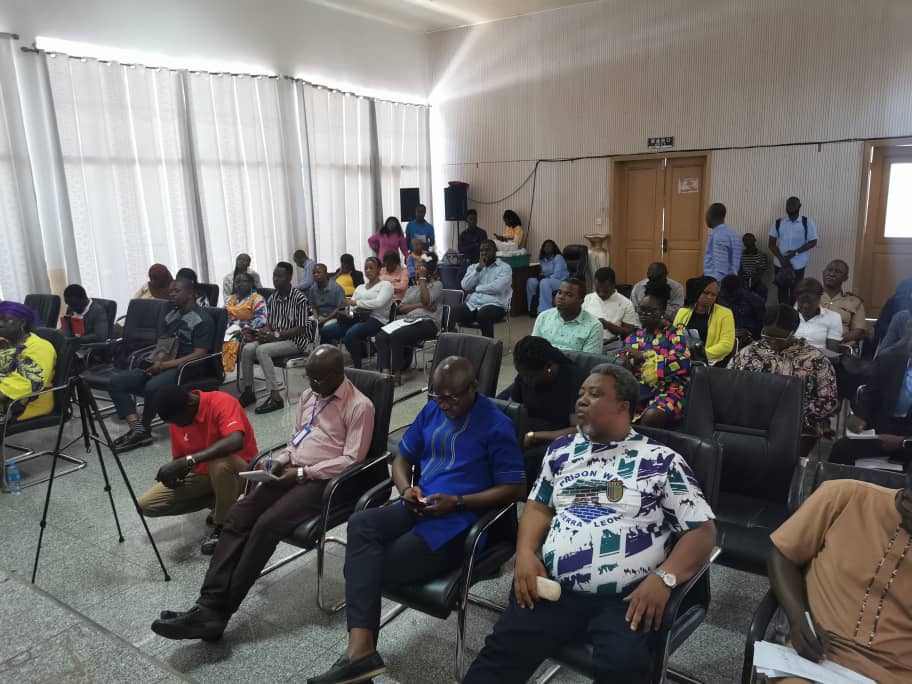

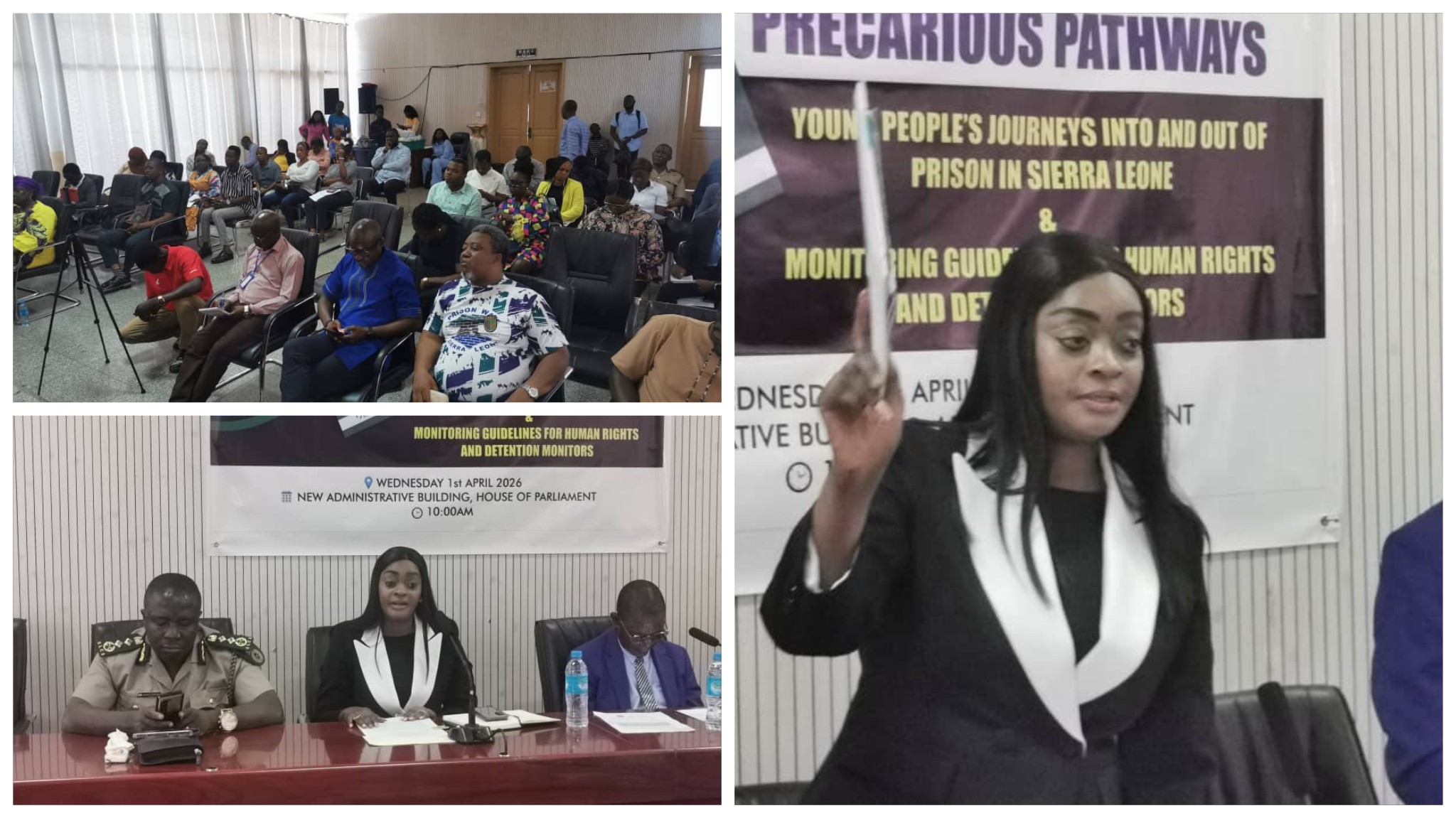
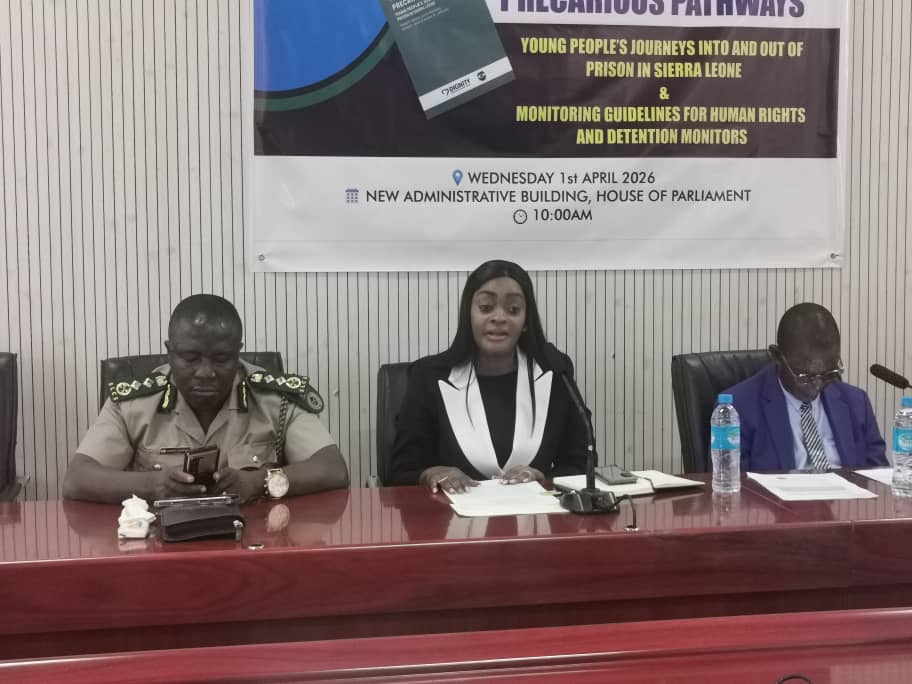
Deputy Minister of Justice, Madam Elizabeth Saptieu Saccoh, has officially launched the landmark report “Precarious Pathways to Prison”, produced by Prison Watch Sierra Leone and DIGNITY. The report examines how young people enter and exit the criminal justice system and introduces guidelines for human rights monitoring and detention oversight.
In her keynote address, Saccoh urged Sierra Leone to rethink its traditional focus on punishment, noting that public discourse often centres on “the destination” prison, rather than the socio-economic pressures shaping youths’ lives. She stressed that many young people are drawn into conflict with the law not because they are inherently criminal, but due to precarity, displacement, and systemic failures.

Drawing on her experience as former Administrator and Registrar General, Saccoh highlighted the risks faced by young entrepreneurs in unregulated informal markets. The report identifies “business gone wrong” as a leading pathway to imprisonment, with commercial disputes too often treated as criminal matters.
“The line between a civil issue and a criminal offence remains dangerously thin,” she warned.
Saccoh outlined ongoing reforms, including the Criminal Procedure Act 2024 and the decriminalization of petty offences, aimed at reducing unnecessary imprisonment and protecting vulnerable youth. She emphasized the need for sentencing that considers personal histories and life circumstances, underscoring that individuals behind bars are “criminalized, not born criminal.”
Under the new Act, the Ministry plans to expand diversion programs to redirect non-violent young offenders to skills centres, farms, or classrooms rather than prisons, promoting a restorative justice approach.
The report also highlights three priorities voiced by young people: secure livelihoods, meaningful guidance, and a greater voice in national decision-making. In response, Saccoh reaffirmed commitments to develop human-centred sentencing guidelines, strengthen the Legal Aid Board, and integrate mentorship into correctional reforms so that prisons serve as true rehabilitation spaces.
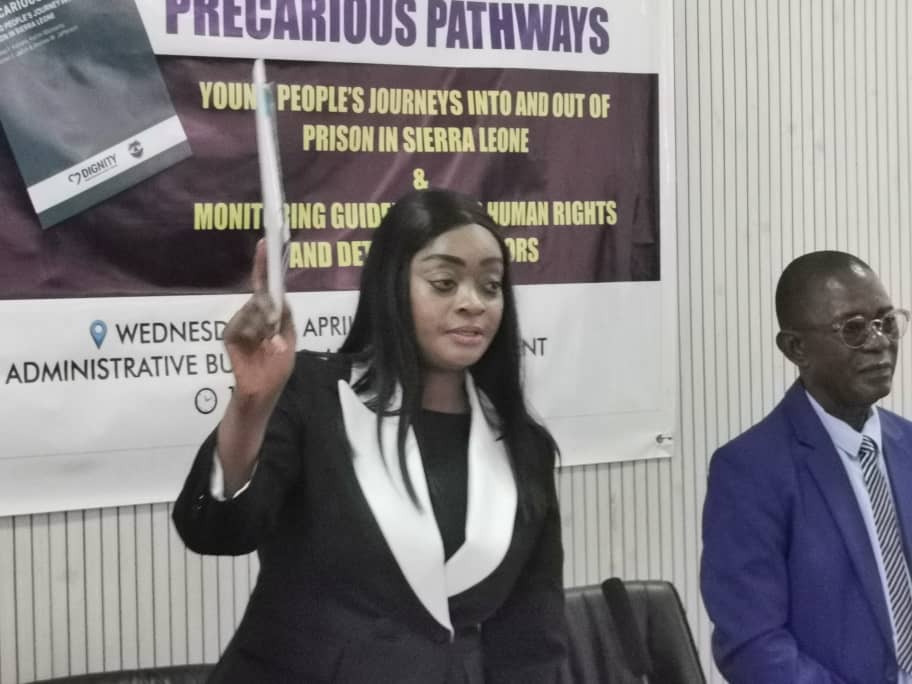
She concluded by urging society to improve social conditions rather than condemn its youth, noting that one misstep or failed business should not define anyone’s future. Saccoh commended Prison Watch and DIGNITY for shedding light on systemic gaps and expressed hope that the report will contribute to a justice system rooted in dignity, opportunity, and shared humanity.