

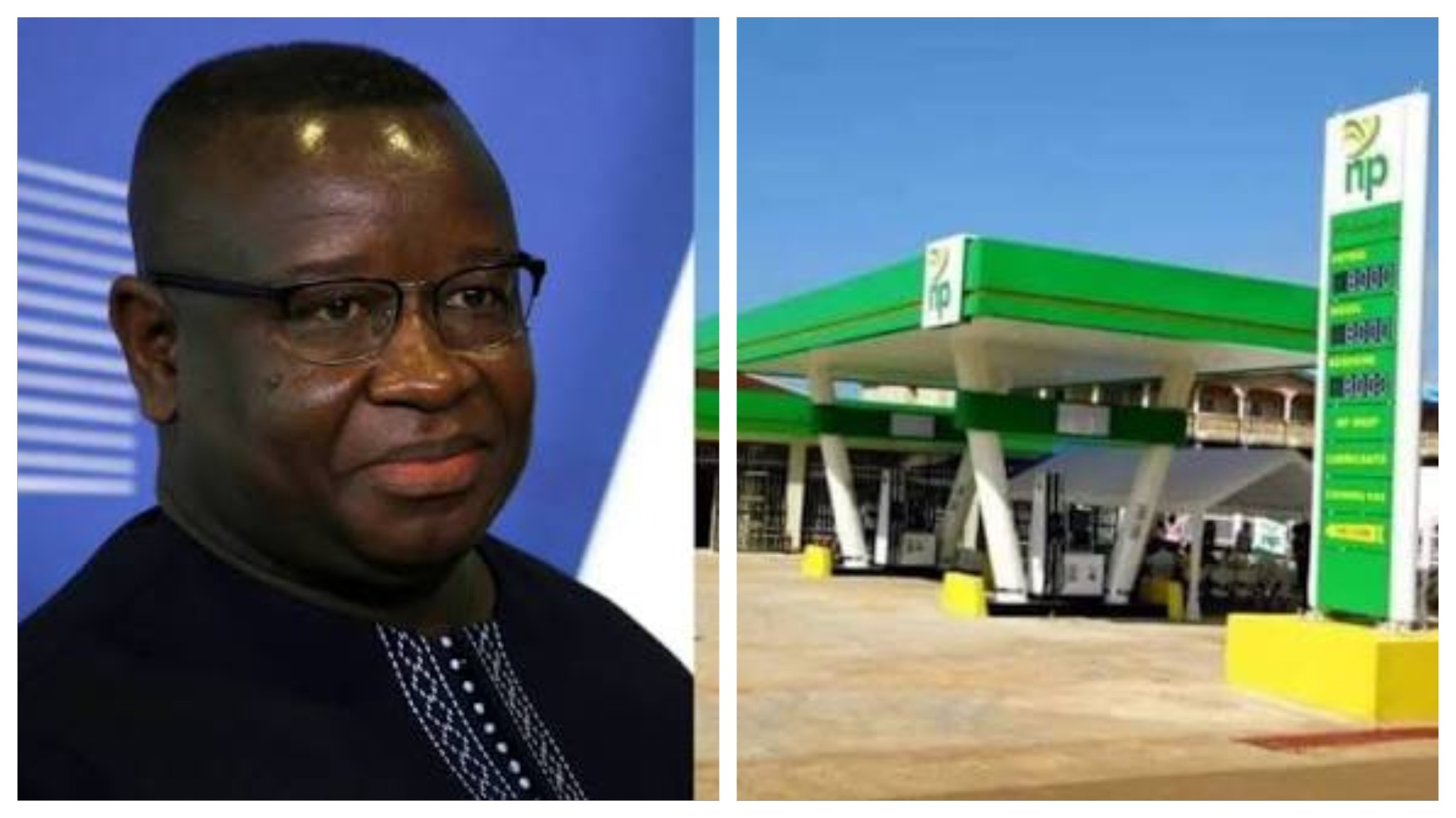
In what many ordinary Sierra Leoneans may regard as another painful blow to their pockets, the Government has announced a fresh increase in the pump prices of petroleum products, pushing petrol to NLe40 per litre and diesel to NLe45 per litre, effective today, Tuesday, 8 September 2026.
The announcement was made through a public notice from the Ministry of Information and Civic Education, citing rising international petroleum prices and the impact of the ongoing conflict involving Iran on global oil markets.
The increase comes barely weeks after the National Petroleum Regulatory Authority (NPRA) set petrol at NLe35 and diesel at NLe40 per litre, effective 17 August 2026.
The latest increase is particularly concerning when Sierra Leone’s prices are compared with those in neighbouring countries.
Available September data show petrol and diesel in Liberia remain cheaper than Sierra Leone, while Guinea’s reported prices are also significantly lower when converted to Sierra Leonean Leone.
The development raises questions about why Sierra Leonean consumers continue to face steep pump prices and whether Government’s intervention is sufficient to protect citizens from the wider economic consequences.
While some countries in the region have also experienced adjustments, the situation is not uniform. In Ghana, for instance, some oil marketing companies maintained their prices even as others increased them during the latest pricing window.
Government says the actual pass-through price under the current pricing formula would have been NLe41.04 for petrol and NLe46.76 for diesel.
It therefore says it will absorb the difference through subsidies to cushion consumers from the full impact of the international price increase.
But for ordinary citizens already battling high transportation, food and business costs, the question remains whether the subsidy will provide enough relief.
In an attempt to prevent an immediate increase in public transportation costs, Government says it will provide additional support to maintain existing Waka Fine fares.
According to the notice, Waka Fine fares will not increase because of the new pump prices, with Government promising to absorb the additional fuel cost.
The assurance may provide some relief to commuters, but concerns remain over the possible indirect effects of higher fuel prices on commercial transportation, food distribution, small businesses and the general cost of living.
Government also says several Oil Marketing Companies recently reduced or stopped sales at filling stations, resulting in fuel shortages and long queues across the country.
The new prices, it says, are intended to restore normal supply and ensure petroleum products remain available nationwide.
Government further says it is accelerating measures to strengthen its role in fuel importation, storage and wholesale supply in an effort to improve energy security and reduce Sierra Leone’s vulnerability to future international price shocks.
But as the new prices take effect, the burden ultimately falls on the ordinary Sierra Leonean.
From NLe35 to NLe40 for petrol and NLe40 to NLe45 for diesel, the latest increase has already triggered a difficult question across the country: how much more can ordinary citizens afford to pay?