
The call by Sierra Leone’s Attorney-General and Minister of Justice, Alpha Sesay Esq., for stronger African solidarity behind Sierra Leone’s candidature for the International Court of Justice (ICJ) deserves serious attention across the continent.
At its heart, the appeal is about more than one country seeking a seat on an international court. It is about whether Africa is prepared to translate its long-standing calls for fairer representation in global institutions into concrete action.
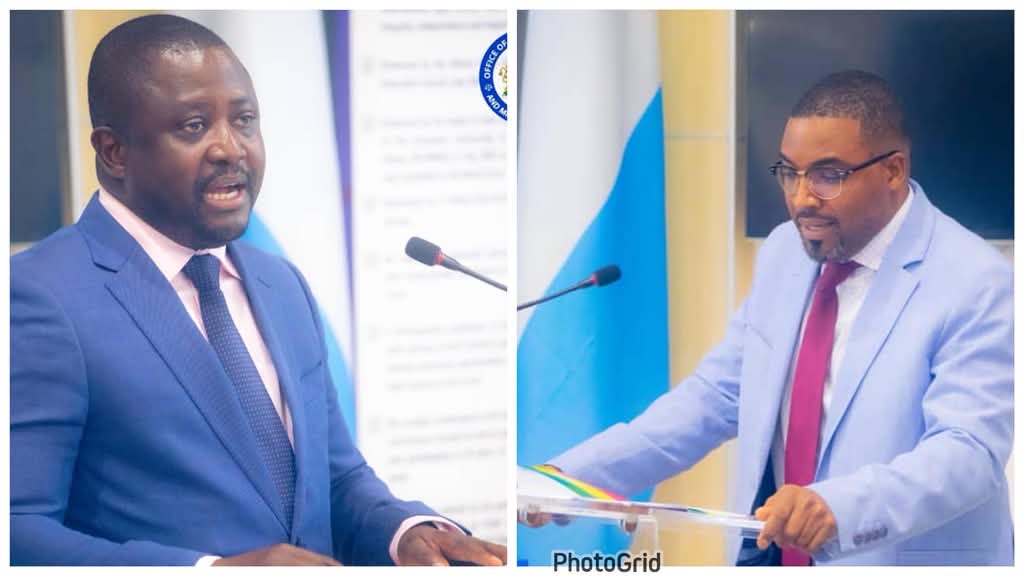
The Attorney-General made the case on September 2, 2026, while delivering a keynote address on the role of the ICJ in the peaceful settlement of disputes in Africa at the Foreign Service Academy in Freetown. His message was clear: Africa must support qualified African jurists when opportunities arise to strengthen the continent’s voice in institutions that shape international law.
That argument becomes particularly compelling in the case of Professor Dr. Charles Chernor Jalloh.
A Candidate With International Legal Standing
Professor Jalloh is not being presented simply because he is Sierra Leonean or because West Africa deserves representation. His candidature is grounded in legal expertise, international recognition and years of contribution to the development and understanding of international law.
This distinction is important.
Africa’s demand for greater representation in international institutions cannot credibly be reduced to a question of geography. The continent needs individuals who possess the intellectual capacity, professional experience and independence required to perform effectively on the world stage.
That is precisely why Sierra Leone’s candidature should command continental attention.
The Attorney-General himself made this point, stressing that Africa is not asking for geography to replace merit. Rather, excellence and equitable representation should go together.
That should be the standard by which Professor Jalloh’s candidature is assessed.
Africa Needs Its Own Jurists At The Centre Of International Justice
For decades, African countries have participated actively in the international legal system, yet questions about equitable African representation in major global institutions remain.
The ICJ is particularly important because it provides States with a peaceful mechanism for resolving disputes. As the Attorney-General noted, at least 37 contentious cases have originated from Africa, demonstrating the continent’s significant engagement with the Court.
Cases involving Burkina Faso and Mali, Libya and Chad, and Cameroon and Nigeria illustrate that African States have increasingly turned to international law and judicial processes instead of armed confrontation.
This makes African representation on the ICJ more than symbolic.
African judges bring valuable perspectives shaped by the continent’s unique experiences with colonial borders, sovereignty, territorial disputes, natural resources, armed conflicts, self-determination and the evolving relationship between national and international law.
A stronger African presence on the ICJ can therefore contribute to a richer and more representative international jurisprudence.
Why Sierra Leone’s Candidate Matters
Sierra Leone has a particularly credible story to tell when it comes to international justice.
The country has played an important role in international efforts to promote accountability and the rule of law, including through the establishment of the Special Court for Sierra Leone. It has also served on the United Nations Security Council and participated in international climate proceedings.
These contributions demonstrate that Sierra Leone’s engagement with international institutions is not new.
Supporting Professor Jalloh would therefore be consistent with Sierra Leone’s broader history of contributing to multilateralism, international justice and the rule of law.
More importantly, it would provide Africa with an opportunity to place a highly qualified African legal mind at one of the most important judicial institutions in the international system.
This Is Bigger Than Sierra Leone
There is sometimes a tendency to view elections to international institutions through a narrow national lens: one country wants its candidate to win, while others have little reason to care.
That approach should change.
When a qualified African candidate competes for a position at an institution as important as the ICJ, African countries should ask a broader question: What does this mean for Africa’s collective voice?
Today it is Sierra Leone. Tomorrow it could be Ghana, Nigeria, Senegal, Kenya, South Africa or another African State.
Continental solidarity should not mean blindly supporting every African candidate. Merit must remain the foundation.
But where a candidate demonstrates the competence, experience and international standing required for the position, African States should be prepared to rally behind that candidature.
That is the real meaning of the Attorney-General’s message: “Africa Must Support Africa.”
Representation Must Be Backed By Merit
Africa has rightly demanded reform of international institutions, including greater representation in the United Nations Security Council and other major global bodies.
But representation alone will not be enough.
Africa must also consistently produce and support candidates capable of excelling once they occupy those positions.
Professor Jalloh’s candidature presents an opportunity to demonstrate that Africa’s demand for representation is not merely political. It can be anchored in professional excellence.
This is why African governments, particularly those in West Africa, should carefully consider the strategic importance of supporting Sierra Leone’s candidate.
The support already expressed by Ghana, Nigeria and other West African countries is therefore significant. It demonstrates that regional solidarity can move beyond diplomatic statements and become practical cooperation.
A Stronger African Voice In International Law
The international system is changing rapidly. Geopolitical tensions are rising, conflicts continue to challenge the global order, and smaller States remain vulnerable to decisions made by more powerful actors.
For African and other small States, international law and credible judicial institutions provide an important layer of protection.
The ICJ cannot eliminate disagreements between States, but it provides an alternative to confrontation: sovereign States can place their disputes before an independent judicial institution rather than resorting to force.
That principle should matter deeply to Africa.
Supporting strong African representation on the ICJ is therefore not simply about securing a position for an individual. It is about ensuring that African legal expertise is present where international law is interpreted, developed and applied.
Africa Has An Opportunity To Turn Words Into Action
For years, African leaders and institutions have called for greater African representation in global decision-making.
The candidature of Professor Dr. Charles Chernor Jalloh provides an opportunity to turn that principle into action.
African States should examine his qualifications on their merits, consider his record and assess what his election could contribute to the Court and to the broader international legal system.
If the candidate meets the required standards—and if Africa genuinely believes that excellence and equitable representation should go together—then continental support should not be hesitant.
Sierra Leone is asking Africa to stand behind one of its own. But the argument is ultimately bigger than Sierra Leone.
It is about Africa believing in its legal professionals, investing in its intellectual capital and ensuring that the continent is not merely represented in international institutions but represented by people capable of making meaningful contributions.
The question, therefore, should not simply be whether Sierra Leone deserves an African seat at the ICJ.
The more important question is whether Africa is prepared to support a qualified African jurist when the opportunity comes.
Africa has repeatedly called for a stronger voice in global institutions. Now is the time to demonstrate that solidarity through action.