
By: Ibrahim Mandalay
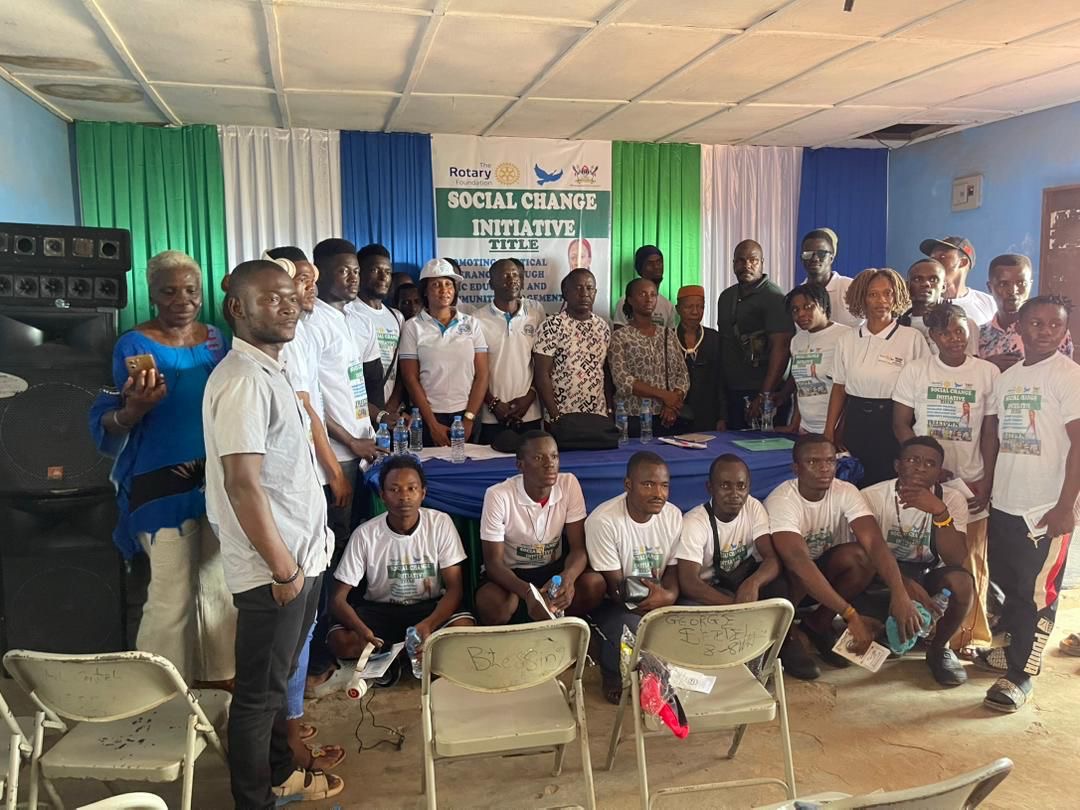
As part of her academic programme at Makerere University in Uganda, Namsa Thoronka has held a one-day civic engagement forum in the Kamayama community in Lumley, western Freetown.
The initiative, which she described as a “social change engagement,” was implemented in partnership with the Political Parties Regulation Commission (PPRC) and the National Commission for Democracy (NCD).
Young people, community leaders, and government officials attended the programme.
In her welcome address, Thoronka explained that the engagement was inspired by both her academic requirements and a personal commitment to community service and development.
She noted that Kamayama, with its politically diverse population and presence of supporters from major political parties, has experienced occasional tensions over the years, prompting the need for dialogue and sensitisation.
“This gathering is part of efforts to ensure tolerance for all shades of political opinion in this community,” she said.
Officials from state institutions also made presentations aimed at strengthening political tolerance, addressing extremism, and consolidating democratic values.
Senior Outreach Officer at the PPRC, Eugene Momoh, highlighted ongoing efforts by the Commission to promote political tolerance, including ensuring unhindered access for political parties.
He also underscored the role of young people in shaping governance and encouraged the youth of Kamayama to actively engage their leaders so their voices are heard and needs addressed.
Gender, Youth and Disability Manager, Isata Sowa, focused on creating a safer political environment for women. She urged participants to reject intimidation, discrimination, and violence, and to foster conditions that encourage women’s full participation in politics.
“Women should not be confined to the kitchen but should take up leadership roles in their communities and demonstrate their abilities,” she said.
Chief Pa Alimamy Kebbay Conteh called for unity, stressing that development depends on collective effort and peaceful coexistence.
Young participants acknowledged that they have often been at the centre of political tensions and expressed a renewed commitment to promoting peace and political tolerance.
The programme ended with a renewed call for unity, tolerance, and peaceful coexistence ahead of future elections, with the aim of strengthening social cohesion in Sierra Leone.