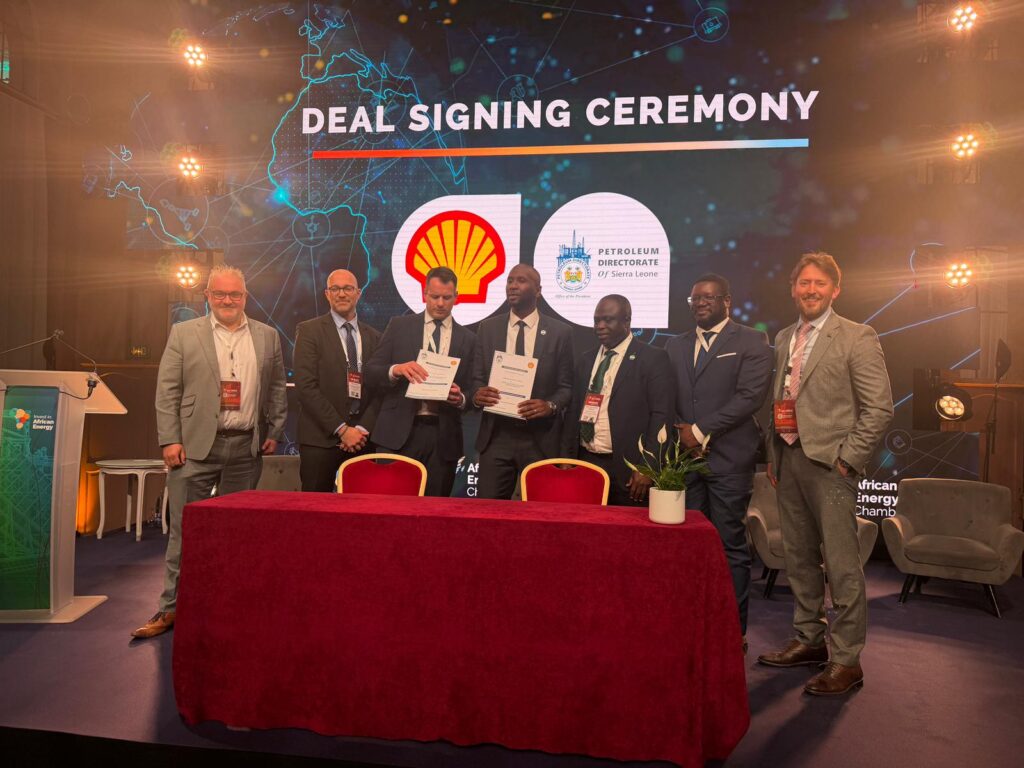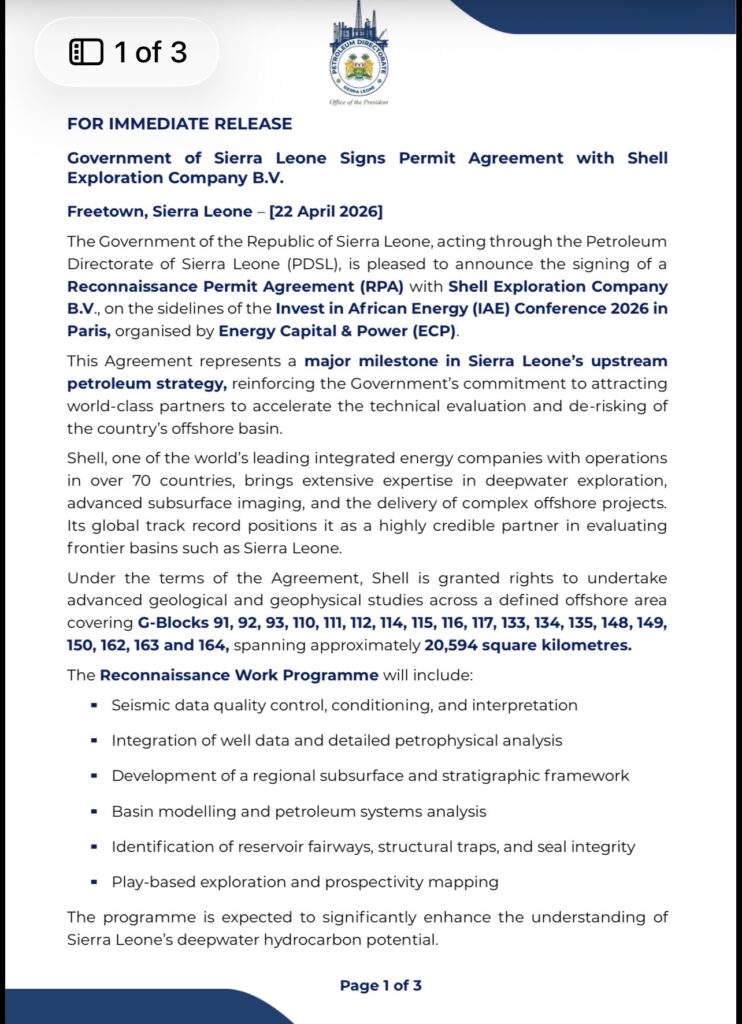

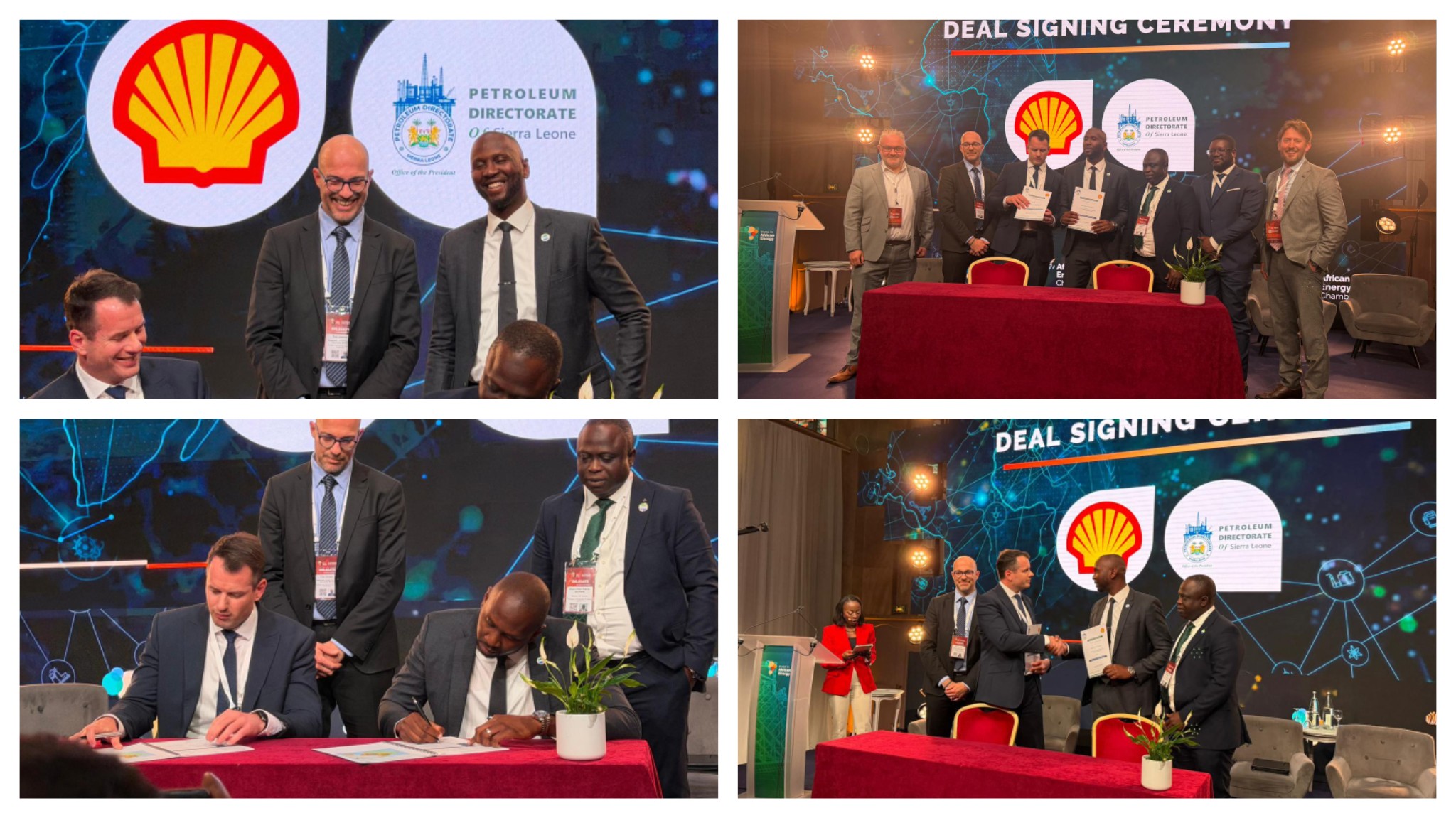
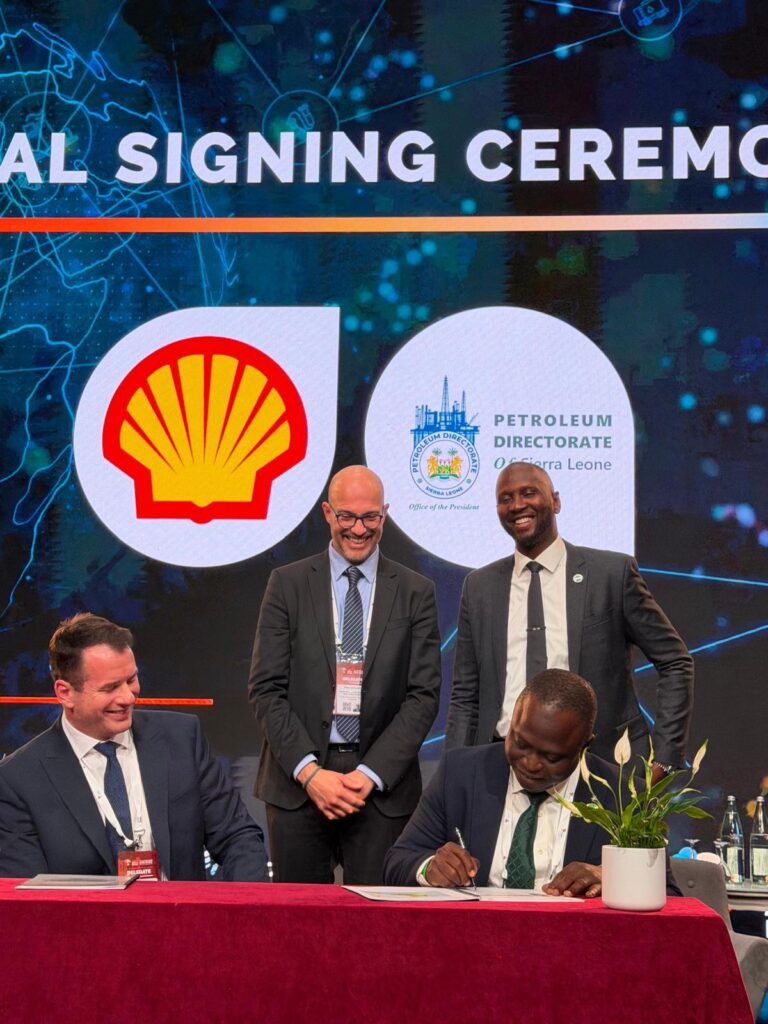
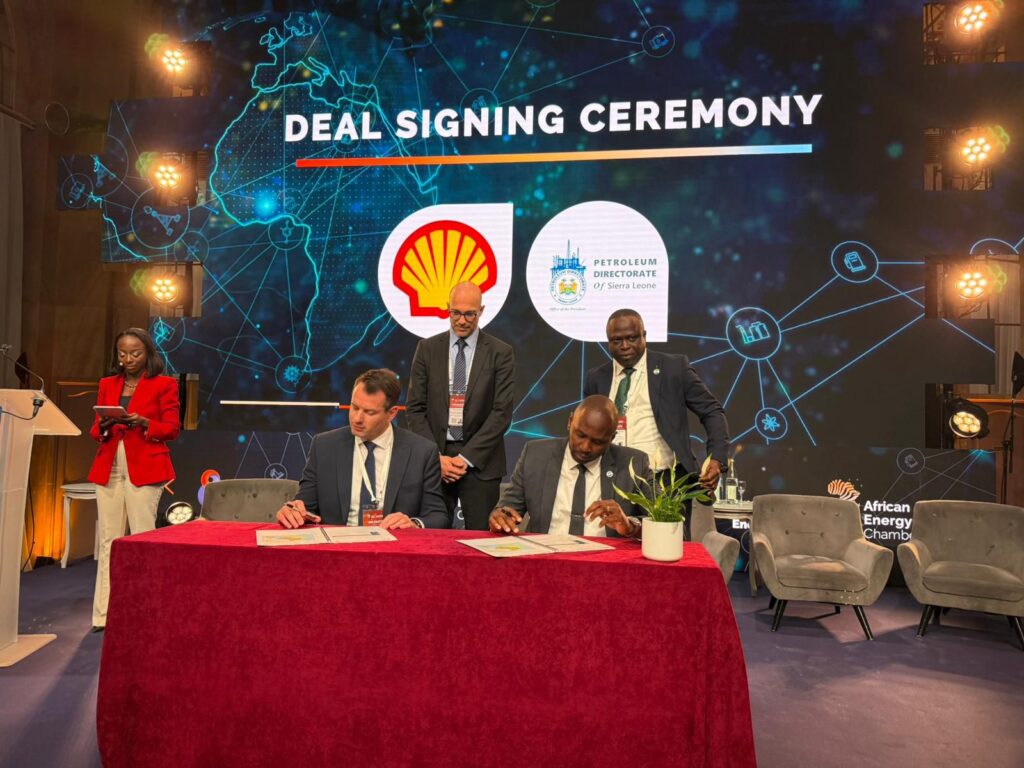
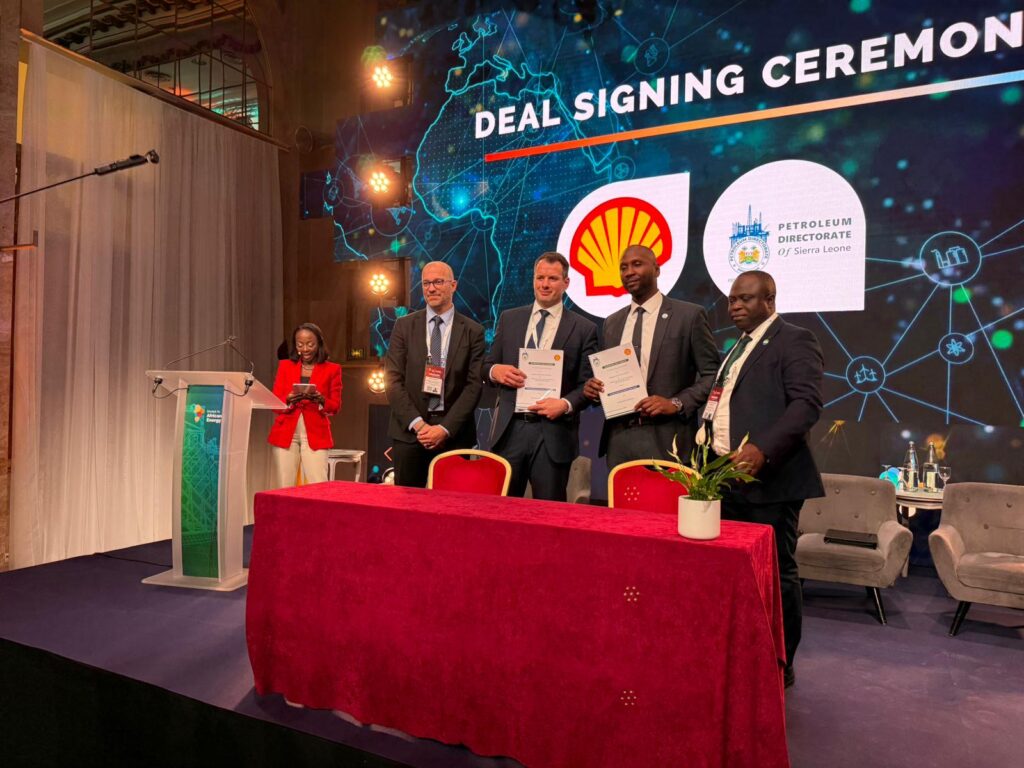
The Government of Sierra Leone has signed a Reconnaissance Permit Agreement (RPA) with Shell Exploration Company B.V., marking a significant step in the country’s efforts to advance its upstream petroleum sector.
The agreement, concluded through the Petroleum Directorate of Sierra Leone (PDSL), was signed on the sidelines of the Invest in African Energy Conference 2026 held in Paris and organised by Energy Capital & Power.
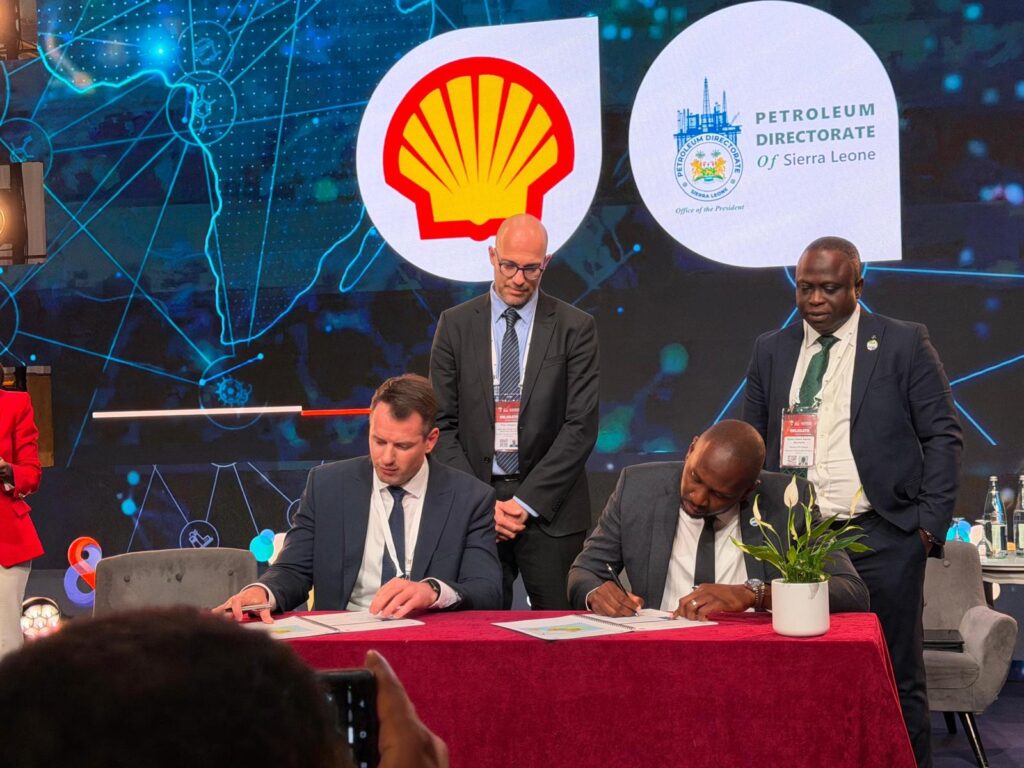
According to the government, the deal represents a major milestone in Sierra Leone’s petroleum strategy, aimed at attracting credible global partners to support the technical evaluation and de-risking of the country’s offshore basin.
Under the terms of the agreement, Shell has been granted rights to carry out advanced geological and geophysical studies across a defined offshore area covering multiple G-Blocks, spanning approximately 20,594 square kilometres. The reconnaissance work programme will include seismic data analysis, integration of well data, basin modelling, and petroleum systems evaluation, among other technical assessments.
Authorities say the initiative is expected to significantly improve understanding of Sierra Leone’s deepwater hydrocarbon potential and lay the groundwork for future licensing opportunities.
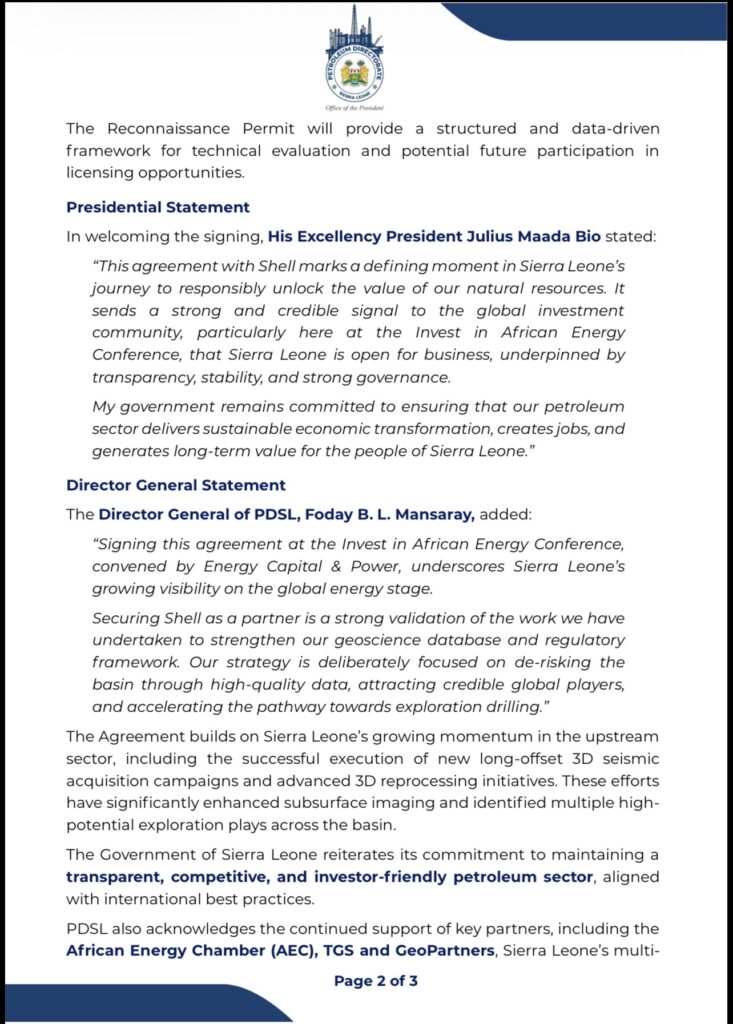
President Julius Maada Bio described the agreement as a “defining moment” in the country’s drive to responsibly harness its natural resources. He noted that the partnership sends a strong signal to international investors that Sierra Leone remains open to business, with a focus on transparency, stability, and good governance.
The Director General of PDSL, Foday B. L. Mansaray, said securing Shell as a partner reflects growing global confidence in Sierra Leone’s petroleum sector. He added that the government’s strategy is focused on strengthening geoscience data, attracting reputable investors, and accelerating progress toward exploration drilling.
The agreement builds on ongoing efforts by the government to enhance offshore exploration, including recent 3D seismic acquisition and reprocessing campaigns that have identified several high-potential exploration targets.
Officials reaffirmed their commitment to maintaining a transparent, competitive, and investor-friendly petroleum sector aligned with international best practices.
The Petroleum Directorate also acknowledged support from partners such as the African Energy Chamber, TGS, GeoPartners, and Africa Energy Partners in promoting investment and advancing technical work in the sector.