
By Usman Fambuleh
Journalists in Sierra Leone have been urged to use their media platforms to raise public awareness about antimicrobial resistance (AMR), promote the responsible use of antibiotics, and support efforts to save lives through accurate, evidence-based health reporting.
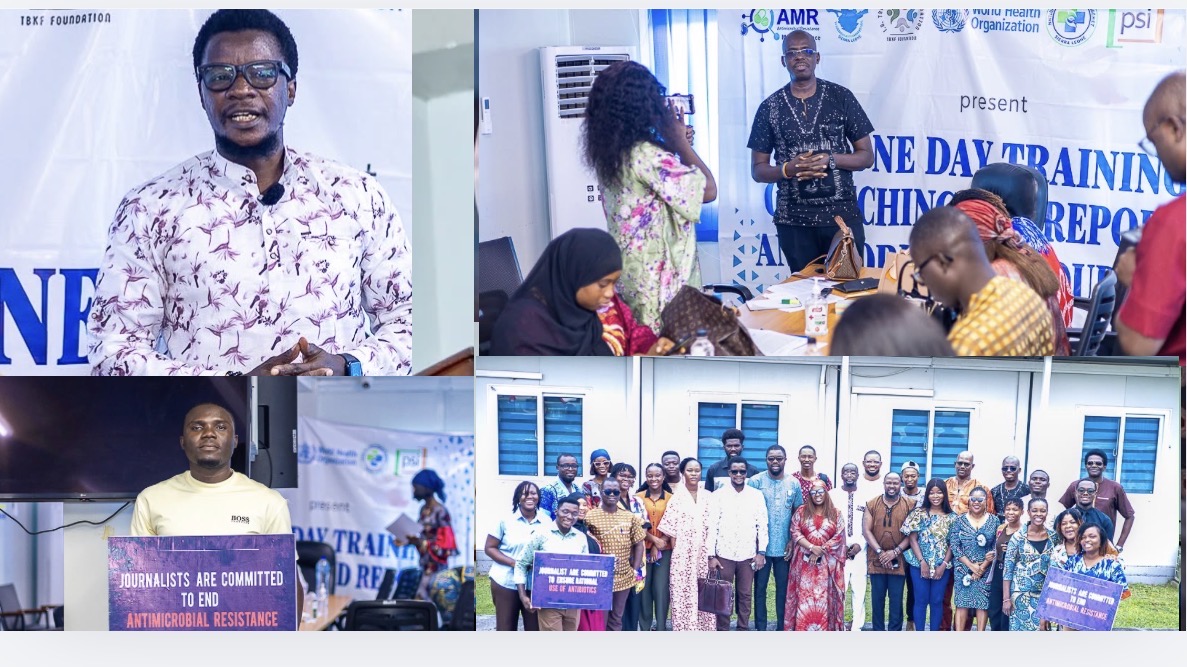
The call was made on Friday, 9 October 2026, during a one-day training on pitching and reporting AMR stories for journalists at the Emergency Operations Centre (EOC) on Wilkinson Road, Freetown. The training brought together 20 journalists from various media organisations to strengthen their understanding of AMR and equip them with practical skills to develop compelling stories that can influence public behaviour and support national efforts to address the growing public health threat.
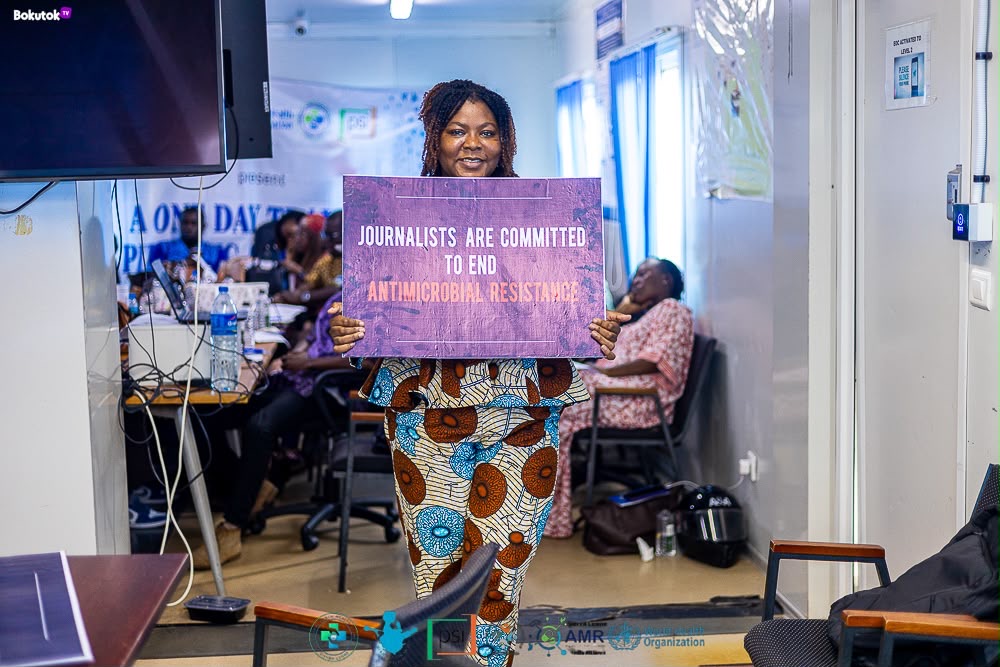
The initiative was convened by Davida Spaine-Solomon, Convener of the AMR Journalists Training Initiative, who highlighted the critical role of journalism in raising awareness, informing public decisions, and holding institutions accountable on public health issues.
Drawing on her experience after receiving third prize for the African region at the 2025 Global AMR Media Awards, Spaine-Solomon emphasised the need for credible, evidence-based reporting that explains the dangers of antimicrobial resistance and its effects on individuals, families, and communities.
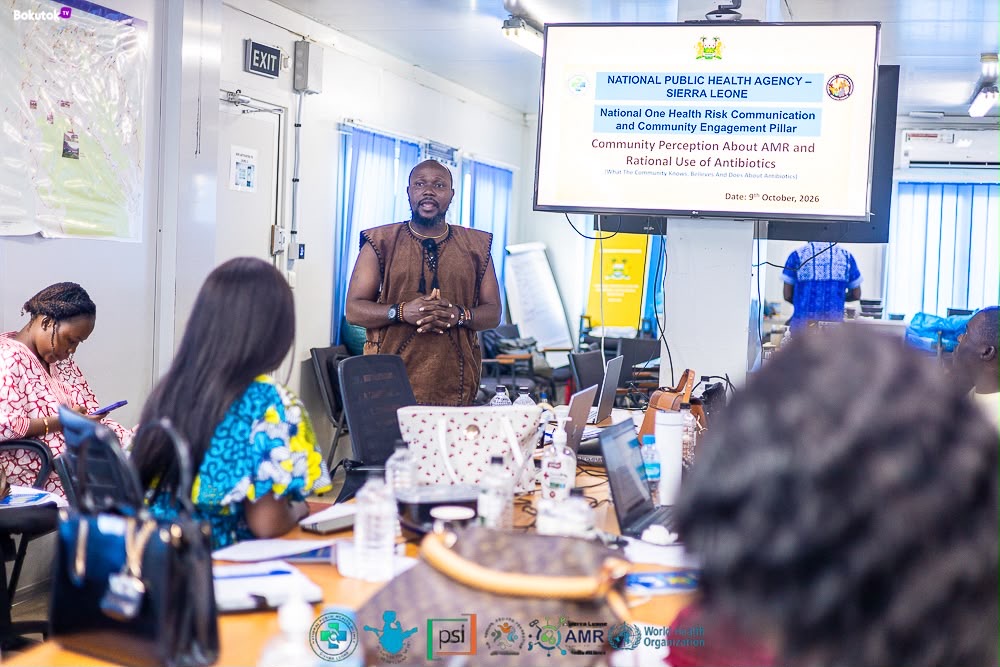
She said the training was designed to equip journalists with practical story ideas and the skills to ask critical questions, seek reliable evidence, and amplify the voices of people affected by AMR beyond the training session.
Antimicrobial resistance occurs when bacteria, viruses, fungi, and parasites change over time and no longer respond effectively to medicines used to treat the infections they cause. This can make infections more difficult to treat, prolong illnesses, increase treatment costs, and raise the risk of severe illness and death.
Speaking on AMR and the rational use of antibiotics, Dr Ibrahim Franklin Kamara warned against the misuse and inappropriate use of antibiotics, explaining that such practices can contribute to the development and spread of resistant bacteria.
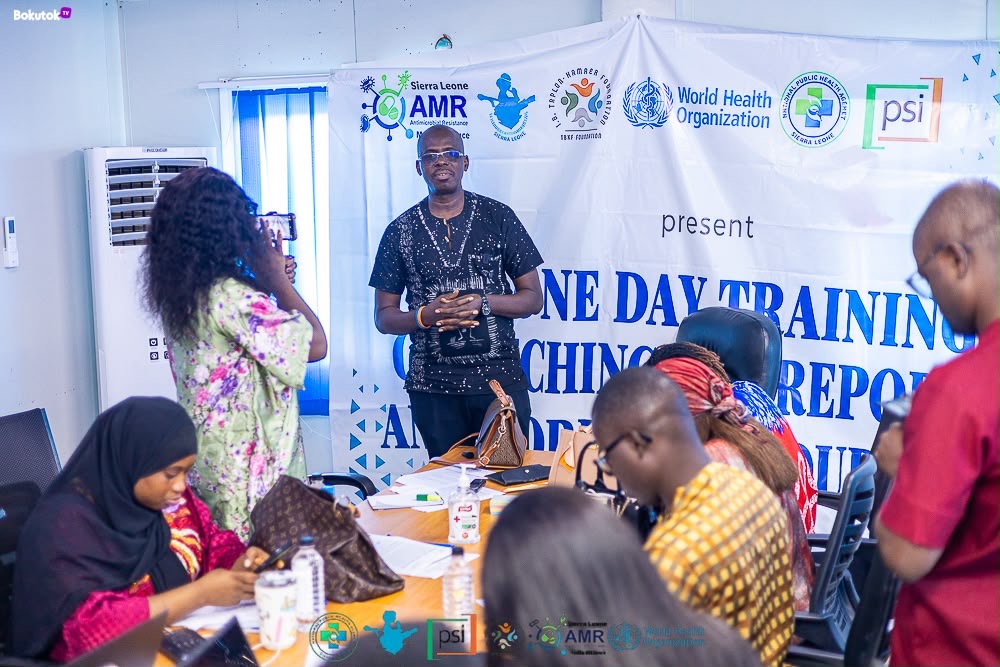
He stressed that antibiotics should only be used when medically necessary and in accordance with guidance from qualified health professionals. He also called on journalists to educate the public about the risks associated with inappropriate antibiotic use, challenge misconceptions, and encourage people to seek professional medical advice instead of misusing or unnecessarily demanding antibiotics.
Dr Kamara noted that accurate health reporting could help prevent avoidable harm and protect the effectiveness of existing medicines.
Pharmacist Kadijatu N. Kamara, who spoke on initiatives implemented in Sierra Leone to combat AMR, emphasised the importance of coordinated action involving health professionals, public institutions, communities, and the media.
She highlighted the need for sustained public education, responsible prescribing and dispensing practices, and greater awareness among medicine users. She described the training as timely, noting that journalists could help extend essential health messages beyond hospitals and health facilities to communities across the country.
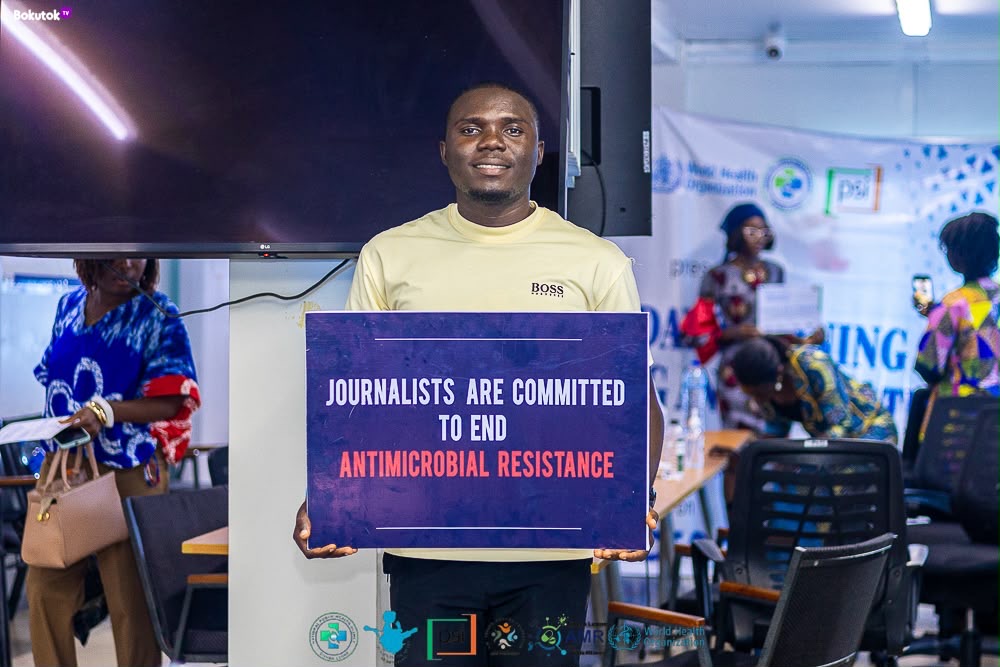
She encouraged media practitioners to use radio, television, newspapers, and digital platforms to explain existing interventions, promote responsible antibiotic use, and encourage public participation in efforts to combat antimicrobial resistance.
Edward Metzger, who addressed community perceptions of AMR and the rational use of antibiotics, urged journalists to understand how people obtain, perceive, and use antibiotics when developing stories aimed at changing public behaviour.
He encouraged reporters to investigate the reasons behind medicine misuse, examine misconceptions about antibiotics, and highlight the experiences of communities affected by infections that are becoming increasingly difficult to treat.
Metzger also stressed the importance of presenting scientific evidence in ways that ordinary citizens can understand, linking technical health information to everyday experiences and providing practical guidance on the responsible use of antibiotics.
The training also featured statements from representatives of the Sierra Leone Association of Journalists (SLAJ), the I.B. Taylor-Kamara Foundation, Population Services International (PSI), the World Health Organization (WHO), the Directorate of Policy and Planning at the Ministry of Health, and the National Public Health Agency (NPHA).
Their participation highlighted the importance of collaboration among media organisations, public health authorities, development partners, and civil society in addressing antimicrobial resistance.
The initiative receives technical support from the WHO, alongside partners including Women in the Media Sierra Leone, PSI, and the I.B. Taylor-Kamara Foundation.
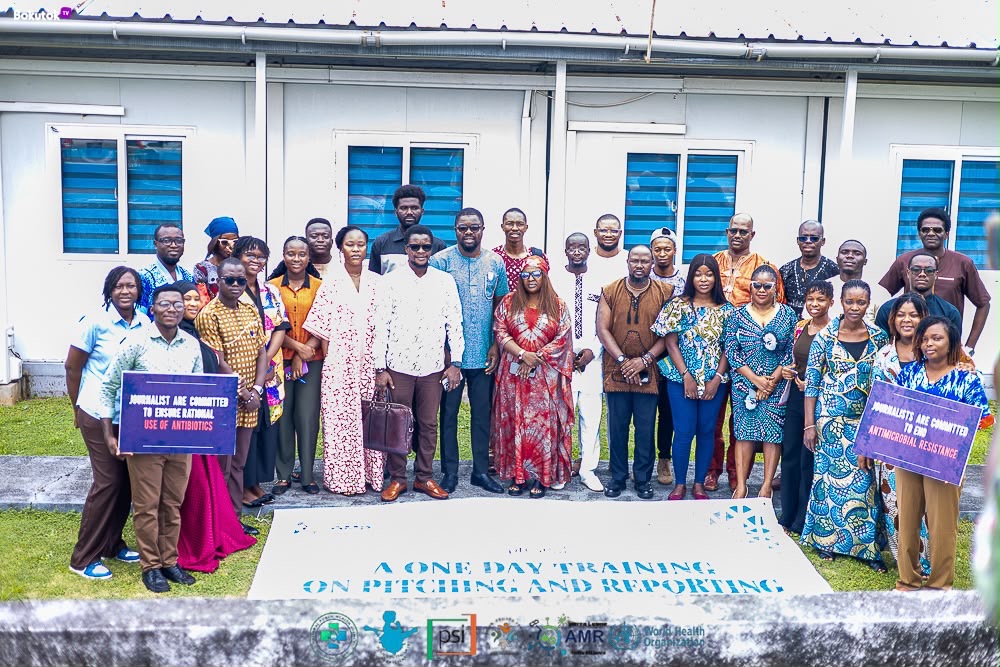
The programme concluded with participating journalists presenting proposed stories on AMR and the rational use of antibiotics, followed by the presentation of certificates of participation.
The training underscored the role of journalists in complementing the work of health professionals by challenging misinformation, investigating unsafe practices, holding relevant institutions accountable, and providing the public with reliable health information.
Through sustained and responsible reporting, the media can help communities make informed decisions, protect the effectiveness of life-saving medicines, and contribute to national efforts to combat antimicrobial resistance.