
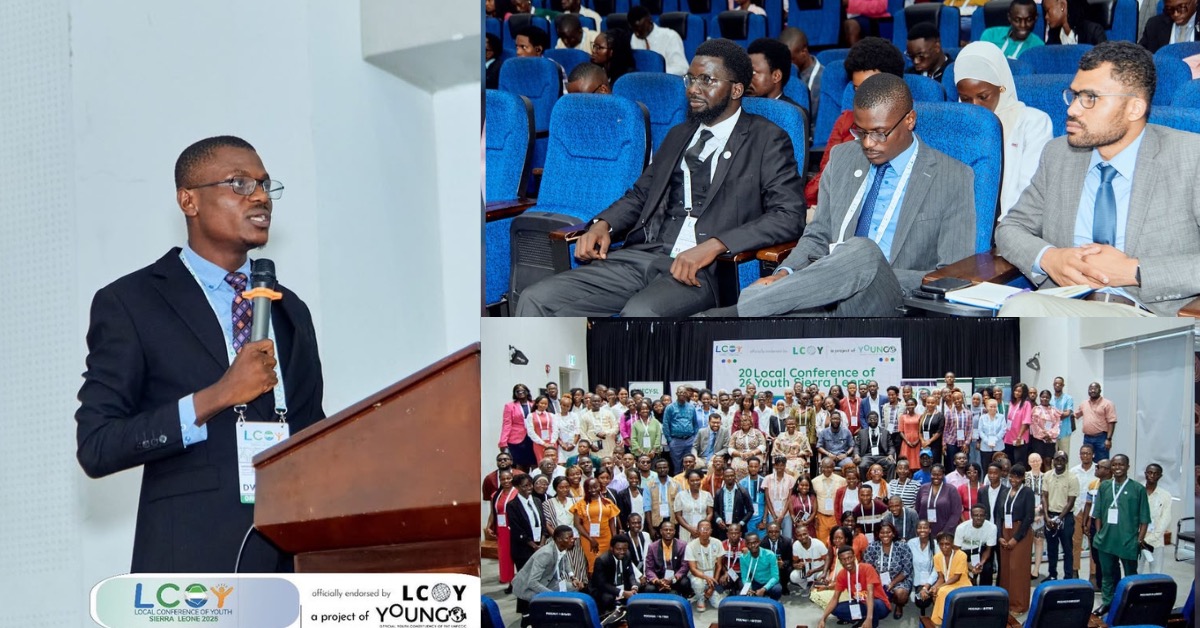
Convener of the 2026 Local Conference of Youth Sierra Leone (LCOY), Hassan Hindolo Senesie, has called for stronger youth leadership, inclusive participation and practical, community-driven solutions to address climate change, stressing that young people must move beyond advocacy to become active drivers of environmental transformation.
Senesie made the call during the two-day conference, held on October 7 and 8 at the Freetown City Council Hall. Organised by the Youth Climate Council under the theme “Inclusive Climate Action: Leaving No One Behind,” the event brought together climate advocates, government representatives, development partners and private sector stakeholders to discuss ways of strengthening youth participation in climate decision-making and ensuring that vulnerable communities are not excluded from climate policies and programmes.
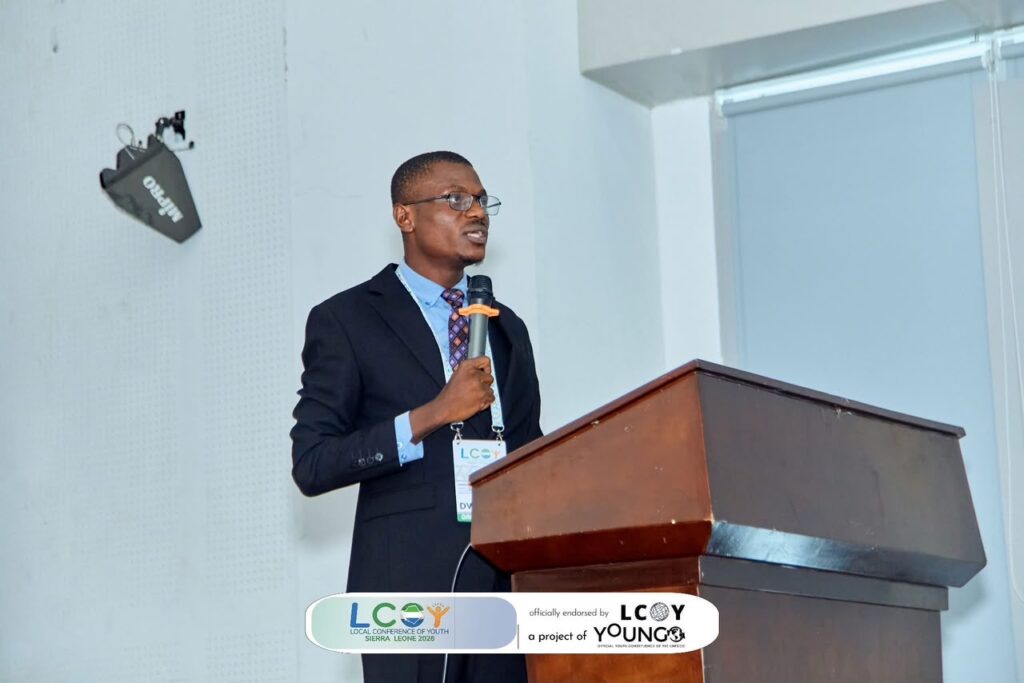
Discussions highlighted climate change as not only an environmental concern but also a development challenge with significant implications for livelihoods, public health, food security and the future of young people. Participants emphasised the need to translate climate awareness into practical interventions that respond to the needs and realities of local communities.
A central message of the conference was that effective climate action must include young people, persons with disabilities, rural communities and other marginalised groups. Participants stressed the importance of giving these groups meaningful opportunities to influence climate policies, contribute to decision-making and lead initiatives aimed at strengthening community resilience.
Delivering the keynote address, Freetown Mayor Yvonne Aki-Sawyerr warned that the effects of climate change were becoming increasingly visible across Sierra Leone. She pointed to rising temperatures, unpredictable rainfall and mounting environmental pressures, noting that both urban and rural communities were experiencing the consequences.
She urged young people to take ownership of the challenge by championing practical interventions that protect communities and the environment.
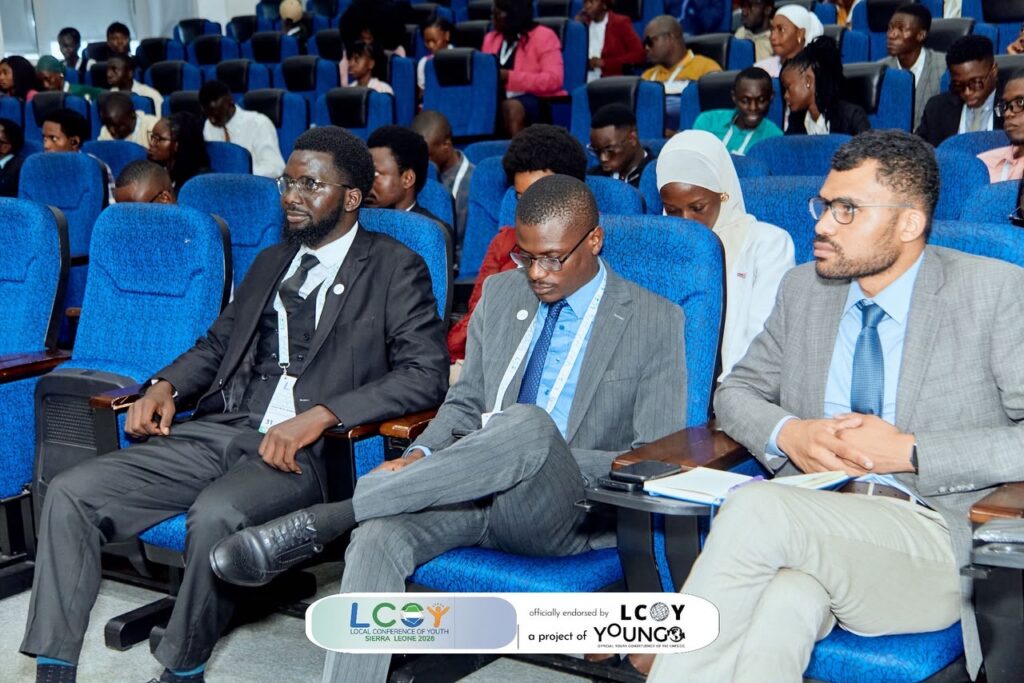
The Mayor also highlighted the risks extreme heat poses to vulnerable populations and the difficulties changing weather patterns create for farmers and communities whose livelihoods depend on natural resources. Her remarks underscored the need to equip young people with the knowledge and capacity to turn climate discussions into measurable results.
Disability inclusion also featured prominently in the discussions. Elaine Gondoe, Country Director of SightSavers, said persons with disabilities should not be regarded merely as recipients of assistance but recognised as active contributors and leaders in climate action.
She noted that disasters and climate emergencies often worsen existing barriers faced by persons with disabilities, making it essential for climate policies, early-warning systems and community response mechanisms to be accessible to all.
Representing the private sector, Bashir Koroma of Euro Metals highlighted the role businesses can play in strengthening community resilience through corporate social responsibility and investment in human development.
He outlined the company’s interventions in agriculture, education, infrastructure, support for vulnerable children and human capital development, emphasising the importance of private sector contributions to community development.
French representative Yosseh Theo also stressed the need to place inclusivity at the centre of environmental initiatives, particularly those affecting vulnerable and marginalised groups. He reaffirmed France’s support for Sierra Leone’s climate agenda and youth participation in international climate programmes.
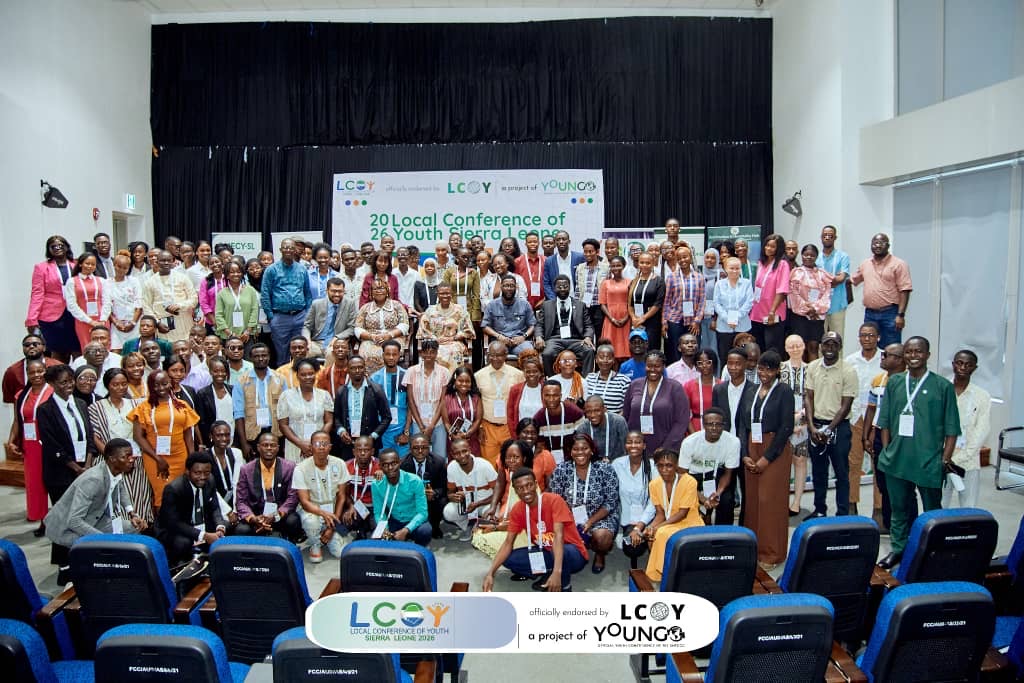
The conference ended with renewed calls for collaboration among young people, government institutions, development partners, civil society organisations and the private sector to ensure that climate commitments translate into tangible benefits for communities.
For Sierra Leone, the discussions at LCOY 2026 highlighted the importance of empowering young people not only to raise awareness about climate change but also to influence decisions, mobilise communities and lead sustainable solutions.
The challenge now is to translate the commitments and recommendations discussed in Freetown into practical action, with particular attention to ensuring that young people and communities most affected by climate change have the resources, representation and opportunities needed to shape the country’s climate response.