
There are moments when a country’s natural wealth becomes more than an economic asset. It becomes geopolitical power. Sierra Leone may now be entering such a moment. As the international order shifts, our minerals are acquiring a significance that extends far beyond mining. Lithium, rutile, bauxite, iron ore, gold and other strategic resources increasingly sit at the heart of the green transition, advanced manufacturing, digital technologies and national security. The renewed American interest in Sierra Leone should therefore be welcomed with clear eyes, not open arms alone.
The central question is no longer simply who wants our minerals. It is what Sierra Leone will become because the world wants them.
That question has acquired urgency. At the 5 August 2026 U.S. Senate confirmation hearing for Ambassador-designate Daniel Travis, Senate Foreign Relations Committee Chairman Jim Risch openly situated American engagement with Sierra Leone within Washington’s concern about China’s influence. Meanwhile, Sierra Leonean authorities have confirmed that a proposed Critical Minerals Agreement with the United States is under negotiation, although no agreement has yet been approved.
This does not establish that Sierra Leone’s mineral wealth has been “sold” to Washington. We should not substitute suspicion for evidence. But neither should citizens surrender their right to ask difficult questions merely because the language of diplomacy sounds reassuring.
A Rich Country That Has Remained Poor
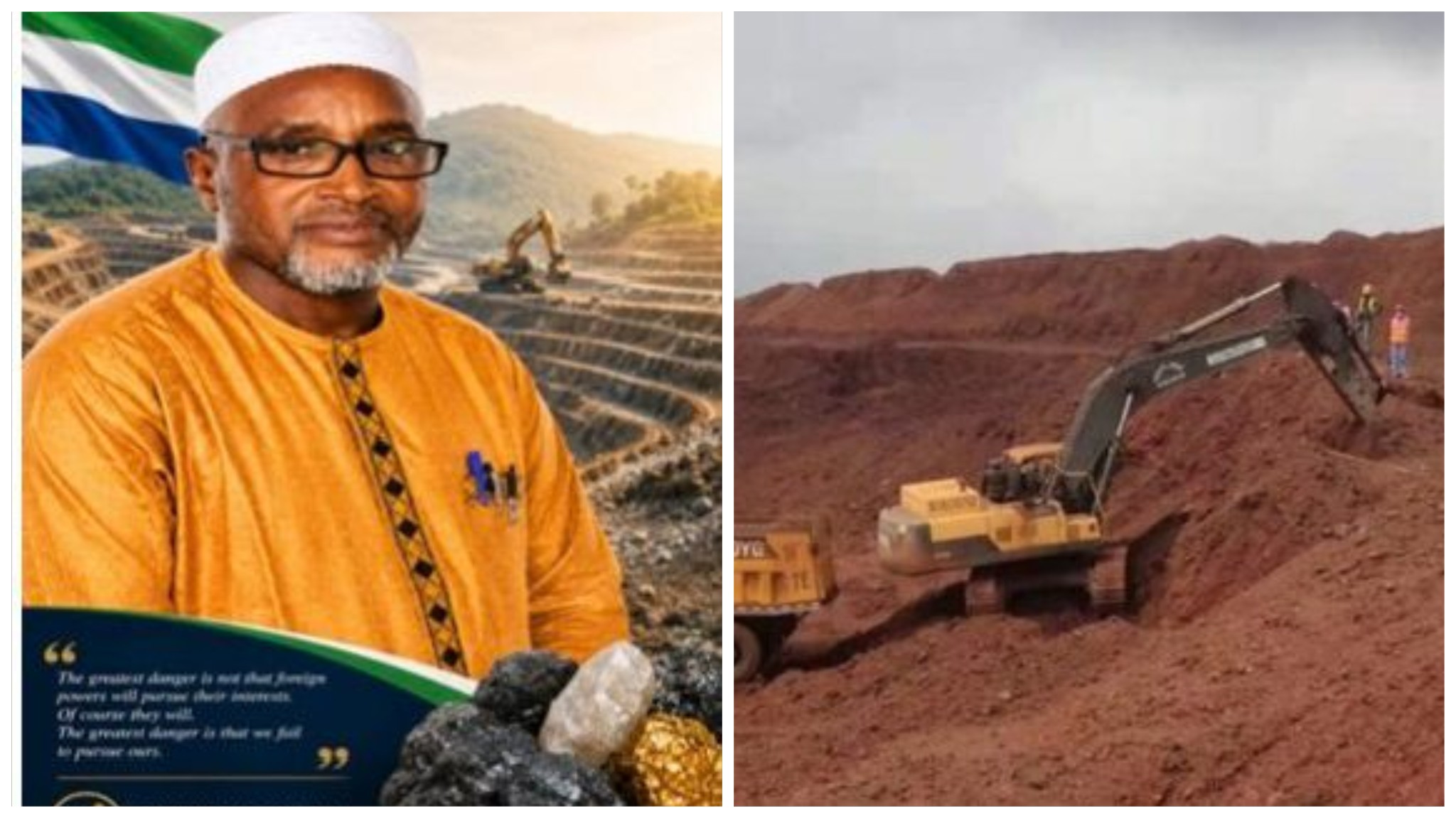
Sierra Leone’s history gives us reason to be vigilant. We have exported diamonds for generations. We have mined rutile, bauxite and iron ore. Yet the prosperity associated with those resources remains painfully difficult to locate in the daily life of the average citizen.
The numbers expose the paradox. Government planning documents report that mining has accounted for almost 70 percent of exports, while the IMF’s recent governance diagnostic places the sector at around 80 percent of goods exports but less than 3 percent of employment. The same IMF assessment observes that most minerals still leave Sierra Leone with little processing or local value addition.
That is the uncomfortable arithmetic of an extractive economy: enormous value can leave a country without creating comparable productive capacity inside it.
Sierra Leone has therefore suffered not from an absence of natural wealth, but from an enduring inability to convert underground wealth into broad-based development above ground. This is precisely why the present moment matters.
Sachs Is Right—but Africa’s Rise Is Not Automatic
Jeffrey Sachs has argued persuasively that the world is undergoing what he calls “geotectonic shifts” in economic and political power. At Wits University in 2025, he suggested that Africa could move towards the centre of the global order as Asia rises, populations shift and the technological and green revolutions reorder the world economy.
It is an exhilarating proposition. But there is nothing automatic about it. Africa will not become powerful simply because it possesses what powerful countries need. We have made that mistake before.
For centuries, African gold, diamonds, rubber, cocoa, oil and other raw materials enriched industries elsewhere. Today the commodities are changing—lithium, cobalt, graphite, rare earths and other critical minerals—but the underlying political-economy question remains disturbingly familiar: who captures the value?
If Africa merely supplies the raw materials for America’s, China’s and Europe’s green and technological revolutions, Sachs’s African century could become another century of sophisticated extraction. Sierra Leone must not repeat that history.
Minerals Are Bargaining Power, Not Diplomatic Gifts
The emerging multipolar order gives small resource-rich states something valuable: choice.
America wants secure supply chains. China has deep commercial interests across Africa. Europe is seeking critical minerals for its energy transition. India and Gulf economies are expanding their African engagements. This competition should strengthen Sierra Leone’s hand. But only if our leadership understands the hand it is holding.
If Washington wants privileged access to Sierra Leonean minerals, our response should not be hostility. It should be intelligent negotiation. What processing facilities will be built here? How many skilled Sierra Leonean jobs will result? What technology will be transferred? What infrastructure will remain after extraction? What proportion of the value chain will be domestic? What will mining communities receive? And what revenue will genuinely reach the Treasury? These are not anti-American questions. They are pro-Sierra Leonean questions.
Indeed, President Bio himself told the G20 in Johannesburg in 2025 that African resources have too often powered global industries while African countries captured the least value. His administration should now apply that principle rigorously at home.
Our Own Law Provides the Standard
There is also a constitutional and moral point that should not be forgotten. Under Sierra Leone’s Mines and Minerals Development Act, ownership and control of minerals are vested in the Republic and held in trust for the people. The law further requires mineral resources to be exploited sustainably and transparently in the public interest. Those words should follow every minister into every negotiating room.
No administration owns Sierra Leone’s minerals. No political party owns them. President Bio does not own them, just as his successor will not own them. Government is a temporary custodian of an exhaustible national inheritance.
That is why any far-reaching critical-minerals arrangement deserves serious parliamentary scrutiny, independent economic assessment and meaningful public disclosure. Commercial confidentiality must not become a curtain behind which the country’s long-term interests disappear.
The Government’s own National Strategy for Critical Minerals 2026–2031 promises “transformation”, “shared prosperity” and strategic partnerships. Its ambitions include billions of dollars in investment, mineral-processing facilities, tens of thousands of jobs and substantially higher public revenues by 2031. Those are commendable aspirations. They should now become the benchmark against which every major mineral agreement is judged.
America Can Be a Partner, But Sierra Leone Must Remain the Principal
Sierra Leone has much to gain from stronger relations with the United States: capital, technology, education, energy investment, infrastructure and access to markets. The same is true of China and other partners. But international relations is not philanthropy. American officials are paid to advance American interests. Chinese officials advance Chinese interests. There is nothing shocking about either fact. The real scandal would arise if Sierra Leonean leaders failed to defend Sierra Leonean interests with equal seriousness.
Our diplomacy must therefore mature beyond choosing patrons. The choice should not be America or China. It should be America, China, Europe, India and others competing to offer Sierra Leone the strongest development bargain, while Sierra Leone retains strategic autonomy.
We should stop asking, “Who will take our minerals?” and begin asking, “Who will help us transform them into national capability?”
President Bio, This Decision Will Outlive Your Presidency
This is the caution the present administration must hear.
A mineral agreement can survive a government. A concession negotiated today can shape public revenue, employment and industrial possibilities for decades. Once a mineral is removed from the ground and shipped abroad, no future president can put it back. So, let the measure of success be brutally simple: what remains in Sierra Leone after the minerals leave?
If the answer is reliable electricity, processing industries, skilled workers, stronger universities, domestic enterprises, infrastructure, public revenue and thriving mining communities, then foreign investment will have served development.
If the answer is merely exported ore, impressive announcements, generous concessions and another generation watching foreign companies carry away value, we will have failed again.
The shifting world order Sachs describes offers Sierra Leone a rare opening. But geography and geology do not guarantee prosperity. Leadership, institutions and bargaining power do. Let America come. Let China come. Let Europe and every serious investor come.
But let them encounter a Sierra Leone that finally understands the value of what lies beneath its soil—and, more importantly, the value of the people who live above it.
Our minerals should not merely enrich the world. They must help transform Sierra Leone.