

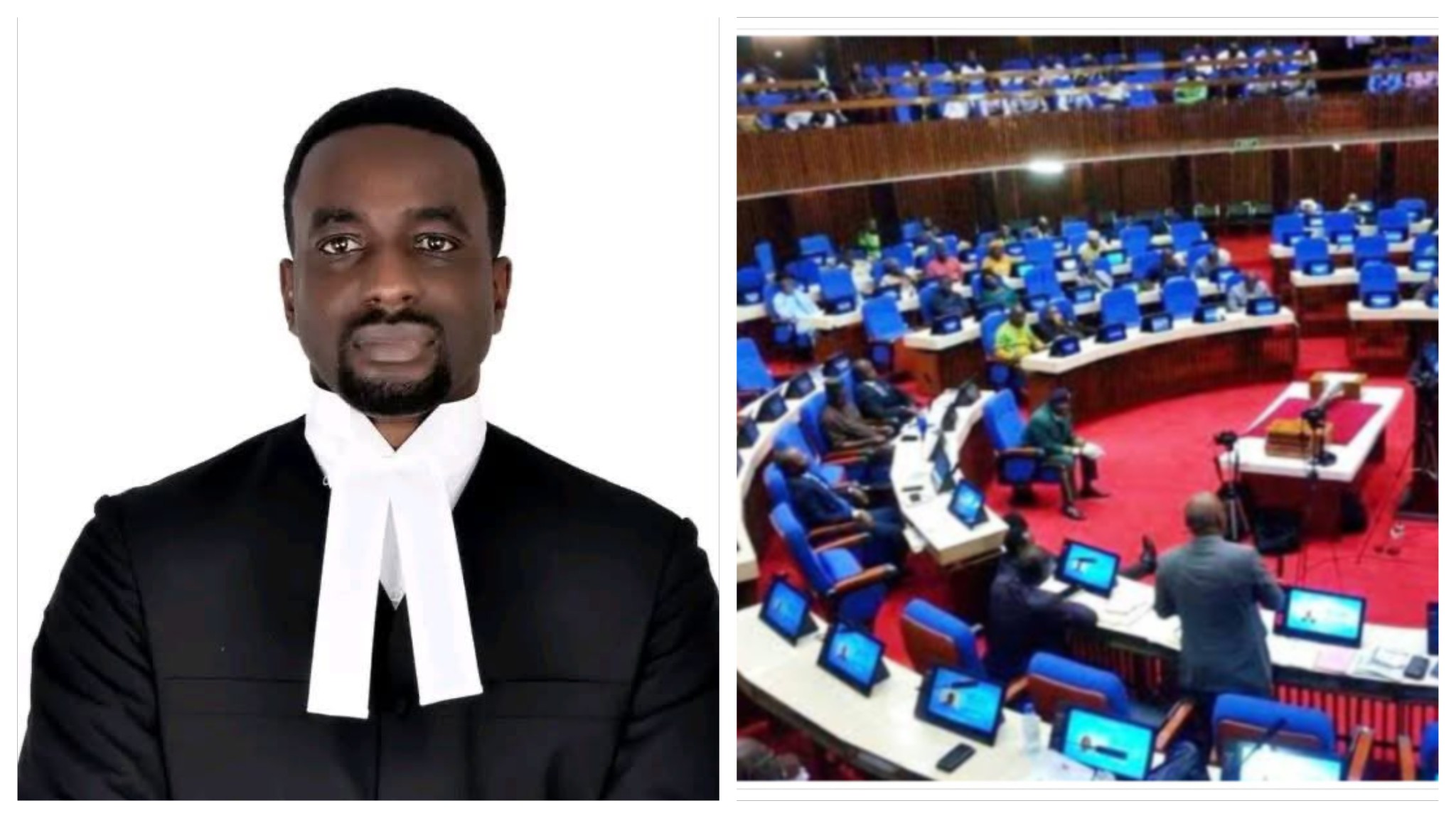
Legal practitioners at Nicol-Wilson & Co. (Malaika Chambers) have challenged the procedure used by Parliament to pass the 1991 Constitution (Amendment) Bill 2025, arguing that the required constitutional threshold was not met during the parliamentary sitting on August 10, 2026.
In a letter dated August 18, 2026, addressed to the Speaker of Parliament, Melron C. Nicol-Wilson said the amendment, which seeks to change the presidential electoral threshold under Section 42(2)(e) of the 1991 Constitution from 55 percent of valid votes cast to 50 percent plus one, was passed using an allegedly incorrect voting threshold.
The lawyers argued that Parliament should have relied on Section 108(2)(b) of the Constitution, which requires a constitutional amendment to be supported at the second and third readings by not less than two-thirds of all Members of Parliament.
They disputed the reported reliance on Section 91(1), which provides for decisions in Parliament to be determined by a majority of members present and voting, except where the Constitution provides otherwise.
According to Nicol-Wilson & Co., Section 91(1) is a general provision for ordinary parliamentary decisions, while Section 108(2)(b) is a specific provision governing constitutional amendments. They maintained that the special constitutional requirement must take precedence over the general voting rule.
The lawyers further argued that the wording of Section 108(2)(b) deliberately refers to “not less than two-thirds of the Members of Parliament” rather than two-thirds of members present and voting. They cited several judicial authorities, including decisions from the Supreme Court of Sierra Leone and constitutional courts in other jurisdictions, to support their interpretation.
They also raised concerns over the Speaker’s reliance on Section 94(2), which provides protection against court inquiries into parliamentary decisions, orders or directions relating to parliamentary rules of procedure and their interpretation.
Nicol-Wilson & Co. argued that Section 94(2) does not give Parliament or the Speaker immunity from constitutional scrutiny, particularly where the issue concerns the interpretation and application of the Constitution itself rather than Parliament’s internal procedural rules.
The lawyers maintained that parliamentary autonomy does not amount to parliamentary sovereignty and that both Parliament and the Speaker remain subject to the Constitution.
They further argued that if there was uncertainty over the interpretation of Sections 91(1) and 108(2)(b), the matter should have been referred to the Supreme Court before the vote was taken, rather than after the Bill was purportedly passed.
According to the lawyers, a subsequent Supreme Court interpretation cannot retrospectively supply votes that were not cast or cure a failure to meet the constitutionally required threshold.
They therefore contend that if the two-thirds threshold was not attained, the purported passage of the constitutional amendment is not merely a procedural irregularity but a fundamental constitutional defect that renders the amendment null, void and of no legal effect.
The law firm acknowledged the Speaker’s indication that the matter would be referred to the Supreme Court for interpretation, as well as calls by other interested parties for judicial review of the amendment.
However, Nicol-Wilson & Co. maintained that the Supreme Court should ultimately declare the purported amendment unconstitutional, arguing that both a literal and purposive interpretation of the Constitution support the position that Section 108(2)(b) cannot be overridden by Section 91(1).
The letter was issued in the public interest and signed by Melron C. Nicol-Wilson Esq. of Nicol-Wilson & Co. (Malaika Chambers).