

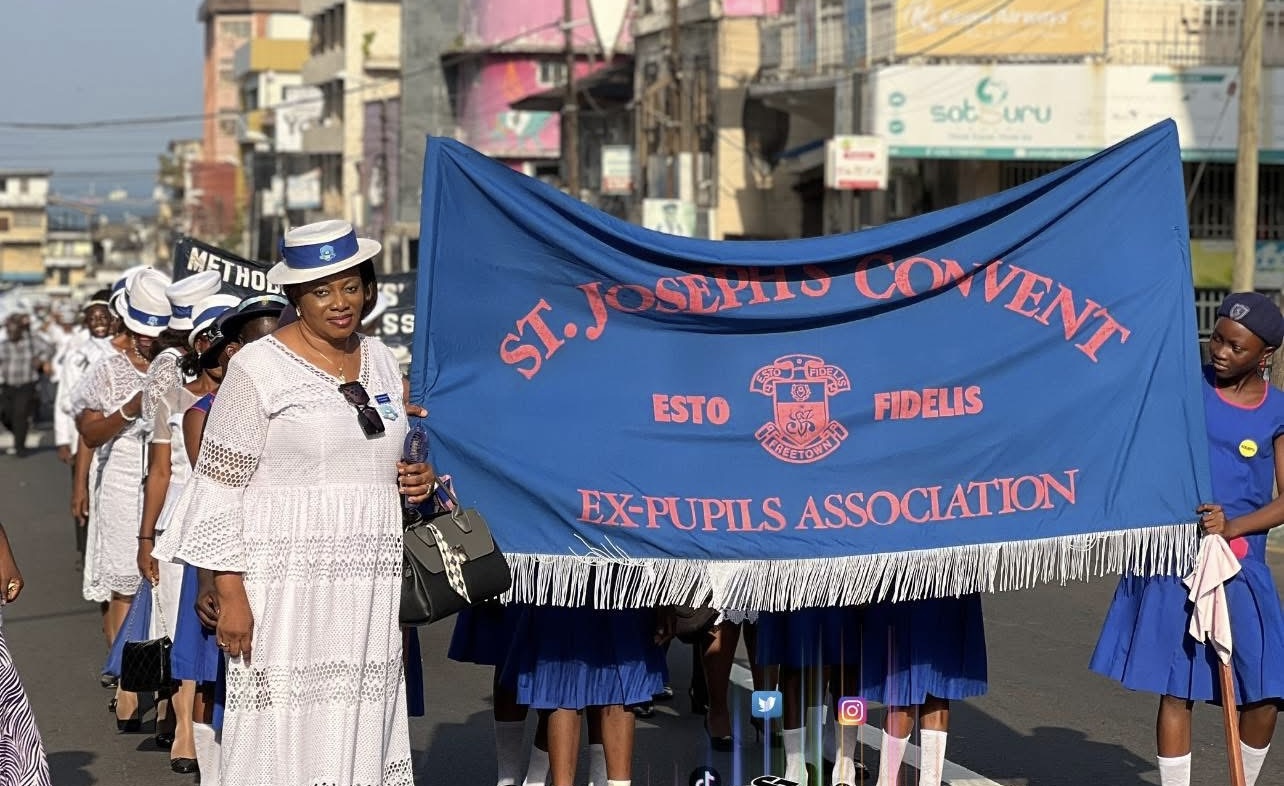
The Supreme Court of Sierra Leone has dismissed an application seeking an interim injunction against the St. Joseph Convent Secondary School Ex-Pupils Association, in a case arising from a dispute over a dress code introduced for the association’s anniversary thanksgiving service and march past.
The matter was heard by a panel of judges led by His Lordship the Chief Justice, Justice Komba Kamanda, sitting alongside Justices Alusine Sesay and Tonia Barnett.
The application was brought by Professor Isata Wurie and several other former pupils against Marian Kargbo, the President of the association, together with other members of the executive. The applicants, represented by counsel Osman Jalloh, asked the court to temporarily restrain the organisers from preventing their participation in the anniversary activities based on their attire, which they described as modest long dresses with minimal head covering.
They argued that the enforcement of the dress code amounted to unfair exclusion and infringed on their constitutional rights, including freedom of conscience and equal treatment. According to their submission, their intention was not to disrupt the celebrations but to ensure participation while maintaining what they consider appropriate dress standards.
Counsel for the 2nd to 6th defendants, M.C.L. Stronge, opposed the application.
After hearing arguments from both sides, the court adjourned to consider the matter before returning with its decision later in the day. In its ruling, the Supreme Court declined to grant the interim injunction, stating that, in the interest of justice, it could not issue such an order without hearing all affected parties. The court further noted that due to the urgency of the matter, the request for interim relief was refused.
The bench indicated that detailed reasons for its decision would be delivered at a later date, while the substantive case remains active before the court.
The dispute has sparked public discussion over the extent to which alumni associations can enforce participation rules for major events, particularly where such rules may be viewed as restrictive or discriminatory.
Although the request for immediate relief was unsuccessful, the broader constitutional questions raised by the applicants remain to be determined by the Supreme Court as proceedings continue.