
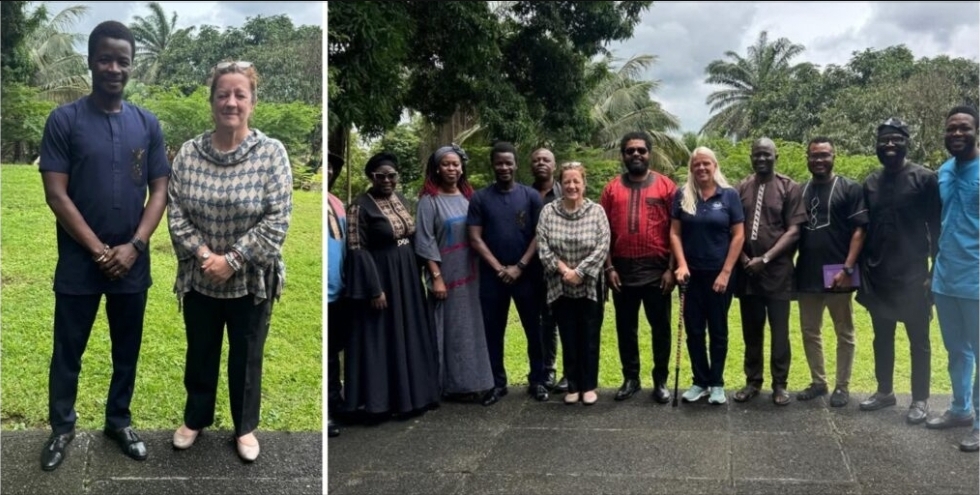
On Friday, 15th August 2025, the National Executive of the Sierra Leone Association of Journalists (SLAJ), led by President Alhaji Manika Kamara, paid a courtesy call on the new British High Commissioner to Sierra Leone, Josephine Gauld, at her Runnymede Residence in Freetown.
The meeting was aimed at introducing the new SLAJ Executive, strengthening longstanding ties with the British High Commission, and reflecting on the partnership that has helped advance press freedom and media development in Sierra Leone.
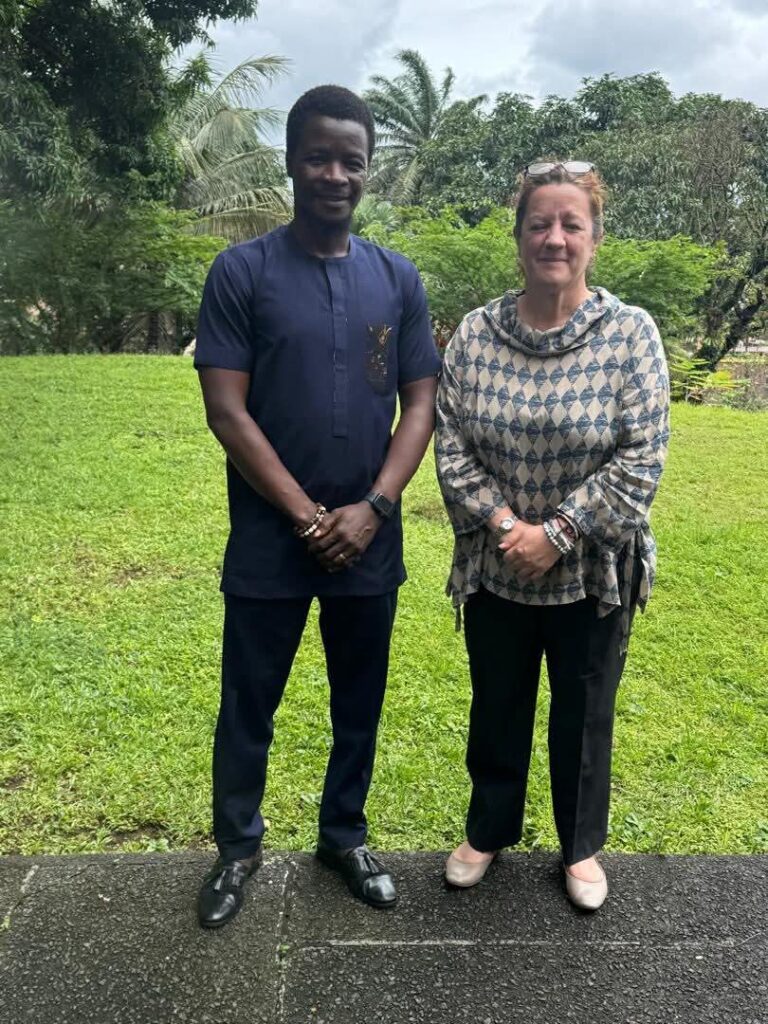
Speaking at the event, SLAJ Immediate Past President and Ex-Officio, Ahmed Sahid Nasralla, highlighted key milestones achieved during his tenure with support from the British High Commission and the UK Foreign, Commonwealth and Development Office (FCDO). He recalled:
- The historic repeal of the criminal and seditious libel law, a major step in expanding press freedom.
- Capacity-building for journalists nationwide, particularly on conflict-sensitive reporting during the June 2023 elections.
- High-level engagements with visiting UK officials around democracy, press freedom, politics, and the civic space.
Nasralla noted that since the repeal of the criminal libel law, Sierra Leone has recorded tremendous gains in media freedom and development, citing:
- The establishment of the National Fund for Public Interest Media (NFPIM) with support from IFPIM, BBC Media Action, and the Government of Sierra Leone.
- The launch of the SLAJ Gender Equality Policy for the Media, supported by the Embassy of Ireland.
- Strengthened institutional collaborations and professional standards.
However, he cautioned that press freedom is “never a finished business.” New challenges continue to emerge, including restrictive provisions in the Cyber Security and Crime Act and the recently passed Counter Terrorism Act. SLAJ has already engaged the Office of the Attorney General and Minister of Justice, and urged President Bio to return the Counter Terrorism Bill to Parliament for broader consultations.
Nasralla also stressed the importance of the proposed Chapter 12 in the revised 1991 Constitution, a standalone constitutional guarantee for press freedom and freedom of expression, which SLAJ is championing.
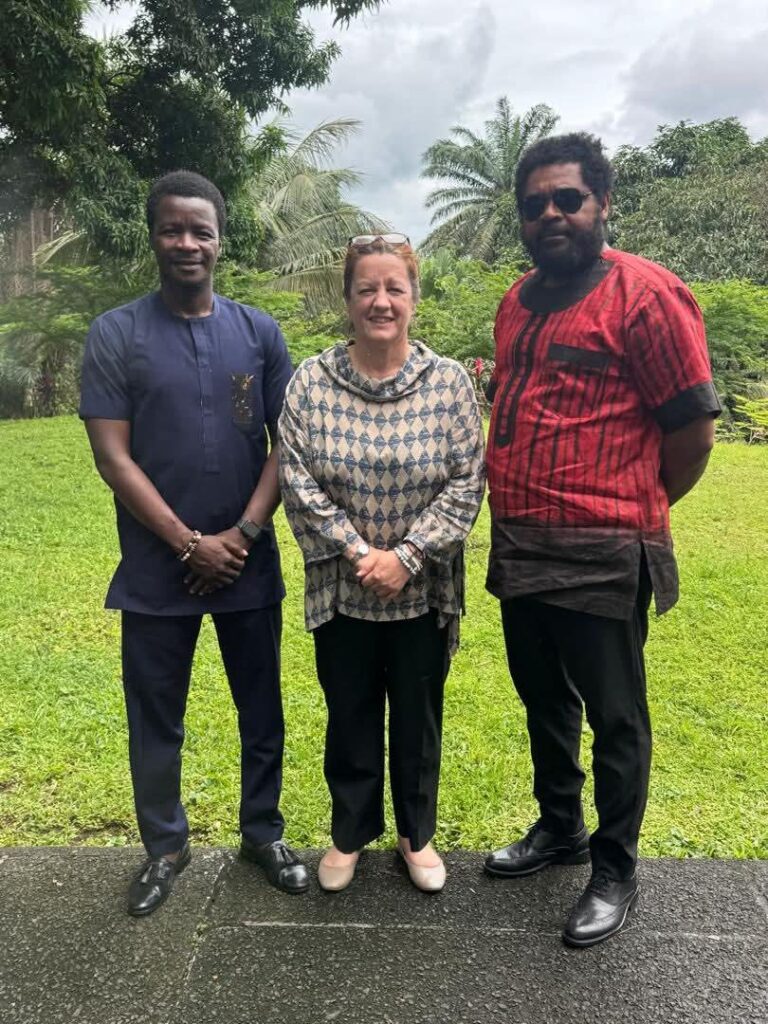
He further pointed out that current threats to press freedom often come in the form of self-censorship, as journalists fear reprisals from powerful public officials, including orchestrated smear campaigns on social media.
In his remarks, SLAJ President Alhaji Manika Kamara expressed gratitude to the British High Commission for its consistent support to SLAJ over the years. He emphasized that his administration is committed to sustaining and deepening partnerships with international allies to strengthen journalism in Sierra Leone.
President Kamara also outlined upcoming EU-funded trainings through BBC Media Action:
- Digital literacy training for 60 female journalists, and
- Public financial management training for 75 female journalists.
He appealed to the British High Commission for more exchange and training opportunities, in line with his ACTION Manifesto, which prioritizes capacity building, professionalism, and international collaboration.
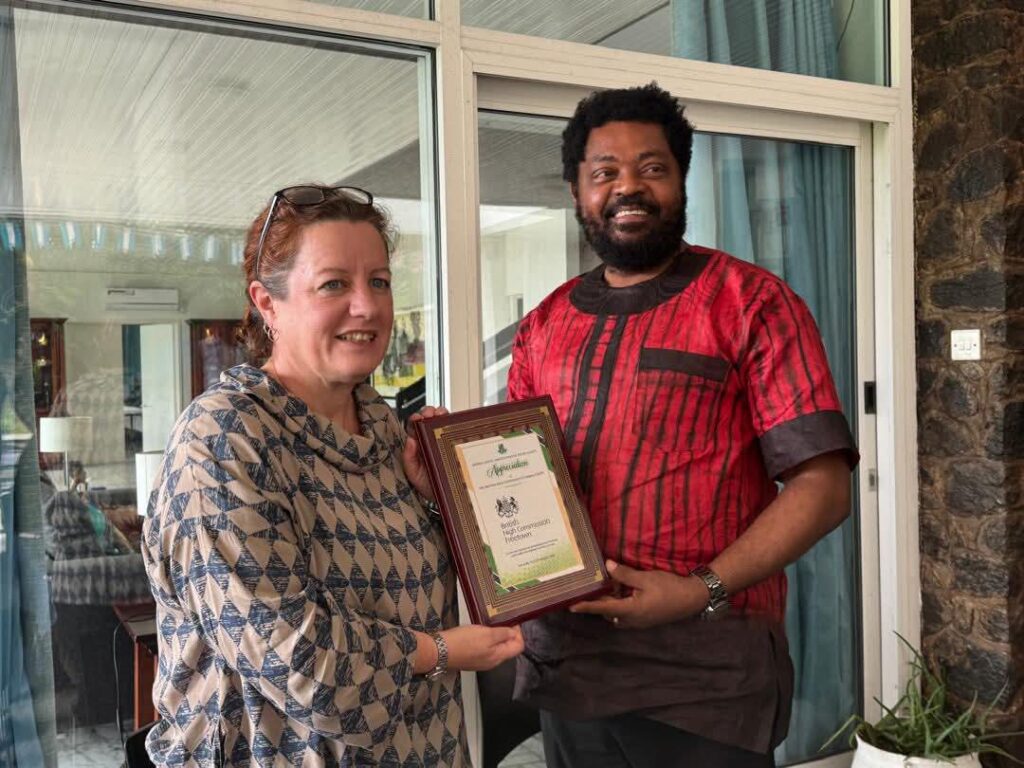
The visit climaxed with the presentation of an award of appreciation to the British High Commission for its partnership with SLAJ over the last six years. Nasrallaalso announced a similar award to Bournemouth University (BU), UK, for its invaluable collaboration with SLAJ, including:
- Joint research and publication on the impact of Covid-19 on journalism in Sierra Leone,
- Development of the SLAJ Gender Equality Policy, and
- Training on disaster reporting.
He requested the High Commission’s support to deliver the BU award to the University in the UK.
The courtesy call concluded with a working lunch and interactive discussions between the High Commission and selected critical media practitioners on the state of the media, press freedom, and future areas of cooperation.