
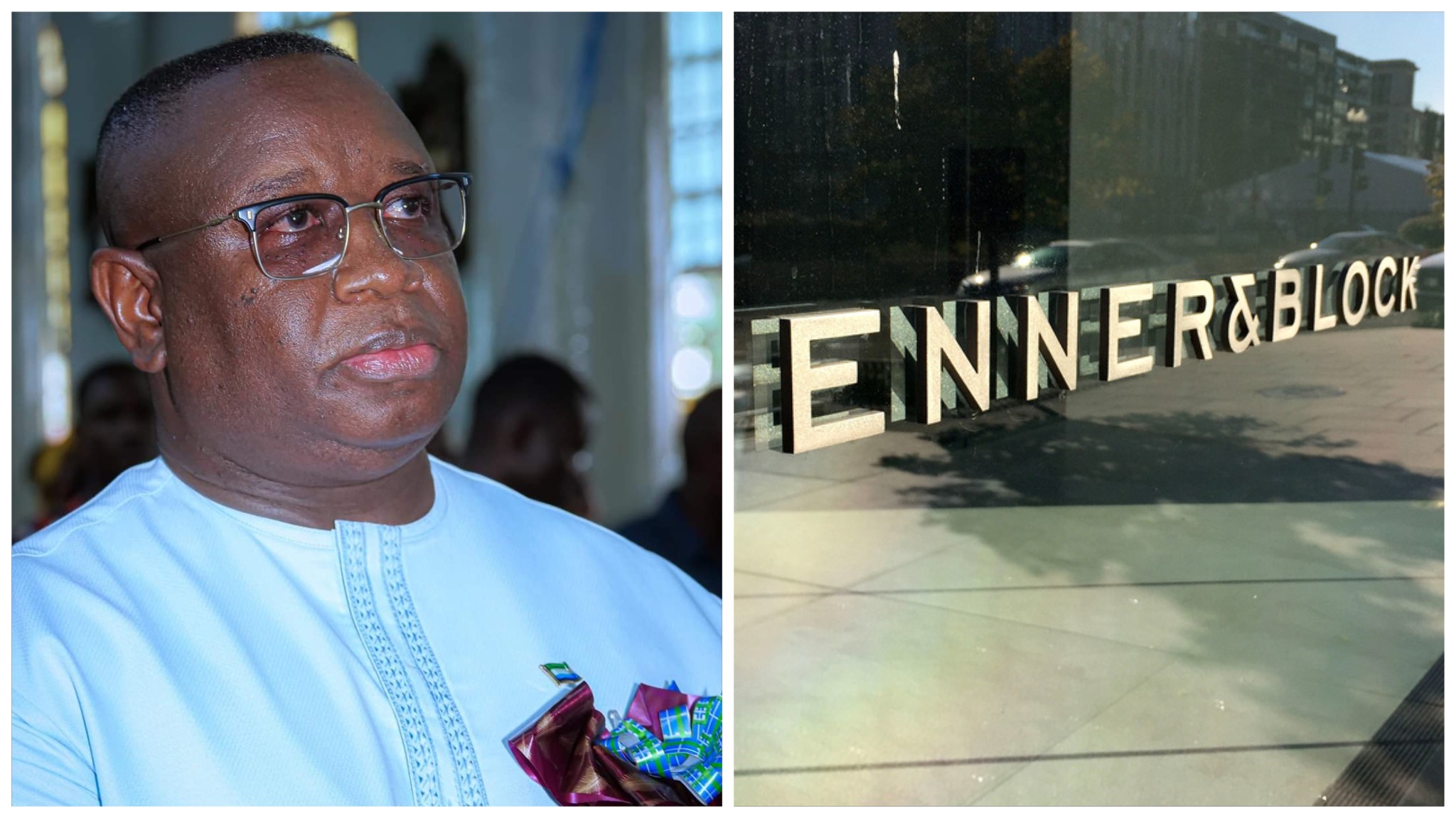
Sierra Leone’s government has reached a settlement with U.S. law firm Jenner & Block over a long-running legal fee dispute totaling more than $8 million, a development that has drawn concern from economic observers and civil society actors.
Critics argue that the payout raises questions about the government’s spending priorities at a time when the country faces significant financial challenges.
The settlement was disclosed on Thursday by U.S. Magistrate Judge G. Michael Harvey in Washington, D.C., though the terms of the agreement remain undisclosed. Jenner & Block had sued Sierra Leone in 2022, claiming $8.1 million in unpaid legal fees for representing the country in a major arbitration against iron-ore trader Gerald International Ltd.
Court filings show that Sierra Leone had already paid approximately $3.6 million between 2019 and late 2021. The law firm argued that its work in the arbitration “turned out to be far more complex and voluminous than either party initially contemplated.” The government, however, had disputed the claim, arguing that Jenner & Block had not demonstrated entitlement to the additional sum, and had raised sovereign immunity as a defense.
While settling the dispute avoids protracted litigation in the U.S., critics have expressed concern over the timing and magnitude of the payment. Sierra Leone is currently confronting economic pressures, including inflationary trends, rising public service costs, and budgetary constraints, prompting questions about whether the settlement represents a prudent use of public resources.
“This settlement, while perhaps legally expedient, diverts funds that could have been used for critical sectors such as health, education, and infrastructure,” said a local economist, speaking on condition of anonymity. “At a time when the country’s economy is fragile, every million counts for the welfare of citizens.”
The original arbitration involved Gerald International seeking over $1.8 billion in damages after Sierra Leone imposed an export ban on iron ore a dispute that was eventually resolved. Both the government and Jenner & Block have so far declined to provide further details on the settlement.
Civil society groups have called for greater transparency, arguing that Sierra Leoneans have a right to know how public resources are spent, particularly when such funds are tied to overseas legal matters.
As the settlement closes one chapter of Sierra Leone’s international legal engagements, it also opens broader discussions about financial accountability, governance, and the balancing act between defending the country’s interests and safeguarding scarce economic resources.