

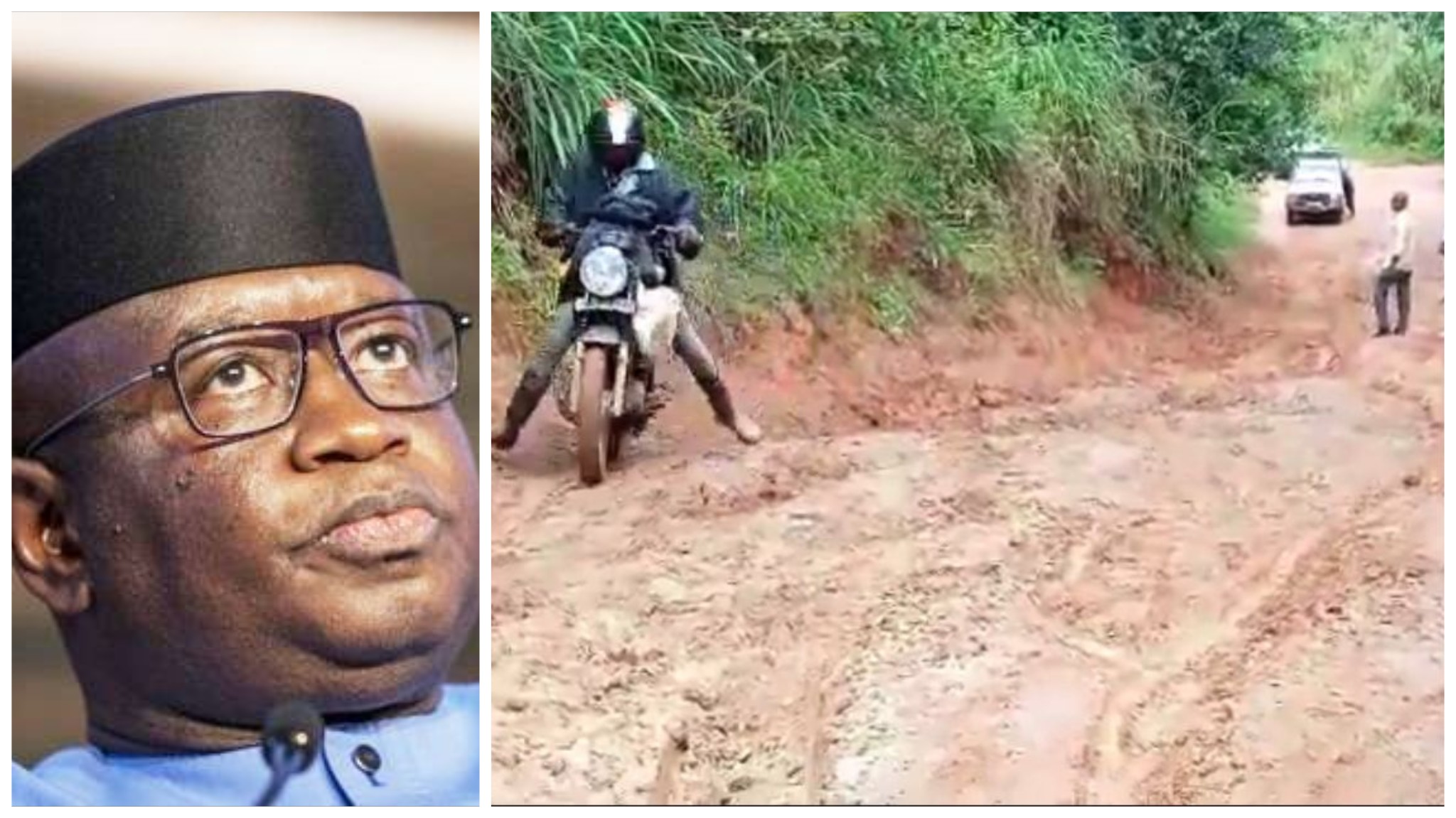
Frustration is mounting in Sierra Leone’s Kono District as residents express disappointment over the government’s failure to commence the long-promised Sefadu-Kamiendor-Guinea border road project.
Despite assurances dating back to 2022 and a revised start date of January 17, 2025, no construction work has begun, leaving communities to grapple with worsening road conditions and stalled economic prospects.
The road, which was expected to boost trade, mobility, and regional integration, has instead become a source of hardship for thousands of people who rely on it for daily transport and market access. Local business owners and farmers say their hopes for improved access to economic opportunities have been dashed, while transport costs and accident rates have soared.
Finda Satta Mbawa, speaking on behalf of her husband, the Paramount Chief of Bbane Kandor Chiefdom, recalled that the road project was a key campaign pledge by President Julius Maada Bio during both the 2018 and 2023 elections.
“They told us if we voted for them, they would build the road from Koidu to Kamiendor to link us with Guinea,” she said, urging the government to deliver on its promise.While acknowledging the ongoing construction of a university in the region, Mbawa noted that road infrastructure remains an urgent need.
“Those were the two main things they promised us, and we truly need both,” she added.In the absence of government intervention, community volunteers under the Kono District Council Public Workers Initiative have taken it upon themselves to address the most dangerous parts of the road.
Chairman Ibrahim Issa explained that since March 2025, the group has been repairing hazardous slopes and clearing waterways to prevent further accidents. He appealed for support in securing proper tools and resources to continue their efforts.Motorbike riders, who serve as the backbone of rural transport, have also been severely affected.
One rider, Mohamed Banya, noted that fares from Koidu to Mafindor can reach up to Le700,000 per person, especially for passengers carrying luggage. “This road has left at least four of our friends permanently disabled,” he lamented, underscoring the human cost of the delay.
The impact of the stalled project extends beyond transportation. Local economic activity has slowed, potential investors have pulled back, and job creation has stagnated. Residents argue that the road’s completion is essential not only for mobility but for unlocking broader development opportunities in chiefdoms like Fiama, Soa, Gbanakador, and Mafindor.
Civil society groups are now calling for increased transparency and accountability from the government. They are also pushing for greater community involvement in infrastructure planning, warning that broken promises risk deepening public mistrust.
Despite the challenges, many in Kono remain hopeful that the long-awaited road will eventually be built. “We haven’t given up,” said one local trader. “But we are watching closely—and we will hold them to their word.”