

The Directorate of Science, Technology and Innovation (DSTI) and the Sierra Leone Roads Authority (SLRA) have signed a Memorandum of Understanding (MoU) to implement a Road Asset Management System (RAMS) with an integrated mobile field application.
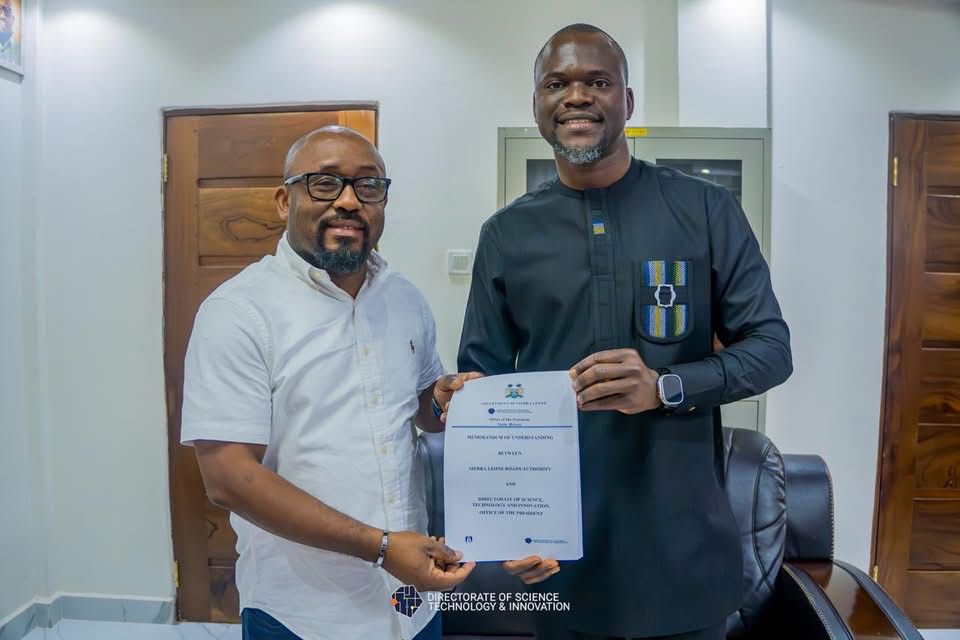
The agreement marks a major step toward improving the documentation, monitoring, and maintenance of road infrastructure across Sierra Leone. Through the system, roads, bridges, culverts, and related infrastructure will be managed on a centralized digital platform, enabling more efficient planning and maintenance.

A key feature of RAMS is its mobile field component, which allows engineers to collect data directly on site. Using GPS, photographic evidence, and standardized assessment tools, field teams can record the precise location and condition of each asset. This approach ensures that SLRA has accurate, real-time information to support infrastructure management.
The system is designed to shift the Authority from reactive to predictive maintenance. By tracking asset conditions over time, engineers can detect early signs of deterioration and plan interventions before serious damage occurs. This is expected to enhance road safety, reduce emergency repair costs, and optimize public resource use.

For SLRA, RAMS provides a centralized tool to manage its growing inventory of roads and related infrastructure. All asset data, inspection records, and condition reports will be stored in one system, improving coordination, decision-making, and long-term infrastructure planning.
DSTI’s involvement reflects its mandate to provide digital solutions that strengthen public sector institutions. The collaboration demonstrates how technology can be leveraged to support sustainable road maintenance, safer transportation, and informed investment decisions.

The Road Asset Management System is expected to enhance Sierra Leone’s transport network, improve safety for road users, and provide a foundation for long-term infrastructure development.