
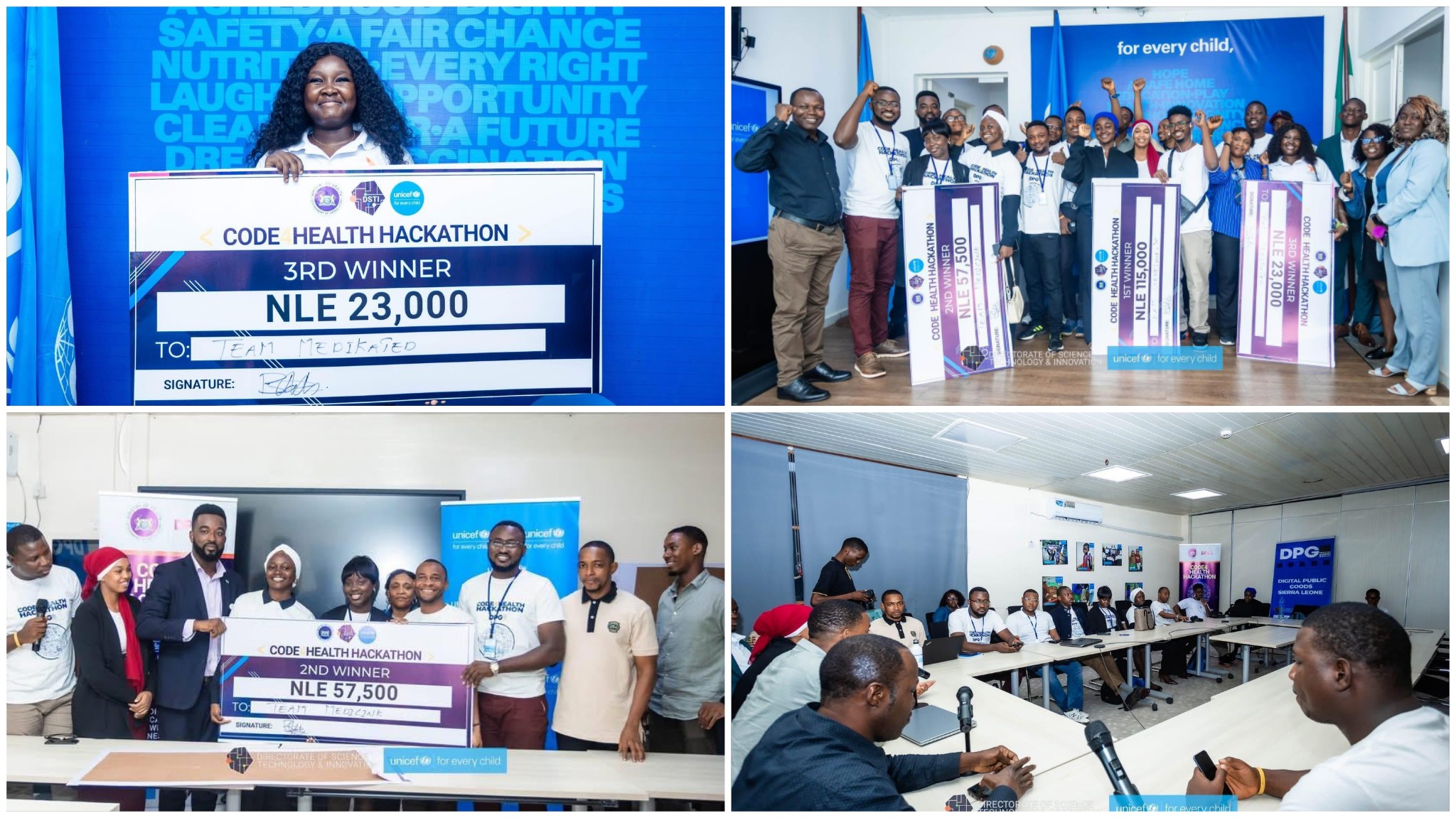
The Directorate of Science, Technology and Innovation – DSTI , in partnership with UNICEF Sierra Leone and the Ministry of Health has successfully concluded the Code4Health Hackathon. This intensive national challenge transformed bold digital health ideas into tangible solutions.
The finale and awards ceremony, held in Freetown on the 11th September 2025, brought together developers, health professionals, and innovators to present technologies designed to strengthen maternal and child health services across Sierra Leone.
The Code4Health journey began in January 2025 with an open call that drew 22 applications from young innovators nationwide. From this pool, five finalist teams were selected and guided through a rigorous process of training and product development.
In March, these finalists received targeted instruction on essential digital health requirements, including FHIR standards, Digital Adaptation Kit (DAK) compliance, and integration with PreSTrack, DSTI’s national maternal health tracking platform.
Over the following three months, they built their minimum viable products (MVP) capable of addressing real-world health challenges. After an initial pitch in July, the teams were given an additional month to refine their solutions and meet compliance benchmarks, ensuring that their innovations could stand up to both technical and health-sector standards.
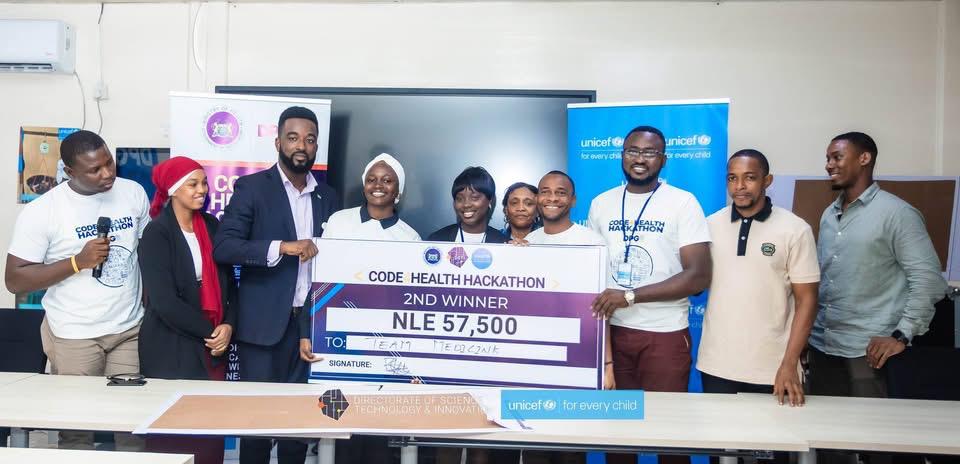
The grand finale showcased the tools built by Team Medilink, Team Geneline -X, Team Peer Pay, Team Next Wave Innovators, and Team Medikated, each demonstrating working prototypes of their solutions. Their innovations ranged from digital antenatal-care tools to integrated emergency-response systems and pharmacy access platforms.
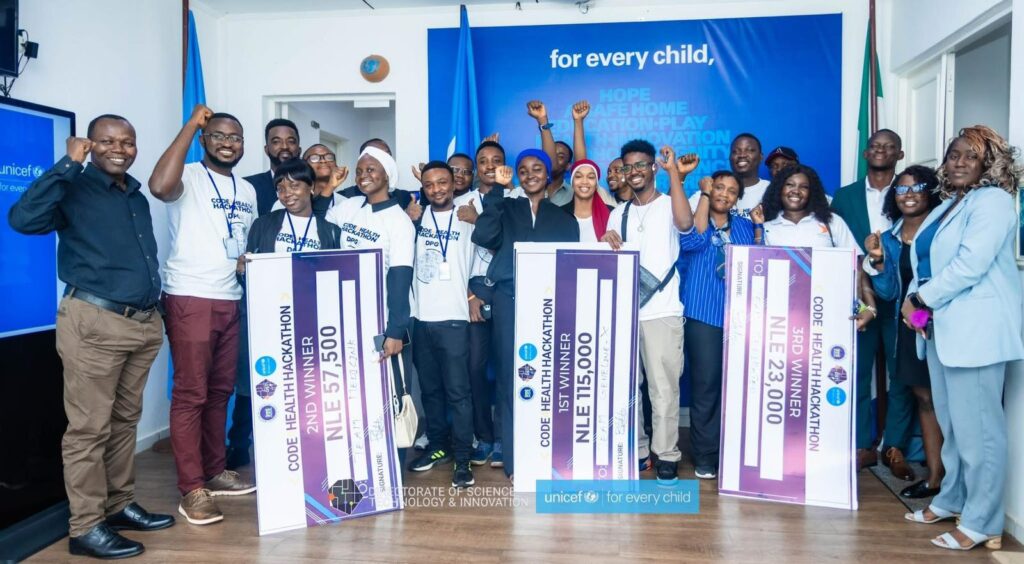
Team Geneline -X emerged as the first-place winner, followed by Team Medilink and Team Medikated came third.
Instead of receiving full cash prizes immediately, the winning teams were given structured work plans to guide further development, ensuring their products will continue to mature, meet FHIR and DAK standards, and integrate fully with PreSTrack before broader adoption.
Tigidankay Bah, Project Manager at DSTI, said, “This hackathon shows what’s possible when technology meets real health needs. We have moved beyond ideas to working prototypes that can integrate with national health systems.”
Bani Forster, UNICEF Project Officer, expressed appreciation for the dedication shown by the teams and reaffirmed UNICEF’s commitment to working with DSTI to provide ongoing mentorship and technical support.
Finalists spoke of the challenges they faced, the lessons they gained, and a collective sense that the experience had strengthened their skills and inspired them to keep building practical solutions for Sierra Leone’s health sector.

Each finalist brought a distinct innovation addressing critical gaps in maternal and child healthcare:
- Team MediLink developed the Healthy Mother App, a free digital tool that provides weekly health tips, emergency support, and reporting features to help pregnant women stay safe throughout their pregnancies.
- Team Geneline-X created a powerful, all-in-one platform that connects patients, doctors, and administrators for seamless care coordination and improved maternal health outcomes.
- Team Peer Pay designed a centralized, connected health system with a Digital Health ID, enabling real-time referrals, automated patient tracking, and one-tap ambulance dispatch to respond quickly to emergencies.
- Team Next Wave Innovators built Mama Care, a user-friendly platform that reduces maternal deaths through real-time monitoring, verified health provider records, and emergency call support.
- Team Medikated introduced an innovative solution for remote access to licensed pharmacies, offering online consultations, e-prescriptions, and medication adherence tools to improve access to essential medicines.
By mentoring these innovators and embedding global standards into their prototypes, DSTI and UNICEF have strengthened Sierra Leone’s digital health ecosystem and demonstrated the power of local talent to solve pressing health challenges.
The Code4Health Hackathon has shown that Sierra Leone’s young innovators are capable of developing impactful, standards-based digital tools that respond directly to the needs of mothers and children.
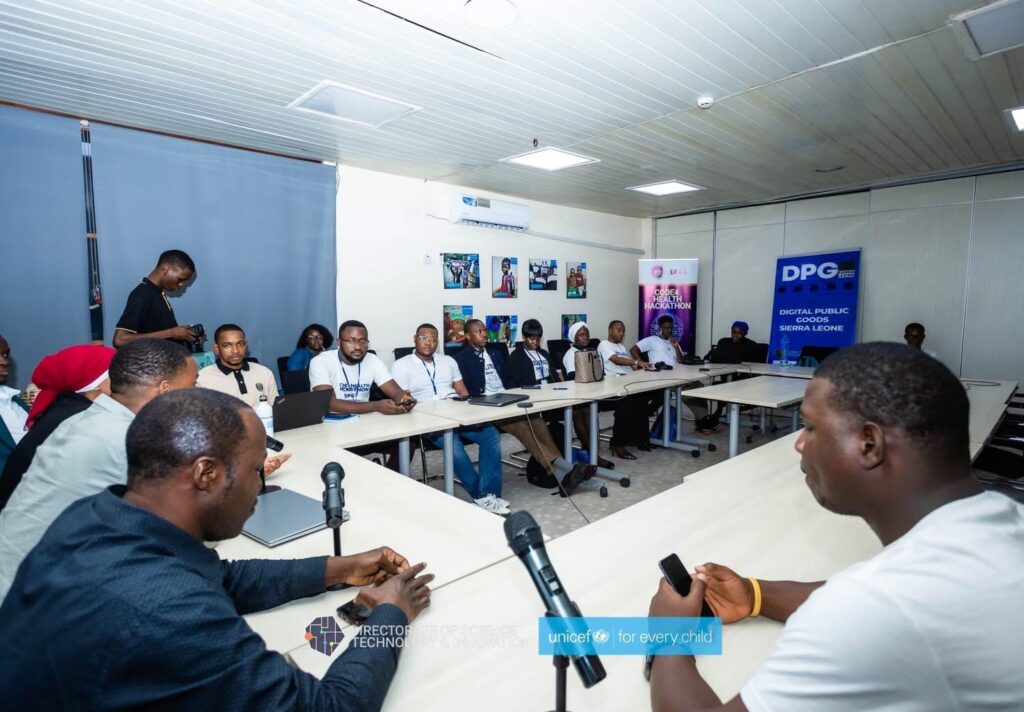
DSTI and UNICEF will continue to support the winning teams as they refine their solutions for national integration. This collaborative effort has laid a solid foundation for sustainable, homegrown digital health tools that can transform care and save lives across Sierra Leone.