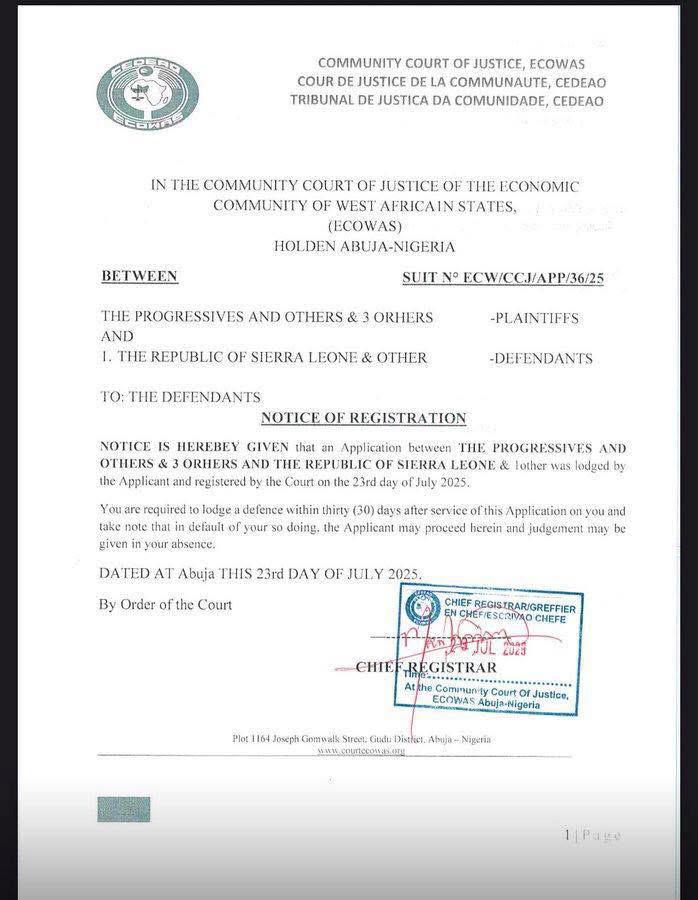

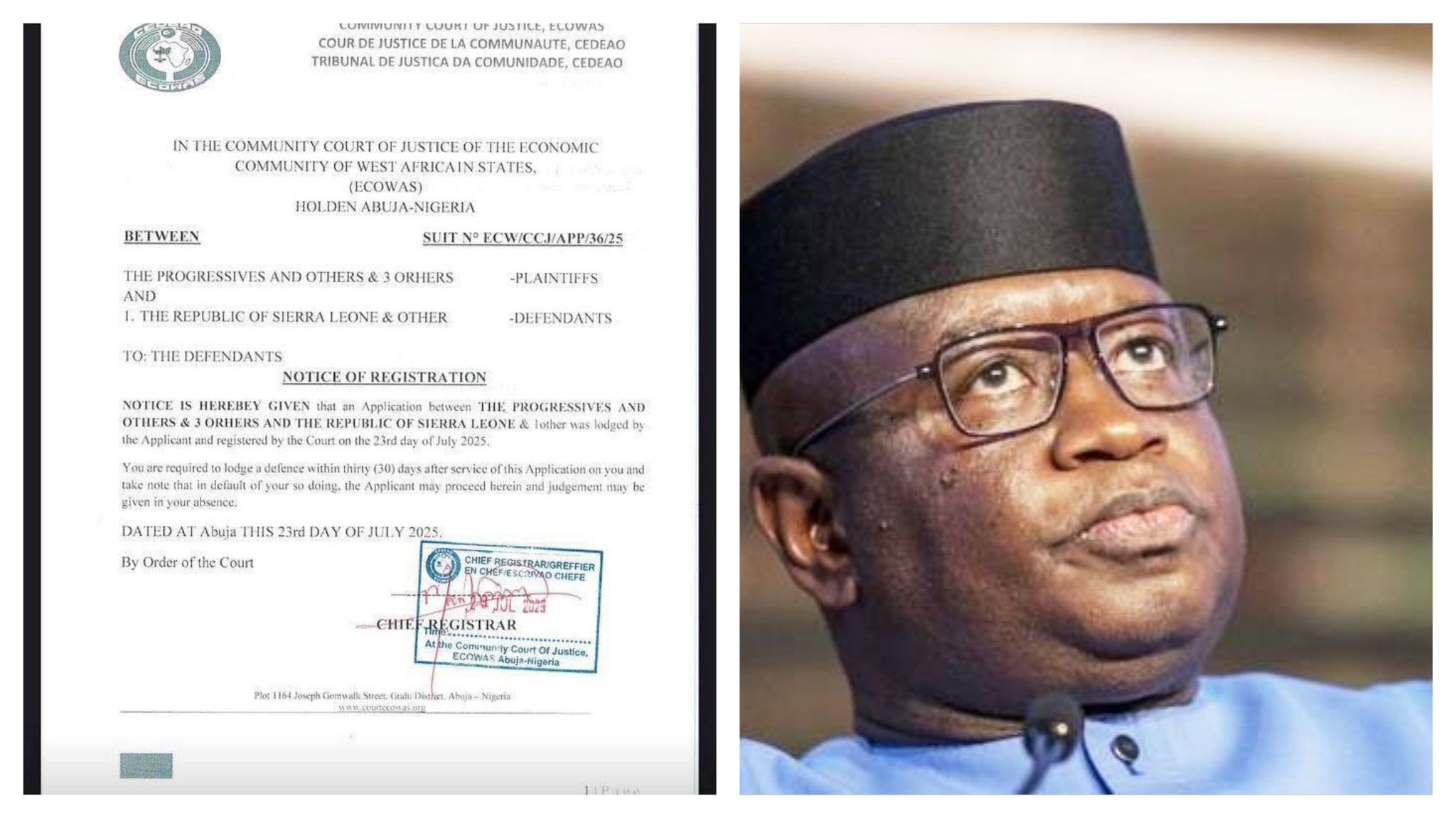
In a move that has raised eyebrows, tickled political nerves, and sent officials scrambling for legal dictionaries, the ECOWAS Court of Justice has officially served the Government of Sierra Leone in connection with a case filed by the opposition Progressive Party, challenging the legitimacy of the country’s 2023 general elections.
The legal challenge, brought by the Progressive Party, alleges widespread irregularities, voter suppression, and a lack of transparency in the electoral process—charges the ruling government has repeatedly dismissed as baseless and politically motivated. However, ECOWAS’s decision to entertain the suit suggests the West African bloc sees more than just political posturing.
The Progressives claim the 2023 elections were marred by voter intimidation, ballot stuffing, and a questionable collation process that left many scratching their heads—and others taking to the streets. While international observers raised red flags, their final reports remained diplomatically vague.
Now, with the ECOWAS Court stepping in, Sierra Leone faces a rare moment of regional scrutiny. Legal experts caution that the court’s decision to serve the government does not imply guilt, but it does mean the matter is serious enough to warrant a full hearing.
“This is not a political witch hunt,” said Abdul Karim, a constitutional lawyer based in Freetown. “It’s a sign that regional institutions can still act when national processes fall short. Whether or not the case succeeds, it sets an important precedent.”
The Bio administration responded with a terse press statement, insisting that “due process was followed during the elections” and that they “welcome the opportunity to clear the air.” However, insiders say legal teams are working overtime—just in case the “air” isn’t so clear after all.
The ECOWAS Court is expected to begin hearings later this year. If it finds in favor of the Progressive Party, outcomes could range from recommendations for electoral reforms to calls for a possible re-run—though the court’s enforcement powers remain limited.
Still, for a country grappling with political tension, economic instability, and growing public disillusionment, the optics of a regional court trial over its elections are far from ideal.
Whether this case becomes a landmark for electoral justice or another instance of ECOWAS flexing without follow-through remains to be seen. But for now, one thing is certain: Sierra Leone has mail—and it’s from the courthouse of West Africa itself. In the court of public opinion, the trial has already begun.