
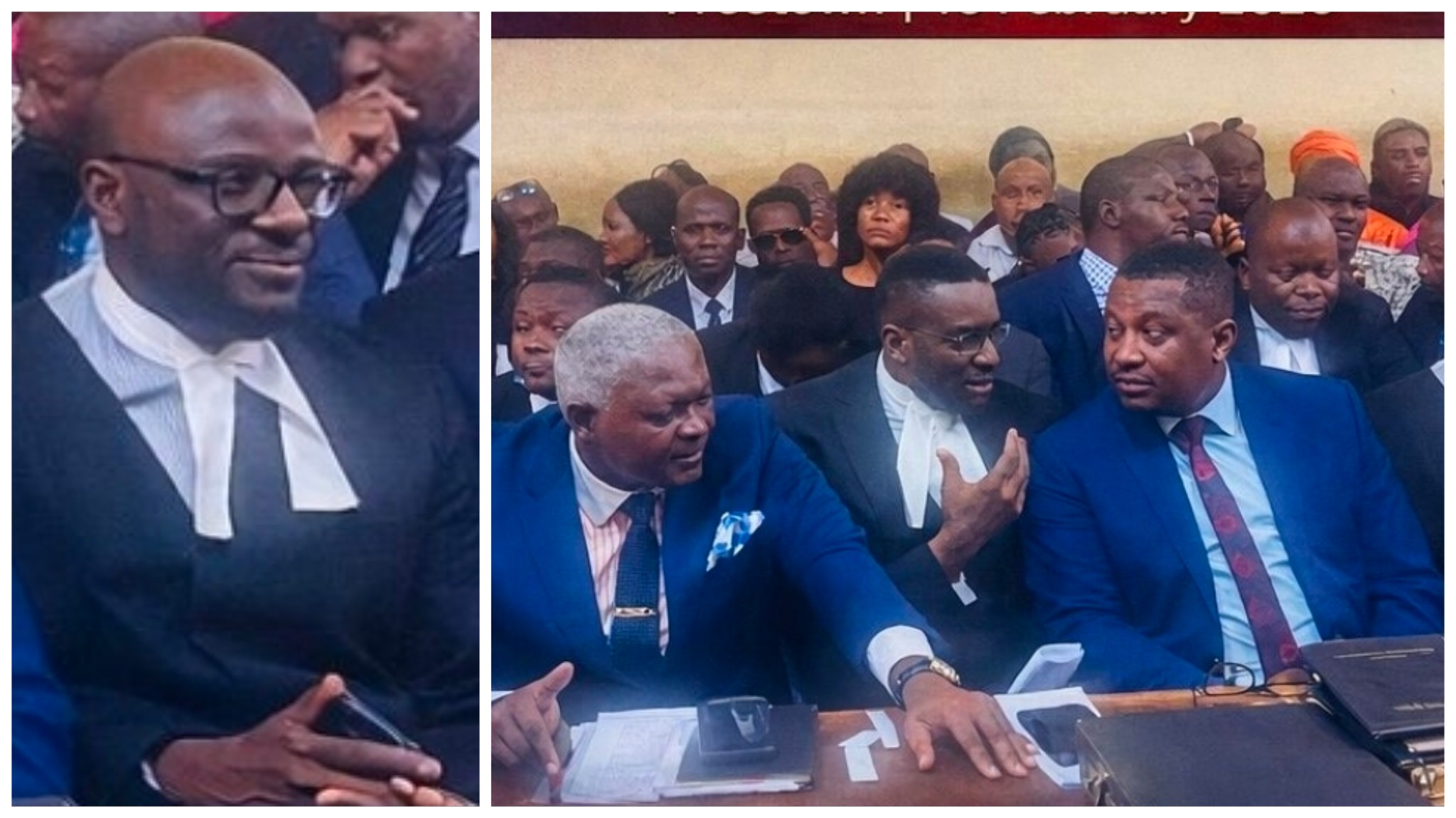
Prominent lawyer and leading flagbearer aspirant Ady Macauley on Monday joined senior members of the legal fraternity at Court No. 1 as proceedings continued in a matter that has attracted significant public attention.
The court appearance comes amid growing public discourse over the constitutional and statutory provisions governing the right to bail in Sierra Leone.
Under the Constitution of Sierra Leone, 1991 (Act No. 6 of 1991), Section 17(3)(b), any person who is arrested or detained must be brought before a court of law within ten days in cases involving capital offences, and within seventy-two hours in cases involving non-capital offences. The provision further states that where a trial is not conducted within a reasonable time, the accused person shall be released either unconditionally or upon reasonable conditions designed to ensure their appearance at trial.
Legal analysts observe that this constitutional safeguard forms the foundation of the right to bail in Sierra Leone, particularly in non-capital matters.
In addition, the Criminal Procedure Act, 1965 (as amended), grants courts discretionary authority to admit accused persons to bail in non-capital offences.
The Act outlines the legal considerations and conditions under which bail may be granted or refused.Key Principles Governing Bail
Bail is generally recognised as a constitutional right in non-capital offences.
The granting of bail remains subject to judicial discretion.
Courts may impose reasonable conditions to ensure the accused’s attendance at trial.
Bail may be denied in capital offences or where there is a demonstrable risk of flight, interference with witnesses, or threats to public safety.