
By: Usman Fambuleh
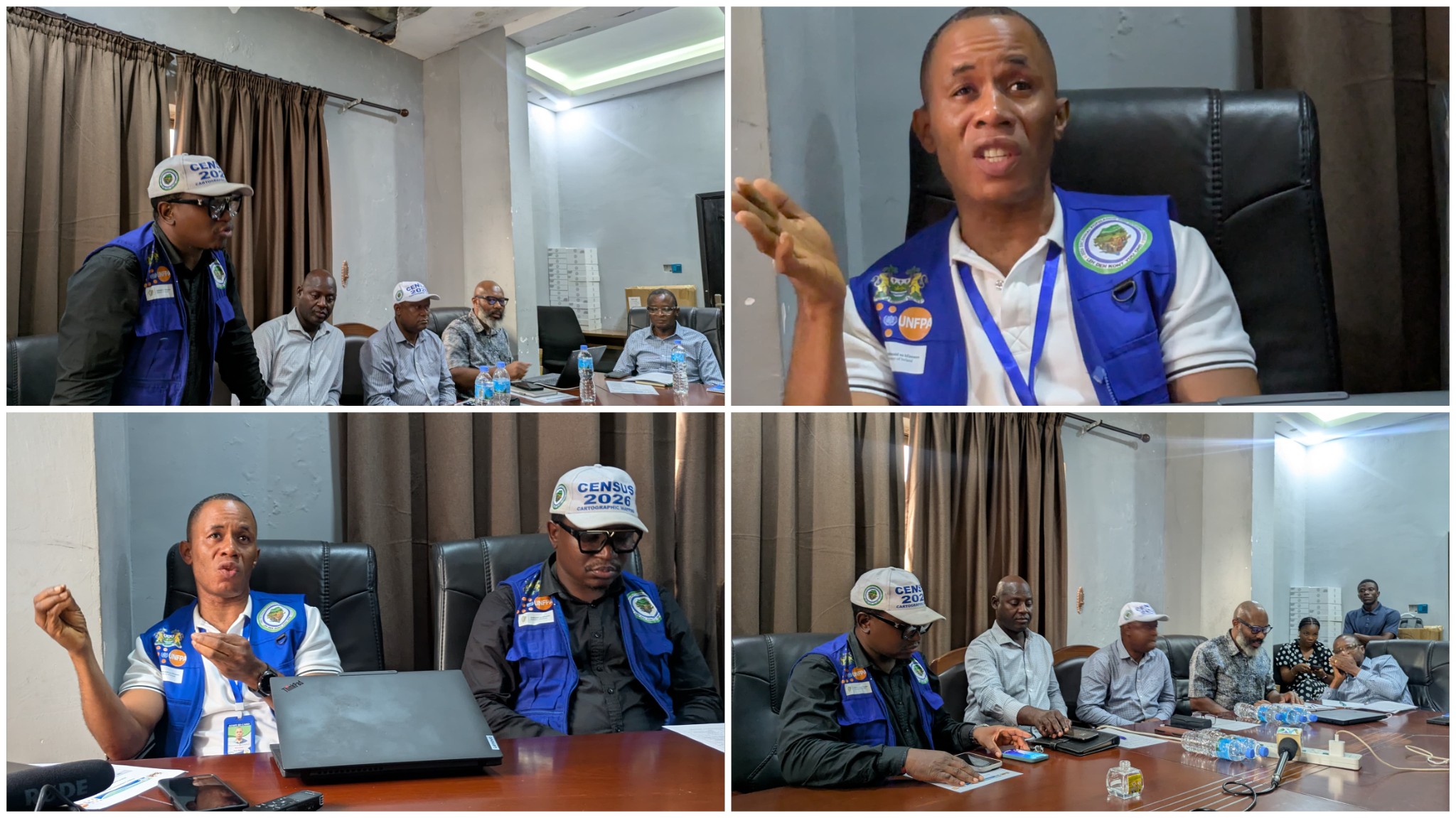
Statistics Sierra Leone on Wednesday, November 25, 2026, assured the public of its readiness to conduct the 2026 Population and Housing Census. The assurance was given by the Statistician-General and Chief Census Officer at a press conference held at the institution’s head office at 1B King Street, Kona Lodge, Freetown.
Giving an update at the press conference, the Statistician-General and Chief Census Officer highlighted key milestones and final preparations for the 2026 Population and Housing Census.
Statistician-General and Chief Census Officer, Andrew Bob Johnny, assured the public of the institution’s readiness to conduct the census, scheduled to begin on Wednesday, December 2, 2026. He disclosed that Tuesday, December 1, had been designated as Census Night, urging residents across the country to participate fully in the exercise.
He revealed that the Secretariat had completed national cartographic mapping, the Pilot Census and Mock Census to prepare for the main enumeration. He further noted that all three stages of census training, including the training of Master Trainers, Trainers of Trainers, Enumerators and Supervisors, had been completed. He explained that the teams were now focused on field deployment, tablet allocation and finalising supervision arrangements to ensure a smooth exercise.
Addressing concerns raised during the training, the Statistician-General acknowledged challenges relating to tablet availability, short-notice changes in training venues and workloads in some enumeration areas. However, he assured the public that an additional 3,000 tablets had been received to supplement existing equipment, adding that the Secretariat had sufficient tablets and power banks for the exercise. He also disclosed that field team allocations and workloads were being reviewed, while supervisors would monitor progress and identify areas requiring additional support. He welcomed independent monitors whose orientation was facilitated by the United Nations Population Fund (UNFPA), noting that their observations would help identify challenges during fieldwork.
Addressing households, he emphasised that where individuals sleep on Census Night would determine where they should be counted. He urged residents to include visitors who sleep in their homes on that night and ensure that household members who sleep elsewhere are counted at their respective locations. He encouraged households to cooperate with enumerators, request official identification and provide accurate information, assuring them that all information collected would remain confidential and be used strictly for statistical purposes. He stressed that the census was essential for planning schools, health facilities, water supply and other public services, calling on the media, community leaders and local authorities to support public awareness. He concluded by reminding the public that Census Night was December 1, while counting would begin on December 2, 2026.
Meanwhile, Deputy Statistician-General Lasana Kanneh disclosed that 65,108 Sierra Leoneans applied for positions as enumerators and supervisors following a digital recruitment exercise conducted by Statistics Sierra Leone. He said approximately 31,662 applicants were shortlisted for training, while 30,085 completed the training and sat the final examinations, with almost 95 per cent scoring above 80 per cent. However, only 28,862 candidates would be selected for deployment as enumerators and supervisors across the country. Kanneh said the institution was finalising their contracts and preparing transport allowances, tablets, power banks and data bundles ahead of deployment.
He added that deployment was expected to be completed by Friday, November 27, to ensure that census personnel were in their respective enumeration areas by Saturday morning for the listing exercise. He assured the public that the institution had sufficient personnel and other essential materials to commence the exercise, with the listing scheduled to precede the main census enumeration beginning December 2.
On the technological aspect, Director of Data Science, Theophilus Blaudfaust, highlighted the importance of digital systems in improving data quality, accuracy, monitoring and security during the census. He explained that digital data collection provides built-in quality checks that help minimise errors and ensure precision, unlike traditional paper-based methods. He said the technology would also allow the institution to monitor enumerators in real time, track their progress and identify areas requiring attention during field operations. Blaudfaust further disclosed that the census digital system had been developed in collaboration with international partners and United Nations experts, incorporating established data collection practices and security standards.
He said the digital approach would strengthen the overall census process while improving the institution’s capacity to manage modern data collection technologies. He maintained that the combination of digital monitoring, quality assurance and security measures would support the delivery of reliable census information.
Also speaking, Dr. Collins Opiyo said the 2026 Population and Housing Census was being implemented in accordance with United Nations principles and recommendations governing the 2030 round of censuses, which covers the period from 2025 to 2034. He explained that the international standards emphasise methodological and technological innovations to improve data quality and timeliness, noting that Sierra Leone had adopted these approaches throughout the census process.
He disclosed that the exercise was fully digital, from training to data capture and field operations, using advanced mapping methods to establish a reliable geospatial framework. He further explained that enumerators would use Computer-Assisted Personal Interviewing (CAPI) applications on GPS-enabled tablets, supported by Geographic Information System (GIS)-based maps, to identify their assigned areas and ensure complete enumeration.
Dr. Opiyo added that the census had an end-to-end data capture and management system supported by cloud servers, security protocols and disaster recovery mechanisms. He said the census instruments and digital systems had been tested during the Pilot Census, Mock Census and practical training sessions, while recruitment and training of qualified field personnel had been completed and deployment was underway.
He stressed that the objective was to count every building, household and individual in the right place, noting that reliable information on where people live and who lives there was essential for effective development planning. He also described the media as strategic partners in ensuring public awareness and called for continued support to deliver a high-quality and credible census that meets the expectations of the Government, people of Sierra Leone and the international community.
The 2026 Population and Housing Census is expected to provide essential demographic and housing information to support national development planning and evidence-based decision-making.