
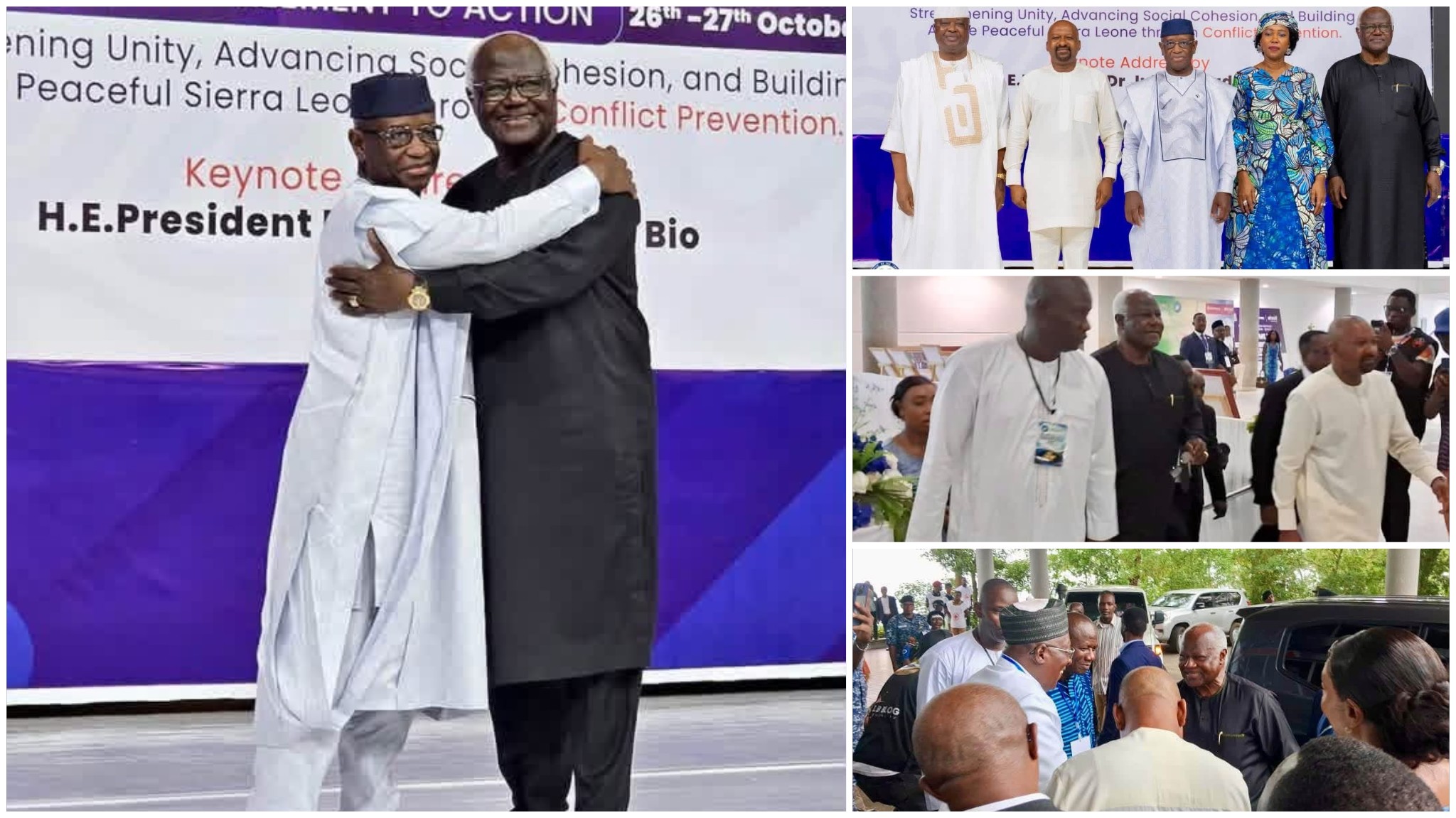
At a significant moment in Sierra Leone’s continuing journey towards national reconciliation, Former President Koroma has called upon the country’s political leadership and citizens to rise above longstanding divisions, rebuild trust and embrace their shared responsibility for the nation’s future.
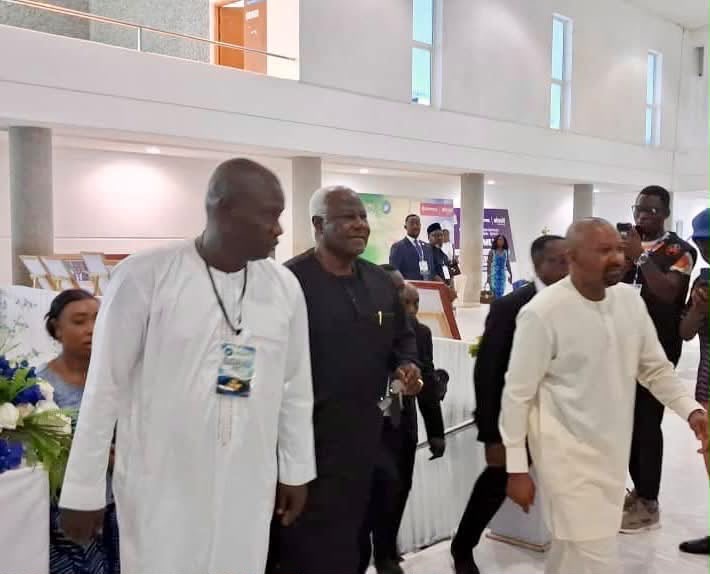
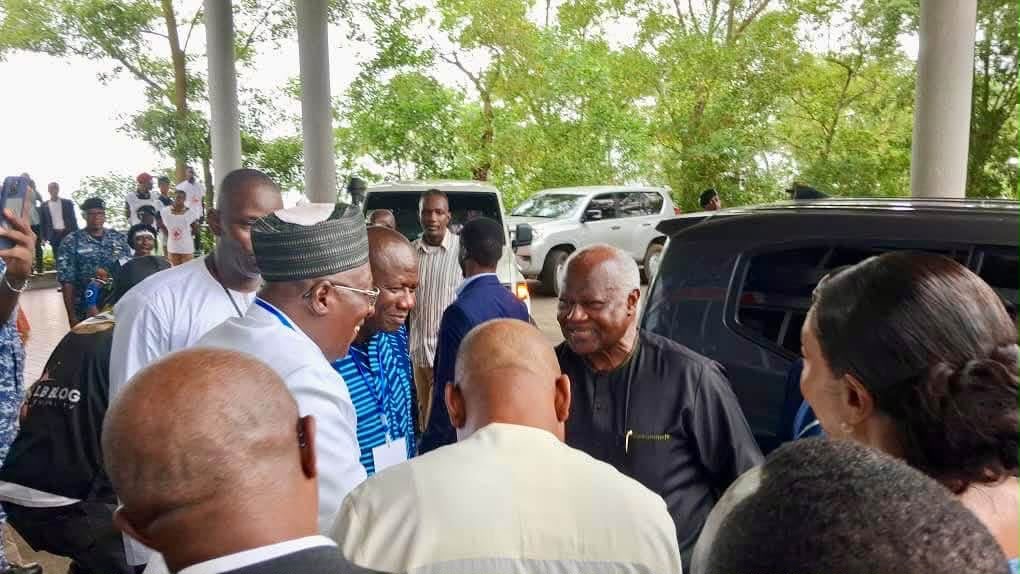
His intervention at the National Unity and Social Cohesion Conference, held in Freetown on 26 October 2026, came against the backdrop of renewed engagement between the country’s political leaders and ongoing efforts to strengthen national unity following years of political tensions.
Before an audience of national leaders, institutions and international partners, H.E. Ernest Bai Koroma set aside his prepared statement and chose instead to speak from the heart. What followed was a deeply personal reflection on Sierra Leone’s journey from conflict to peace, the responsibilities of leadership and the importance of preserving the dignity and unity of a nation beyond political differences.
President Koroma began by acknowledging H.E. President Julius Maada Bio for his leadership in establishing the Independent Commission for Peace and National Cohesion and facilitating the conference. He recognised the considerable responsibility borne by a sitting President, observing that leadership extends beyond governing to holding the country together.
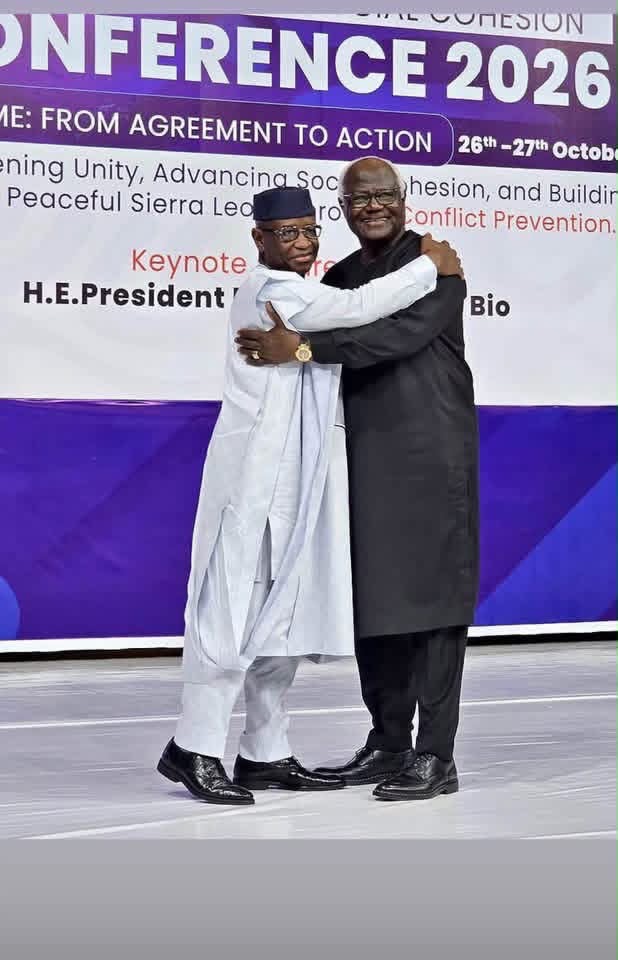
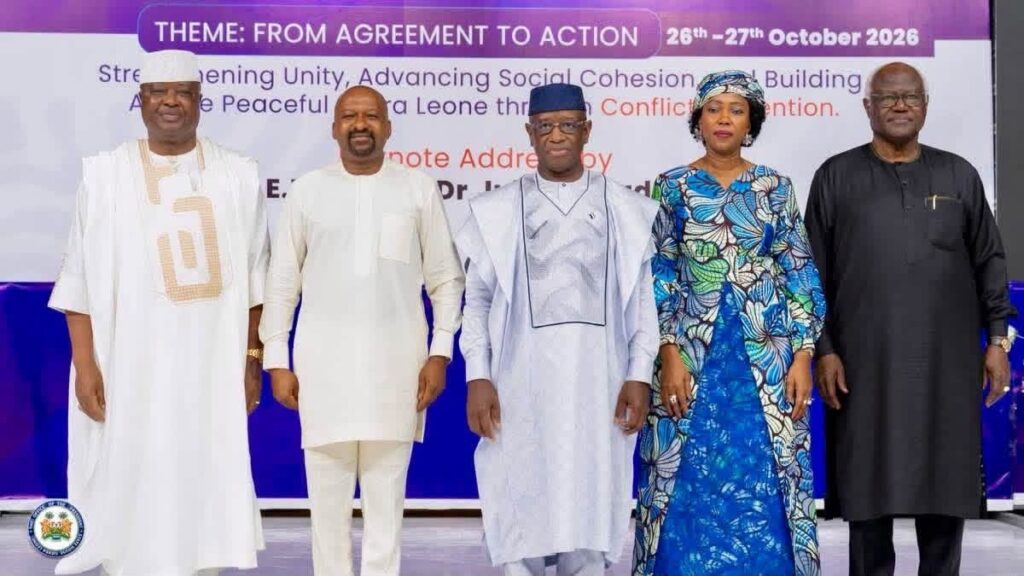
The gathering, convened under the theme “From Commitment to Action, Rebuilding Trust, Strengthening National Unity, Advancing Social Cohesion, and Building a More Peaceful Sierra Leone Through Conflict Prevention,” provided an opportunity to reflect on the country’s peacebuilding achievements and the challenges that remain. In his keynote address, President Bio similarly emphasised the importance of reconciliation, collective responsibility and translating national commitments into meaningful action.
Reflecting on the journey since the late President Ahmad Tejan Kabbah declared the end of the civil war in 2002, President Koroma recalled how successive administrations, supported by the resilience of Sierra Leoneans and the international community, had helped the country rebuild and earn recognition for its postconflict recovery.
Yet he reminded the gathering that peace, however hard won, cannot be taken for granted. Its preservation demands continued engagement, mutual understanding and the willingness to confront unresolved grievances.
Drawing upon his experience of the 2007 democratic transition, President Koroma recalled visiting outgoing President Kabbah to thank him for his service and assure him that his experience and counsel would remain valued.
He also recounted visiting former Vice President Solomon Berewa shortly after the election results were announced, only to discover that his security detail had been withdrawn. President Koroma immediately instructed the Inspector General of Police to restore the former Vice President’s protection.
The recollection illustrated a principle central to his message: the transfer of political power must never become an occasion for the withdrawal of dignity, respect or protection from those who have served the nation. Democratic transitions should strengthen institutions and preserve the rights of citizens, irrespective of political affiliation or changes in leadership.
President Koroma reminded Sierra Leoneans that belonging to a political party is a democratic choice, while being Sierra Leonean is a shared inheritance. No citizen should be disadvantaged because of political conviction, regional identity or place of birth.
His appeal extended beyond political institutions to the relationships that bind communities together.
In a warmly received moment, he questioned why he should not visit President Bio in Tihun, or why President Bio should not visit him in Makeni. His remarks, delivered with characteristic humour, drew laughter and sustained applause, but carried a deeper message about the need to restore personal relationships, encourage interaction across communities and overcome the divisions that too often separate Sierra Leoneans.
“Let’s sit down and talk. Let’s dialogue, dialogue, dialogue. We must find a solution.”
He urged national leaders and citizens alike to acknowledge past mistakes, address grievances openly and reject violence and confrontation as means of resolving political differences.
In one of the most significant moments of his intervention, President Koroma offered his continued support to President Bio in advancing national reconciliation.
“Moving forward, I am just a telephone call away.”
The assurance, received with sustained applause, reflected his willingness to place his experience at the service of the nation and his conviction that responsibility for Sierra Leone’s peace and stability extends beyond the tenure of any presidency.
He further emphasised that national cohesion requires shared responsibility. Those entrusted with governing must exercise humility and accommodate differing views, while the opposition must operate within the law. Civil society, journalists, traditional and religious leaders, and citizens also have essential roles in strengthening institutions, promoting accountability and rebuilding public trust.
The significance of the gathering was also recognised by the international community. H.E. Leonardo Santos Simão, United Nations Special Representative of the Secretary-General for West Africa and the Sahel, acknowledged President Bio’s gesture of reconciliation towards President Koroma and the latter’s decision to return and contribute to dialogue, peace and national cohesion.
His remarks situated the renewed engagement between the two leaders within Sierra Leone’s broader reconciliation process, including the Agreement for National Unity and the continuing efforts to strengthen democratic institutions and national stability.
President Koroma also spoke candidly about the consequences of prolonged political tensions and institutional mistrust, warning that continued divisions were discouraging investment, slowing development and denying younger generations opportunities for a better future.
“The world won’t wait for us. West Africa won’t wait for us.”
He urged Sierra Leoneans not to allow another decade to pass without addressing the differences that continue to hold the country back, calling for sincerity, patience and sustained engagement in rebuilding the trust upon which national progress depends.
The conference concluded on 27 October with the adoption of the Freetown Declaration on National Unity and Social Cohesion, providing a renewed framework for translating commitments to peace and reconciliation into practical action.
For President Koroma, the task ahead is clear: Sierra Leone must heal its wounds, rebuild trust and strengthen the bonds that unite its people.
He believes that the country has the capacity to overcome its divisions, as it has done in the past, provided its leaders and citizens are guided by humility, understanding and a genuine commitment to the common good.
His appeal was ultimately directed towards the generations yet to come—a Sierra Leone where political beliefs and regional origins do not constrain opportunity, where every citizen enjoys dignity and freedom, and where peace is not merely proclaimed but lived.
Sierra Leone belongs to all its people. Its peace, unity and future are a responsibility they must share.
Credit:Office of H.E. Ernest Bai Koroma
Former President of the Republic of Sierra Leone