
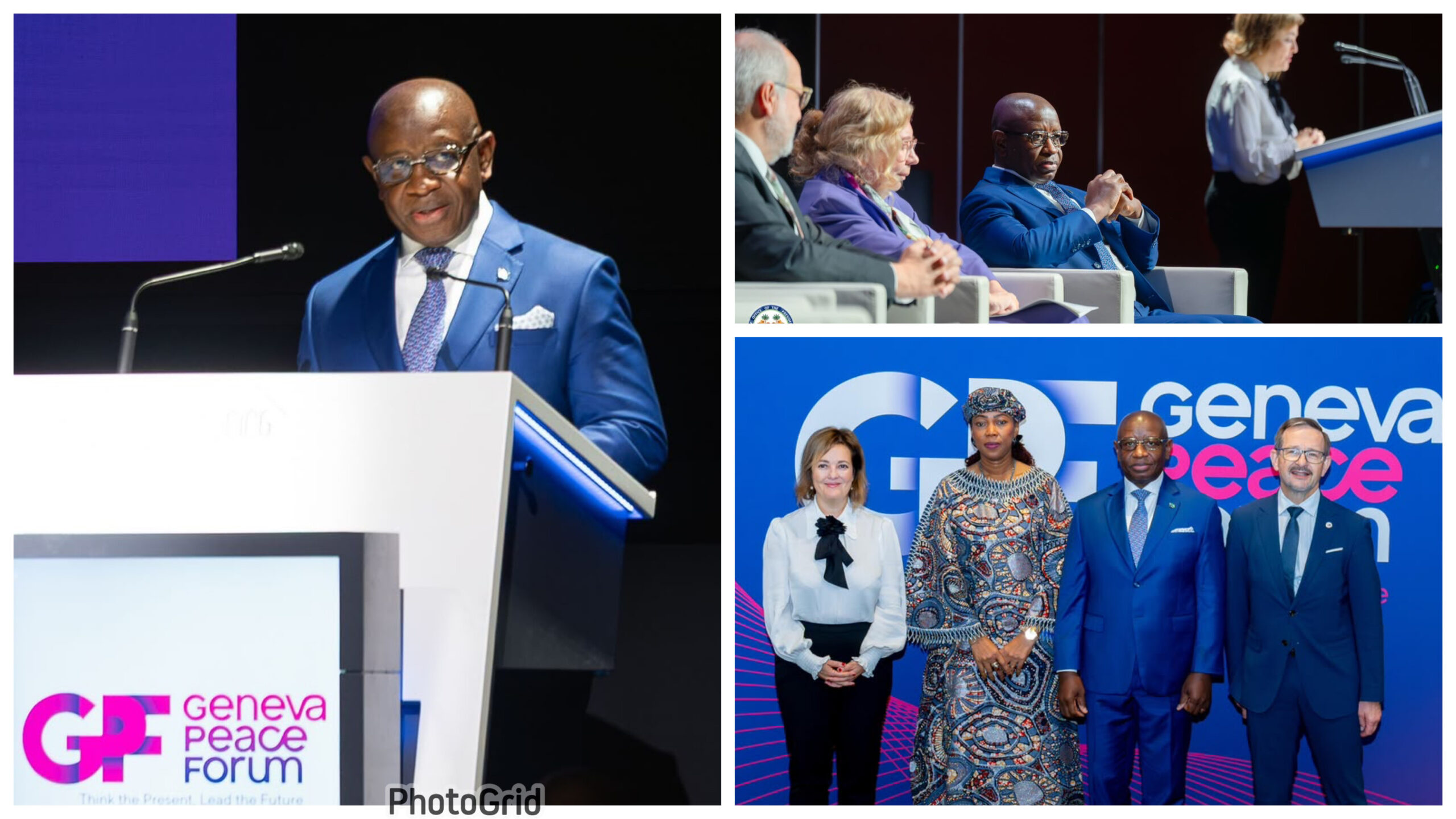
International Conference Centre Geneva (CICG), Geneva, Switzerland, Monday, 12 October 2026 – His Excellency, President Dr Julius Maada Bio has challenged world leaders to shift global priorities from financing the consequences of war to preventing conflicts before they erupt, proposing a Geneva Commitment to Prevention that would make early action a measurable priority of international cooperation.
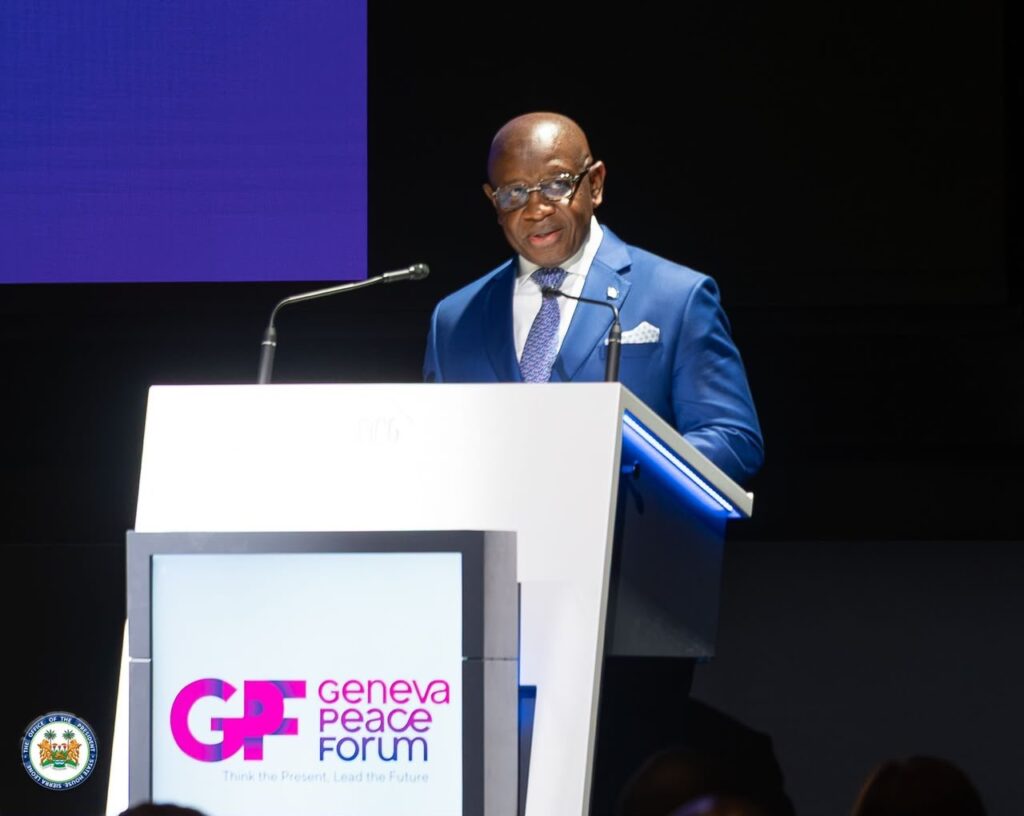
Delivering the keynote address at the inaugural Geneva Peace Forum at the International Conference Centre Geneva (CICG), under the theme “Choose Peace,” President Bio questioned why the world mobilises enormous resources after wars begin but invests far less in preventing them, insisting that the problem is not simply money, but political will and priorities.
“We have become experts at managing the consequences of war. We must show the same determination in preventing its causes,” he declared.
The President proposed two practical commitments: progressively increasing the share of international assistance devoted to conflict prevention and publishing annual reports on early warnings received and the actions taken. He urged the Forum to measure success by the conflicts prevented and lives saved, not merely by declarations adopted.
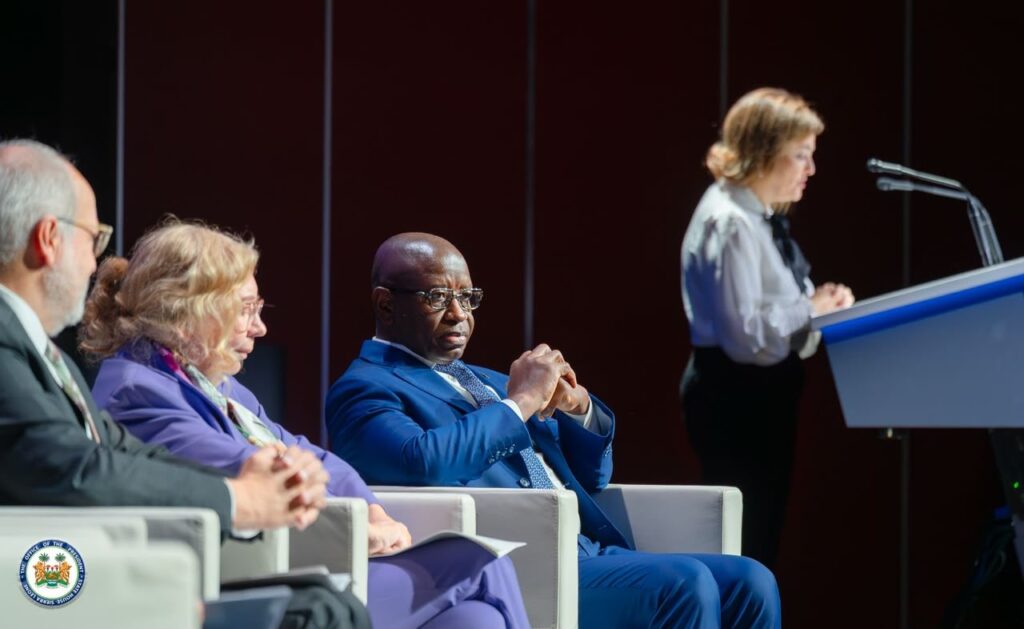
Drawing on Sierra Leone’s civil war and recovery, President Bio recalled the broken-legged wooden chair at Geneva’s Place des Nations, a monument to landmine victims, which reminded him of Sierra Leoneans who lost limbs but rebuilt their lives despite the enduring scars of conflict.
“War does not end when the guns fall silent,” he said, warning that its consequences persist in wounded survivors, divided communities and children who inherit the costs of decisions they never made.
Speaking from his experience as a soldier who served with the Economic Community of West African States Monitoring Group (ECOMOG) in Liberia, a military Head of State who oversaw Sierra Leone’s transition to civilian government in 1996, and a democratically elected President, Bio recalled the country’s declaration in January 2002: “Di wor don don”, meaning, the war is over.
He stressed that peace had to be built through reconciliation, accountability and national recovery, citing the Truth and Reconciliation Commission and the Special Court for Sierra Leone as essential parts of that journey.
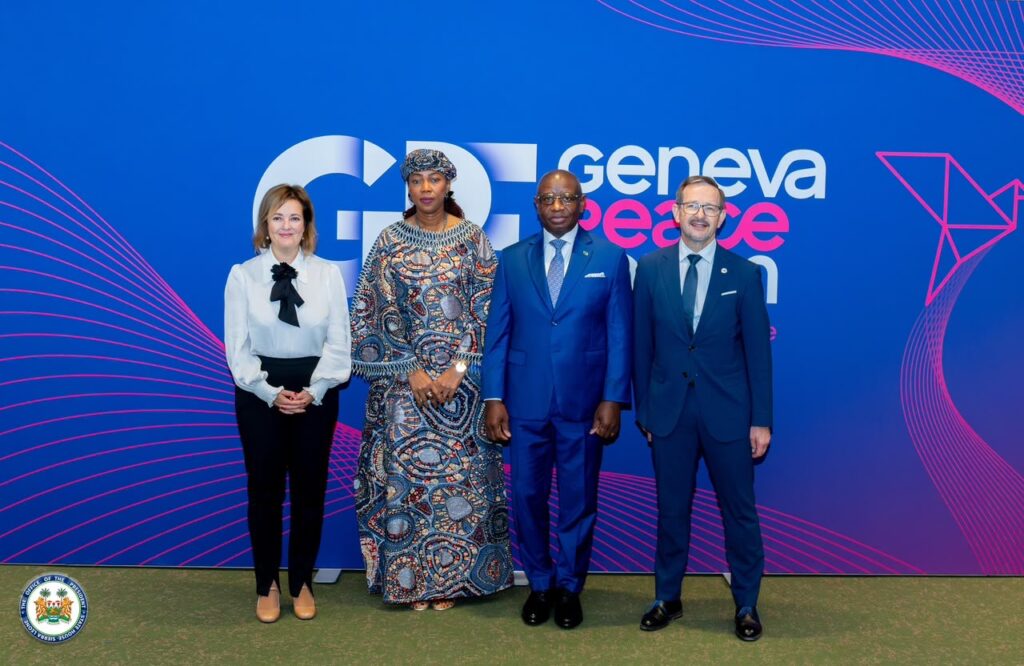
“We learned that reconciliation without justice is fragile, and justice without reconciliation is incomplete. A nation needs both,” he said, highlighting Sierra Leone’s transformation from a recipient of peacekeepers to a contributor to international peacekeeping and its service on the United Nations Security Council in 2024 and 2025.
Referencing conflicts in Sudan, the Sahel, eastern Democratic Republic of Congo, the Middle East and Ukraine, President Bio warned that the international community too often acts only after violence begins, despite early signs such as exclusion, inequality and broken trust.
He called for stronger early-warning systems and decisive action before disagreements become hatred, misinformation fuels mobilisation and grievances turn violent. He emphasised that peace prevention must also include investment in education, employment, fair courts, credible elections and opportunities for young people.
The President further warned that climate-related disasters can aggravate poverty and exclusion, while misinformation, artificial intelligence misuse and cyberattacks threaten public trust and essential services. He called for fair climate financing and more inclusive global technology rules.
“On all of these challenges, Africa does not come to Geneva only to seek solutions. Africa comes to offer them,” he declared, drawing on his tenure as Chair of the Authority of Heads of State and Government of the Economic Community of West African States (ECOWAS) to stress that lasting peace must be regionally owned, internationally supported and built on mutual respect.
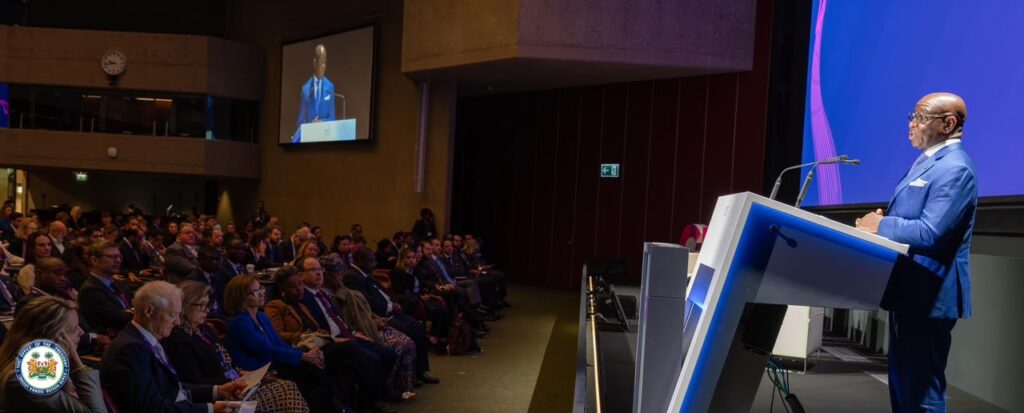
He urged continued dialogue with Mali, Burkina Faso and Niger, noting that West African nations share a common history, interconnected markets and a collective future.
To turn commitments into results, President Bio outlined three imperatives: act earlier, talk longer and include more people
President Bio concluded with a call for leaders to choose peace before violence begins, when dialogue is difficult and when doing so demands courage.
“Because the greatest victory of peace is not the war we end. It is the war we never allow to begin,” he declared.
The inaugural Geneva Peace Forum brings together international and regional stakeholders to advance dialogue on conflict prevention, peacebuilding and practical measures for sustaining peace. President Bio’s address placed particular emphasis on the need to move beyond international declarations towards measurable commitments, timely action and a shared responsibility to prevent future conflicts.
For media enquiries:
State House Media and Communications Unit
info@statehouse.org.sl