

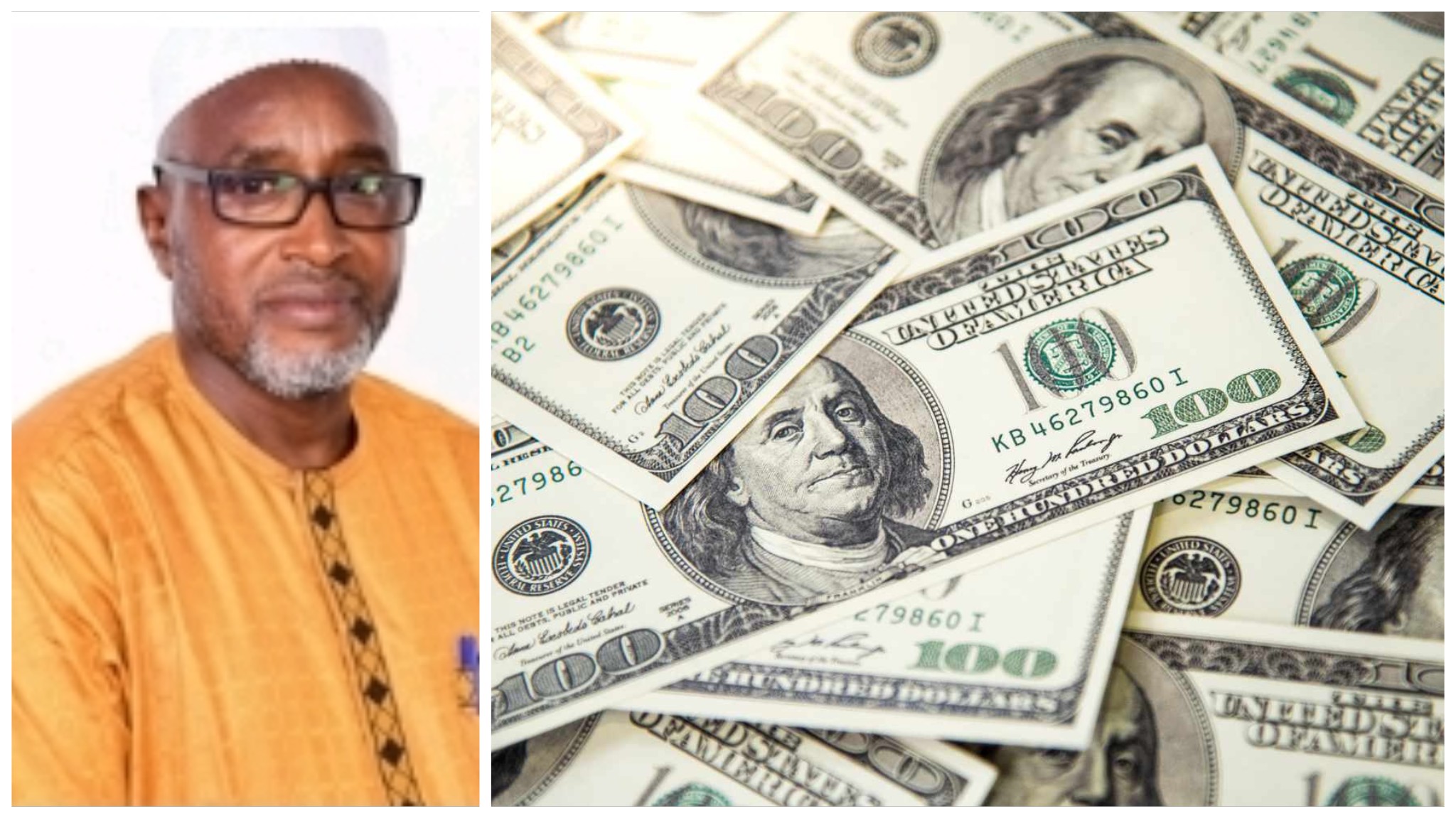
By Chernor M. Jalloh Lecturer of Governance & Development Studies IPAM – USL
There’s a quiet revolution unfolding in global finance, and many African business leaders have yet to catch wind of it. While the continent remains deeply anchored to the U.S. dollar for trade, savings, and external borrowing, the very foundation of that dependence—the Petro-dollar system is beginning to crumble.
For decades, the dollar reigned supreme. Its global dominance was unchallenged, propped up by a geopolitical masterstroke forged in the 1970s: oil, the world’s most strategic commodity, would be priced exclusively in U.S. dollars. This agreement between the United States and Saudi Arabia replicated across the OPEC bloc gave birth to the Petro-dollar system, an economic construct that effectively forced every country, regardless of geography or ideology, to hold vast reserves of U.S. currency just to keep their energy sectors running.
It was a brilliant move one that positioned the dollar at the center of the global economy. But like all hegemonies, it came with a price especially for developing economies in Africa. Countries such as Guinea, Sierra Leone, Senegal, and much of the subregion continue to operate under a dollar-first logic: exports are priced in dollars, reserves are held in dollars, and debts are repaid in dollars. Even the most routine cross-border transactions must pass through the gate of the greenback. Yet, the global financial winds are shifting swiftly and unmistakably revealing deepening cracks in the once-unshakable Petro-dollar order.
Cracks in the Petro-Dollar Order
What was once unthinkable is now becoming reality. Major powers are beginning to challenge the dollar’s monopoly. Russia and China now settle much of their energy trade in rubles and yuan. India has resumed oil transactions with Iran outside the dollar. The BRICS nations are actively developing a new settlement currency backed by gold and national currencies. Even U.S. allies in the Gulf, including Saudi Arabia, have shown interest in pricing oil contracts in alternative currencies. These are not hypothetical thought experiments; they are concrete policy shifts with far-reaching consequences.
A 2024 OAPEC survey revealed that more than 50% of oil market stakeholders anticipate a shift away from the U.S. dollar within the next three to five years. This trend signals a deliberate and growing effort to hedge against the financial dominance of the United States and the geopolitical vulnerabilities it imposes. For African economies heavily tethered to dollar-based trade, reserves, and debt this is both a cautionary signal and a catalytic opportunity. The danger lies not in the dollar’s immediate disappearance (which is unlikely), but in the mounting costs of overreliance on a single currency in a world that is rapidly becoming more financially multipolar. In this context, such dependence is no longer just inefficient it is increasingly perilous. Further supporting this perspective, a January 2025 report by the Asia Society Policy Institute’s Center for China Analysis authored by economist Diana Choyleva notes that the Petro-dollar system is being gradually reshaped by China’s financial innovations, particularly its digital yuan and the cross-border mBridge platform. These alternative payment systems offer compelling options for oil-exporting nations seeking flexibility. Choyleva writes, “Intertwining forces could accelerate changes to the dollar-based financial system in addition to the geopolitical shifts alone.” While she concedes that complete de-dollarization of the oil trade is unlikely in the near term, she forecasts the gradual erosion of the dollar’s dominance in oil settlements and the recycling of oil revenues.
Choyleva outlines three possible trajectories: a managed evolution toward gradual yuan adoption, an external shockscenario driven by conflict or technology, and a rapid pivot to Asia, especially if Gulf states like Saudi Arabia align more decisively with Chinese systems. Each of these scenarios reinforces the same message: the Petro-dollar era is no longer absolute and it is being rewritten in real time.
Why Africa Is Exposed
The vulnerabilities are clear. When the dollar strengthens, African currencies often tumble. The result? Soaring import prices, inflationary pressures, and fiscal disruptions. Countries like Guinea and Sierra Leone have seen the costs of imported fuel, rice, and medicine spike whenever the dollar flexes its muscles.
Worse still, dollar liquidity is far from guaranteed. During global disruptions such as the COVID-19 pandemic, African businesses struggled to obtain dollars to finance vital imports. And when the U.S. Federal Reserve raises interest rates as it has in recent years the burden of servicing dollar-denominated debt rises sharply. For many governments, this siphons resources away from health, education, and infrastructure. For businesses, it threatens solvency. This is more than a macroeconomic concern. It is an existential threat to national stability, to small and medium-sized enterprises, and to the continent’s development trajectory.
Even Wall Street Is Hedging Its Bets
Perhaps the most telling sign of change is coming from where you’d least expect it Wall Street itself. In March 2025, Morgan Stanley became the first American firm to issue Panda bonds, raising 2 billion Chinese yuan (≈ $279 million) in China’s domestic market. Meanwhile, Bloomberg reports that BlackRock, JPMorgan, and Goldman Sachs are quietly diversifying into yuan-denominated government bonds, shifting billions into China’s fixed-income market to capitalize on its stability and growing global relevance. As financial columnist Rana Foroohar noted, “The dollar is still dominant, but it’s being increasingly bypassed.” If the titans of global finance are repositioning themselves beyond the dollar, the question for Africa is no longer if but when.
Breaking the Dollar Habit
Abandoning the dollar overnight would be reckless. But strategic diversification? That is long overdue. African central banks must take the lead in rebalancing their reserve portfolios reducing their sole reliance on the dollar and increasing holdings in gold, euro, yuan, and even regional currencies. Initiatives like the African Monetary Cooperation Program must be revived and strengthened.
On the trade front, governments should actively pursue local-currency settlement agreements with regional partners and emerging economic powers. The Pan-African Payment and Settlement System (PAPSS) already in operation in several ECOWAS countries is a step in the right direction and must be scaled up. The private sector also has a role to play. Businesses must build capacity in currency risk management: learning to hedge, to diversify supply chains, and to negotiate contracts with flexible settlement options. The adoption of mobile money, digital wallets, and local fintech platforms will help shift everyday transactions away from physical dollar dependency.
Most crucially, Africa must use its commodity leverage wisely. Why should Guinea price its bauxite exclusively in dollars when China is its largest buyer? Why can’t Senegal negotiate groundnut oil exports in CFA francs, Russian rubles, or Indian rupees?
Monetary Sovereignty Is Economic Power
The deeper truth is this: currency dependence is vulnerability. And in many cases, it is submission. When a nation’s economic fate is tethered to the decisions of a foreign central bank, its sovereignty is incomplete. Africa’s future does not lie in isolation but in regional integration, monetary cooperation, and a bold reimagining of the rules. That means building payment systems that serve African interests. It means demanding fairer terms of trade. It means rejecting the role of collateral damage in global currency wars.
In short, Africa must think like a bloc not a periphery. The dollar will not disappear tomorrow. But its supremacy is no longer assured. African leaders and entrepreneurs must read the writing on the wall. Those who prepare for this shift will thrive. Those who don’t may find themselves dangerously exposed when the dollar tide inevitably begins to recede.