

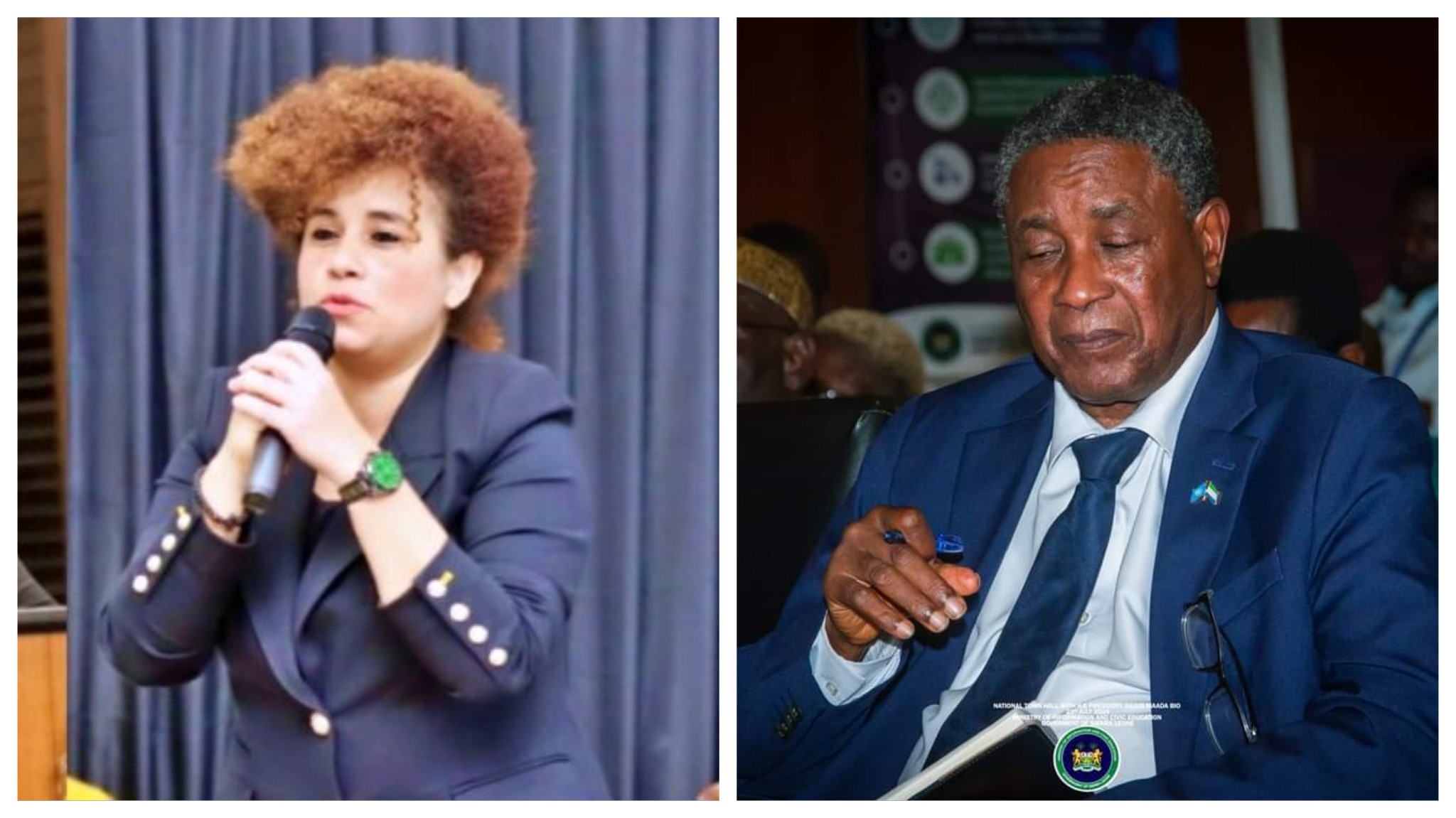
Prominent lawyer and governance advocate Basita Michael has strongly refuted recent comments made by Presidential Spokesman Alpha Kanu, describing his claim that “over 70% of Sierra Leoneans are now employed” as dangerously misleading and out of touch with the country’s harsh socioeconomic reality.
In a written statement shared with the public, Michael argued that such a sweeping claim, made without citing credible data, distorts the lived experiences of millions of Sierra Leoneans particularly the youth and undermines efforts to address the country’s worsening unemployment crisis.
“Such a statement, especially when made without reference to credible, verifiable data, serves to distort public perception, obscure necessary policy interventions, and silence the genuine struggles of millions of citizens,” Michael wrote.
Citing statistics from the United Nations Peacebuilding Fund, she highlighted that over 70% of Sierra Leone’s youth population, estimated at 1.5 million, are either unemployed or underemployed, while nearly half are illiterate and unskilled. She further noted that those who are employed are often categorized by development agencies like GIZ as the “working poor”, pointing to the precarious nature of existing job opportunities.
Michael urged accountability from both public officials and the media, calling on the Sierra Leone Association of Journalists (SLAJ) and fact-checking platforms such as Dubawa and Africa Check to take a more proactive stance against misinformation. “Citizens deserve a government and public officials who are honest about the challenges they face, not one that attempts to ‘flip’ their reality,” she emphasized.
She concluded with a powerful call for the retraction or correction of the employment claim and advocated for greater vigilance and responsibility in public communication, asserting that truth and transparency must remain the foundation of good governance.
The statement has sparked renewed discussions on the need for data-driven policymaking and transparency from state officials, particularly in a context where economic hardship and youth unemployment remain key national concerns.